Results by title
118 books match the query 'College teachers' and 6 start with l
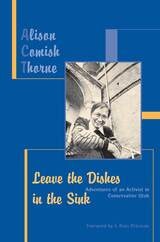
Leave The Dishes In The Sink
Alison Comish Thorne
Utah State University Press, 2002
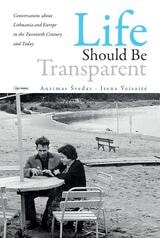
Life should be Transparent
Conversations about Lithuania and Europe in the Twentieth Century and TodayAurimas Svedas
Central European University Press, 2020
This book of thirteen conversations introduces us to the life of an exceptional person—theatre critic, Germanist, and long-time chair of the Open Lithuania Fund board—Irena Veisaitė. The dialogue between Lithuanian historian Aurimas Švedas and a woman who reflects deeply on her experiences reveals both one individual’s historically dramatic life and the fate of Europe and Lithuania in the twentieth century.
Through the complementary lenses of history and memory, we confront with Veisaitė the horrific events of the Holocaust, which brought about the end of the Lithuanian Jewish world. We also meet an array of world-class cultural figures, see fragments of legendary theatre performances, and hear meaningful words that were spoken or heard decades ago.
This book’s interlocutors do not so much seek to answer the question “What was it like?” but instead repeatedly ask each other: “What, how, and why do we remember? What is the meaning of our experiences? How can history help us to live in the present and create the future? How do we learn to understand and forgive?”
A series of Veisaitė’s texts, statements, and letters, presented at the end of the book suggest further ways of answering these questions.
Looking Forward, Looking Upward
My Life, My Friendship with Sir John, and the Early Years of the John Templeton FoundationRobert L. Herrmann
Templeton Press, 2013
Loving Mountains, Loving Men
Memoirs of a Gay AppalachianJeff Mann
Ohio University Press, 2005
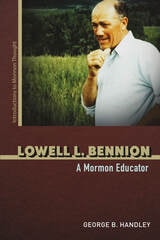
Lowell L. Bennion
A Mormon EducatorGeorge B. Handley
University of Illinois Press, 2023
Known in his lifetime for a tireless dedication to humanitarian causes, Lowell L. Bennion was also one of the most important theologians and ethicists to emerge in the Church of Jesus Christ of Latter-day Saints in the twentieth century.
George B. Handley’s intellectual biography delves into Bennion’s thought and extraordinary intellectual life. Rejecting the idea that individual LDS practice might be at odds with lived experience, Bennion insisted the gospel favored the growth of individuals acting and living in the present. He also focused on the need for ongoing secular learning alongside religious practice and advocated for an idea of social morality that encouraged Latter-day Saints to seek out meaningful transformations of character and put their ethical commitments into practice. Handley examines Bennion’s work against the background of a changing institution that once welcomed his common-sense articulation of LDS ideas and values but became discomfited by how his thought cast doubt on the Church’s beliefs about race and other issues.
Lucchesi and The Whale
Frank Lentricchia
Duke University Press, 2001
Having become “a mad Ahab of reading,” who is driven to dissect the “artificial body of Melville’s behemothian book” to grasp its truth, Lucchesi allows his thoughts to wander and loop from theory to dream to reality to questionable memory. But his black humor-tinged musings are often as profoundly moving as they are intellectual, such as the section in which he ponders the life and philosophy of Ludwig Wittgenstein in relation to the significance of a name—and then attempts to share these thoughts with a sexy, middle-aged flight attendant—or another in which he describes a chance meeting with a similarly-named mafia don.
Despite apparent spiritual emptiness, Lucchesi in the end does find “a secret meaning” to Moby-Dick. And Lentricchia’s creations—both Lucchesi and The Whale and its main character—reveal this meaning through a series of ingeniously self-reflective metaphors, in much the way that Melville himself did in and through Moby-Dick. Vivid, humorous, and of unparalleled originality, this new work from Frank Lentricchia will inspire and console all who love and ponder both great literature and those who would write it.