Results by title
148 books match the query 'Colonization' and 4 start with l
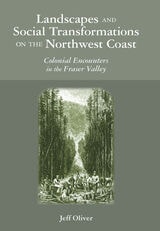
Landscapes and Social Transformations on the Northwest Coast
Colonial Encounters in the Fraser ValleyJeff Oliver
University of Arizona Press, 2010
The Fraser Valley has long been a scene of natural resource appropriation—furs and fish, timber and agriculture—with settlement patterns and land claims centering on the use of these materials. Oliver demonstrates how social change and cultural understanding are tied to the way that people use and remake the landscape. Drawing on ethnographic texts, archaeological evidence, cartography, and historical writing, he has created a deep history of the valley that enables us to view how human entanglements with landscape were creative of a variety of contentious issues. By capturing the multiple dynamics that were operating in the past, Oliver shows us not only how landscape transformations were implicated in constructing different perceptions of place but also how such changes influenced peoples’ understanding of history and identity.
This groundbreaking work examines engagement between people and the environment across a variety of themes, from aboriginal appropriation of nature to colonists’ reworking of physical and conceptual geographies, demonstrating the consequences of these interactions as they permeated various social and cultural spheres. It offers a new lens for viewing a region as it provides fresh insight into such topics as landscape change, perceptions of place, and Indigenous-white relations.
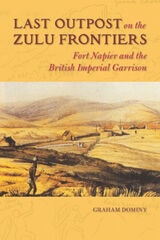
Last Outpost on the Zulu Frontiers
Fort Napier and the British Imperial GarrisonGraham Dominy
University of Illinois Press, 2016
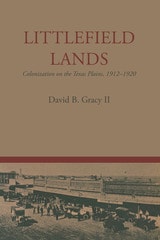
Littlefield Lands
Colonization on the Texas Plains, 1912–1920By David B. Gracy II
University of Texas Press, 1968
The phenomenon of colonization by big land companies, common throughout the history of the United States, came late to the Panhandle-Plains of West Texas. Ranchers held sway there up into the 20th century. Then, realizing that the future followed the plow, they, joined by business owners and speculators, founded towns on their land, competed for railroad connections, provided irrigation wells and other improvements, and engaged in a variety of advertising activities to interest prospective settlers and to sell the land to farmers at a profit. Trainloads of such "prospectors" were brought in to tour the land; and salesmen of all kinds roamed all the more settled states painting enticing pictures of the fertile lands which their employers offered for sale.
Major George W. Littlefield created the Littlefield Lands Company and founded the town of Littlefield, Texas, in 1912, in order to sell as farmland a part of his Yellow House Ranch. His sales manager, Arthur P. Duggan (his nephew by marriage, and grandfather of the author of this study), used many of the techniques then current to attract buyers for the Lamb County land in and around Littlefield. He dug wells and operated a demonstration farm; he planted trees, planned a park, and otherwise beautified the town; he helped to create and maintain a school, a bank, and a number of businesses; and he negotiated contracts and coordinated the activities of innumerable independent land agents.
Because the role of the big land company in the settlement of the United States has not, on the whole, received the attention which it deserves, this detailed examination of the operations of one such company is of particular significance. Most of the book is devoted to the creation of the company, the steps taken to make the area attractive to potential settlers, and the problems which beset the building of the community. One chapter discusses the techniques and the difficulties of selling land through independent agents. The final chapter considers the people who moved onto the Littlefield tracts—where they came from, why they came, what their reactions were to the plains country, and how they learned to cope with their new environment. An appendix gives pertinent information about all land transactions conducted by the company between 1912 and 1920, and about each buyer.
For this study the author made use of previously unknown records discovered while he was gathering information for a biography of Major Littlefield.
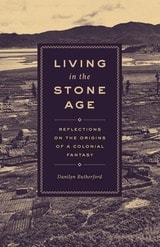
Living in the Stone Age
Reflections on the Origins of a Colonial FantasyDanilyn Rutherford
University of Chicago Press, 2018
Living in the Stone Age answers this question by following the adventures of officials sent to the New Guinea highlands in the 1930s to establish a foothold for Dutch colonialism. These officials became deeply dependent on the good graces of their would-be Papuan subjects, who were their hosts, guides, and, in some cases, friends. Danilyn Rutherford shows how, to preserve their sense of racial superiority, these officials imagined that they were traveling in the Stone Age—a parallel reality where their own impotence was a reasonable response to otherworldly conditions rather than a sign of ignorance or weakness. Thus, Rutherford shows, was born a colonialist ideology.
Living in the Stone Age is a call to write the history of colonialism differently, as a tale of weakness not strength. It will change the way readers think about cultural contact, colonial fantasies of domination, and the role of anthropology in the postcolonial world.