Results by title
80 books match the query 'Community development' and 2 start with l
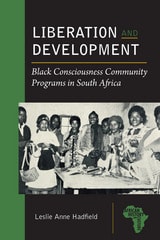
Liberation and Development
Black Consciousness Community Programs in South AfricaLeslie Anne Hadfield
Michigan State University Press, 2016
Liberation and Development: Black Consciousness Community Programs in South Africa is an account of the community development programs of the Black Consciousness movement in South Africa. It covers the emergence of the movement’s ideas and practices in the context of the late 1960s and early 1970s, then analyzes how activists refined their practices, mobilized resources, and influenced people through their work. The book examines this history primarily through the Black Community Programs organization and its three major projects: the yearbook Black Review, the Zanempilo Community Health Center, and the Njwaxa leatherwork factory. As opposed to better-known studies of antipolitical, macroeconomic initiatives, this book shows that people from the so-called global South led development in innovative ways that promised to increase social and political participation. It particularly explores the power that youth, women, and churches had in leading change in a hostile political environment. With this new perspective on a major liberation movement, Hadfield not only causes us to rethink aspects of African history but also offers lessons from the past for African societies still dealing with developmental challenges similar to those faced during apartheid.
[more]
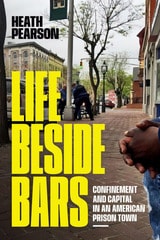
Life beside Bars
Confinement and Capital in an American Prison TownHeath Pearson
Duke University Press, 2024
In Life beside Bars, Heath Pearson showcases dynamic, interdependent community as the best hope for undoing the systems of confinement that reproduce capital in Cumberland County, New Jersey—a place that is home to three state prisons, one federal prison, and the regional jail. Pearson places today’s prisons within the region’s longer history of Lenape genocide, chattel slavery, Japanese American labor camps, and other forms of racialized punishment and carceral control. From this vantage, prisons appear not as the structural fix for the region’s failed political economy but as a continuation of the carceral principle that has always sustained it. This ongoing use of confinement, though, is merely the backdrop. Through ethnographic vignettes written in story form, Pearson offers an alternative history of the unruly and unexpected ways that people resist, get by, make money, find joy, and build radical social life in the small, unseen spaces beside large-scale confinement. As such, Pearson enriches our understanding of daily life in and around prisons—in any American community—while providing a kaleidoscope of possibilities for theorizing and organizing alternative paths.
[more]