Results by title
98 books match the query 'Control' and 2 start with l
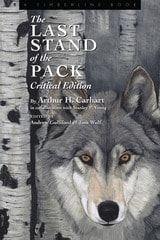
Last Stand of the Pack
Critical EditionAndrew Gulliford
University Press of Colorado, 2017
This critical edition explores the past and future of wolves in Colorado. Originally published in 1929, The Last Stand of the Pack is a historical account of the extermination of what were then believed to be the last wolves in Colorado. Arthur H. Carhart and Stanley P. Young describe the wolves’ extermination and extoll the bravery of the federal trappers hunting them down while simultaneously characterizing the wolves as cunning individuals and noble adversaries to the growth of the livestock industry and the settlement of the West. This is nature writing at its best, even if the worldview expressed is at times jarring to the twenty-first-century reader.
Now, almost 100 years later, much has been learned about ecology and the role of top-tier predators within ecosystems. In this new edition, Carhart and Young’s original text is accompanied by an extensive introduction with biographical details on Arthur Carhart and an overview of the history of wolf eradication in the west; chapters by prominent wildlife biologists, environmentalists, wolf reintroduction activists, and ranchers Tom Compton, Bonnie Brown, Mike Phillips, Norman A. Bishop, and Cheney Gardner; and an epilogue considering current issues surrounding the reintroduction of wolves in Colorado. Presenting a balanced perspective, these additional chapters address views both in support of and opposed to wolf reintroduction.
Coloradans are deeply interested in wilderness and the debate surrounding wolf reintroduction, but for wolves to have a future in Colorado we must first understand the past. The Last Stand of the Pack: Critical Edition presents both important historical scholarship and contemporary ecological ideas, offering a complete picture of the impact of wolves in Colorado.
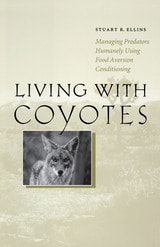
Living with Coyotes
Managing Predators Humanely Using Food Aversion ConditioningBy Stuart R. Ellins
University of Texas Press, 2005
The coyote may well be North America's most adaptable large predator. While humans have depleted or eliminated most other native predators, the coyote has defied all attempts to exterminate it, simultaneously expanding its range from coast to coast and from wilderness to urban areas. As a result, coyotes are becoming the focus of increasing controversy and emotion for people across the continent— from livestock growers who would like to eradicate coyotes to conservationists who would protect them at any cost.
In this thoughtful, well-argued, and timely book, Stuart Ellins makes the case that lethal methods of coyote management do not work and that people need to adopt a more humane way of coexisting with coyotes. Interweaving scientific data about coyote behavior and natural history with decades of field experience, he shows how endlessly adaptive coyotes are and how attempts to kill them off have only strengthened the species through natural selection. He then explains the process of taste aversion conditioning—which he has successfully employed—to stop coyotes from killing domestic livestock and pets. Writing frankly as an advocate of this effective and humane method of controlling coyotes, he asks, "Why are we mired in the use of archaic, inefficient, unsophisticated, and barbaric methods of wildlife management in this age of reason and high technology? This question must be addressed while there is still a wildlife to manage."