Results by title
60 books match the query 'Corrupt practices' and 2 start with l
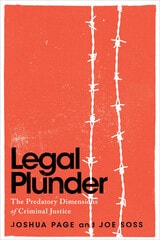
Legal Plunder
The Predatory Dimensions of Criminal JusticeJoshua Page and Joe Soss
University of Chicago Press, 2025
A searing, historically rich account of how US policing and punishment have been retrofitted over the last four decades to extract public and private revenues from America’s poorest and most vulnerable communities.
Alongside the rise of mass incarceration, a second profound and equally disturbing development has transpired. Since the 1980s, US policing and punishment have been remade into tools for stripping resources from the nation’s most oppressed communities and turning them into public and private revenues. Legal Plunder analyzes this development’s origins, operations, consequences, and the political struggles that it has created.
Drawing on historical and contemporary evidence, including original ethnographic research, Joshua Page and Joe Soss examine the predatory dimensions of criminal legal governance to show how practices that criminalize, police, and punish have been retrofitted to siphon resources from subordinated groups, subsidize governments, and generate corporate profits. As tax burdens have declined for the affluent, this financial extraction—now a core function of the country’s sprawling criminal legal apparatus—further compounds race, class, and gender inequalities and injustices. Legal Plunder shows that we can no longer afford to overlook legal plunder or the efforts to dismantle it.
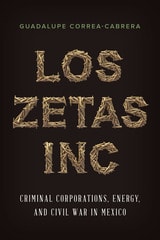
Los Zetas Inc.
Criminal Corporations, Energy, and Civil War in MexicoBy Guadalupe Correa-Cabrera
University of Texas Press, 2017
The rapid growth of organized crime in Mexico and the government’s response to it have driven an unprecedented rise in violence and impelled major structural economic changes, including the recent passage of energy reform. Los Zetas Inc. asserts that these phenomena are a direct and intended result of the emergence of the brutal Zetas criminal organization in the Mexican border state of Tamaulipas. Going beyond previous studies of the group as a drug trafficking organization, Guadalupe Correa-Cabrera builds a convincing case that the Zetas and similar organizations effectively constitute transnational corporations with business practices that include the trafficking of crude oil, natural gas, and gasoline; migrant and weapons smuggling; kidnapping for ransom; and video and music piracy.
Combining vivid interview commentary with in-depth analysis of organized crime as a transnational and corporate phenomenon, Los Zetas Inc. proposes a new theoretical framework for understanding the emerging face, new structure, and economic implications of organized crime in Mexico. Correa-Cabrera delineates the Zetas establishment, structure, and forms of operation, along with the reactions to this new model of criminality by the state and other lawbreaking, foreign, and corporate actors. Since the Zetas share some characteristics with legal transnational businesses that operate in the energy and private security industries, she also compares this criminal corporation with ExxonMobil, Halliburton, and Blackwater (renamed “Academi” and now a Constellis company). Asserting that the elevated level of violence between the Zetas and the Mexican state resembles a civil war, Correa-Cabrera identifies the beneficiaries of this war, including arms-producing companies, the international banking system, the US border economy, the US border security/military-industrial complex, and corporate capital, especially international oil and gas companies.