Results by title
69 books match the query 'Country life' and 6 start with l
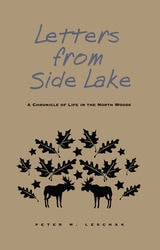
Letters From Side Lake
A Chronicle of Life in the North WoodsPeter M. Leschak
University of Minnesota Press, 1992
After a brief taste of urban life, and convinced that nothing equaled the formidable challenge of life in the heart of the vast woods, Peter M. Leschak returned to northern Minnesota. Letters from Side Lake chronicles the marvelous range of adventures and reflections-described with thoughtfulness and humor-springing from his pioneer-like existence. In Leschak's unique voice and beautifully crafted style, Letters from Side Lake captures the great pleasures and rugged feats and hardships of North Woods living.
"Letters from Side Lake is a celebration. Leschak revels in what he loves the best: the beauty of the north woods; the sweep of Andromeda across a black sky; the sleek thrust of his canoe slicing across a mirror-flat lake; and the simplicity of small-town life." -Washington Post Book World"A vivid, engaging book by a talented writer." -New York Times Book Review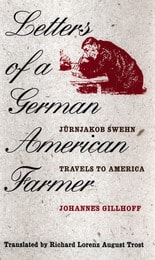
Letters of a German American Farmer
Juernjakob Swehn Travels to AmericaJohannes Gillhoff
University of Iowa Press, 2001
Early in the twentieth century, drawing upon the hundreds of letters written to his father by students who had emigrated to northeastern Iowa from Mecklenburg, in northeastern Germany, Johannes Gillhoff created the composite character of Juernjakob Swehn: the archetype of the upright, honest mensch who personified the German immigrant, on his way to a better life through ambition and hard work. Gillhoff's farmer-hero, planting and harvesting his Iowa acres, joking with his neighbors during the snowy winters, building a church with his own hands, proved so popular with the German public that a million copies of Jürnjakob Swehn der Amerikafahrer are in print. Now for the first time this wise and endearing book is available in English.
“First, let's talk about pigs,”Juernjakob Swehn writes from his farm in Iowa. “In America, pigs have a curly tail and talk in Low German so I can understand them.” Swehn builds a log house and makes a success of farming, marries a woman who's “a whole different nation that has its confidence from the inside,” raises a family, and becomes an elder in the Lutheran church. He recognizes his good fortune but acknowledges that memories of his village grow stronger every year, that “being homesick is the best thing that home can do for you …no power on earth holds on to you like your homeland.” It is this sense of home, both in Iowa and in Mecklenburg, that makes Juernjakob Swehn appeal to today's readers as much as he appealed to readers in 1916.
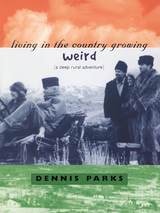
Living In The Country Growing Weird
A Deep Rural AdventureDennis Parks
University of Nevada Press, 2001
Parks created a pottery school that attracts students from around the world and developed for himself an international reputation as the creator of powerful, innovative works in clay. Meanwhile, he and his family had to master the skills required of those who choose to live in the back country--growing and hunting their own food, renovating or building from scratch the structures they needed for residences or studios, resolving conflicts with neighbors, inventing their own amusements. The transformation from middle-class urbanity to small-town simplicity is, as Parks reveals, a lurching and sometimes hilarious process, and the achievement of self-sufficiency is similarly fraught with unexpected challenges.
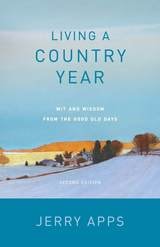
Living a Country Year
Wit and Wisdom from the Good Old DaysJerry Apps
Wisconsin Historical Society Press, 2018
“Even with the all the hard work, we had more time (perhaps we took more time) to enjoy what was all around us: nights filled with starlight, days with clear blue skies and puffy clouds. Wonderful smells everywhere—fresh mown hay, wildflowers, and apple blossoms. Interesting sounds—the rumble of distant thunder, an owl calling in the woods, a flock of Canada geese winging over in the fall.”
In this paperback edition of a beloved Jerry Apps classic, the rural historian tells stories from his childhood days on a small central Wisconsin dairy farm in the 1930s and 1950s. From a January morning memory of pancakes piled high after chores, to a June day spent learning to ride a pony named Ginger, Jerry moves through the turn of the seasons and teaches gentle lessons about life on the farm. With recipes associated with each month and a new introduction exclusive to this 2nd edition, Living a Country Year celebrates the rhythms of rural life with warmth and humor.
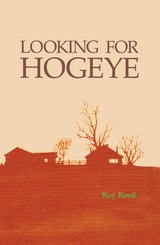
Looking for Hogeye
Roy Reed
University of Arkansas Press, 1986
In that always compelling yet simple style that has made Roy Reed one of the country’s foremost journalists, he shows us—as we share with him delightful moments and rich insights on the way to Hogeye—Southerners still different for being Southerners, and country Southerners who are even more so, pained by bruises and comforted by salves that are peculiarly their own.
“I hope that my city friends will not be upset to learn that this book is a little more sympathetic to the Arkansas hill people than it is to New Yorkers,” he says. “I have grown attached to cities over the years, but I am still, somewhere near my heart, a hillbilly. I have gone to a lot of trouble to remember that.”
This book is a special admission into those hills, to Vacation Bible School, tent meetings, sale barns, back roads and pool halls, to dog days in Hogeye.
To read Looking for Hogeye is to sit with Roy Reed on his wide front porch as he tells by the life he lives why, after Washington, London, and New York, he made his home in the north Arkansas hills, where he felt—as he puts it—”like Brer Rabbit reentering the briar patch.”
It is a visit not to be missed, and not to be forgotten.
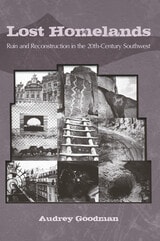
Lost Homelands
Ruin and Reconstruction in the 20th-Century SouthwestAudrey Goodman
University of Arizona Press, 2010
Through analyzing a variety of texts and images, Goodman illuminates the ways that modern forces such as militarization, environmental degradation, internal migration, and an increased border patrol presence have shattered the perception of a secure homeland in the Southwest. The deceptive natural beauty of the Southwest deserts shields a dark history of trauma and decimation that has remained as a shadow on the region’s psyche. The first to really synthesize such wide-ranging material about the effects of the atomic age in the Southwest, Goodman realizes the value of combined visual and verbal art and uses it to put forth her own original ideas about reconstructing a new sense of homeland.
Lost Homelands reminds us of the adversity and dislocation suffered by people of the Southwest by looking at the ways that artists, photographers, filmmakers, and writers have grappled with these problems for decades. In assessing the ruination of the region, however, Goodman argues that those same artists and writers have begun to reassemble a new sense of homeland from these fragments.