Results by title
81 books match the query 'Creation' and 3 start with l
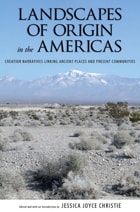
Landscapes of Origin in the Americas
Creation Narratives Linking Ancient Places and Present CommunitiesEdited and with an introduction by Jessica Joyce Christie
University of Alabama Press, 2009
By linking ancient places with present communities, Landscapes of Origin in the Americas explores how cultural landscapes sustain the continuity of origin narratives.
Landscape is a powerful factor in the operation of memory because of the associations narrators make between the local landscape and the events of the stories they tell. Ancestors and mythological events often become fixed in a specific landscape and act as timeless reference points.
In conventional anthropological literature, "landscape" is the term applied to the meaning local people bestow on their cultural and physical surroundings. In this work, the authors explore the cultural and physical landscapes an individual or cultural group has constructed to define the origins or beginnings of that cultural group as revealed through shared or traditional memory. The cultural landscapes of origins in diverse sites throughout the Americas are investigated through multidisciplinary research, not only to reveal the belief system and mythologies but also to place these origin beliefs in context and relationship to each other. In a continual interaction between the past, present, and future, time is subordinate to place, and history, as defined in Western academic terms, does not exist.
Learning to Trust in Freedom
Signs from Jewish, Christian, and Muslim TraditionsDavid B. Burrell, C.S.C.
University of Scranton Press, 2010
True religious faith cannot be confirmed by any external proofs. Rather, it is founded on a basic act of trust—and the common root of that trust, for Jewish, Christian, and Islamic traditions, is a belief in the divine creation of the universe. But with Learning to Trust in Freedom, David B. Burrell asks the provocative question: How do we reach that belief, and what is it about the universe that could possibly testify to its divine origins? Even St. Augustine, he points out, could only find faith after a harrowing journey through the lures of desire—and it is that very desire that Burrell seizes on as a tool with which to explore the origin and purpose of the world. Delving deep into the intertwinings of desire and faith, and drawing on St. John of the Cross, Edith Stein, and Charles Taylor, Burrell offers a new understanding of free will, trust, and perception.

Louis Riel and the Creation of Modern Canada
Mythic Discourse and the Postcolonial StateJennifer Reid
University of Manitoba Press, 2008