Results by title
476 books match the query 'Criticism' and 16 start with l
Labyrinths
Explorations in the Critical History of IdeasRichard Wolin
University of Massachusetts Press, 1995
This book offers a series of probing reflections on issues at the heart of recent debates in philosophy, literary theory, and intellectual history. In ten powerfully articulated essays, Richard Wolin calls into question the implied radicalism of the so-called postmodern turn, exposes the unstated agenda of neoconservative cultural theory, and provides a major reinterpretation of Walter Benjamin’s place in contemporary cultural studies.
At the center of the book lie the peculiar and troubling affinities between two groups of cultural critics usually seen as antithetical: the radical conservative thinkers of Germany’s Weimar Republic and the French poststructuralists who came to the prominence in the aftermath of the May 1968 uprising.
Wolin concludes the volume with a cogent reappraisal of “antihumanism” as a leitmotif of postwar French intellectual culture, along with a reassessment of the “de Man affair” and its implications for the poststructuralist interpretation of fascism.
Lacan in Public
Psychoanalysis and the Science of RhetoricChristian Lundberg
University of Alabama Press, 2012
Lacan in Public argues that Lacan’s contributions to the theory of rhetoric are substantial and revolutionary and that rhetoric is, in fact, the central concern of Lacan’s entire body of work.
Lacan’s conception of rhetoric, Christian Lundberg argues in Lacan in Public, upsets and extends the received wisdom of American rhetorical studies—that rhetoric is a science, rather than an art; that rhetoric is predicated not on the reciprocal exchange of meanings, but rather on the impossibility of such an exchange; and that rhetoric never achieves a correspondence with the real-world circumstances it attempts to describe.
As Lundberg shows, Lacan’s work speaks directly to conversations at the center of current rhetorical scholarship, including debates regarding the nature of the public and public discourses, the materiality of rhetoric and agency, and the contours of a theory of persuasion.
Lagos Never Spoils
Nollywood and Nigerian City LifeConnor Ryan
University of Michigan Press, 2023
Winner of the Society for Cinema and Media Studies, Media Industries Scholarly Interest Group Outstanding Book Award
The slogan “Lagos shall not spoil,” found in print media, political campaigns, and common conversation, represents a shared expression of the optimism the city embodies. However, on city streets the phrase also appears scrawled in irreverent variations—“Lagos cannot spoil more than this!”—that meet the frustrations of city life with irony. In both cases, the slogan captures the resilience and persistence with which residents of Lagos live on, despite it all. This book examines the circumstances that make it possible for residents to persist in pursuing their various projects and for the city to remain a platform that supports these projects and creates space for even more to emerge. Author Connor Ryan argues that residents continually work to combine contingency and endurance in opportunistic ways that make the city work for them, and as such, Lagos never spoils: it endures.
What makes Lagos remarkable is what residents have made of it, and Nollywood—the industry and the body of films—both embodies and represents this continual urban transformation. Lagos Never Spoils traces how Nollywood arose from the social milieu of Lagos and, in turn, generates a repertoire of stories, images, styles, and sentiments with which audiences come to grips with city life. The book traces the evolution of the screen media industry in Lagos and explores how this corresponds with historical phases in the city’s representation onscreen. It discusses important urban spaces of production and consumption, including historic movie halls, video marketplaces, film sets, and multiplex cinemas. Across six chapters, it attends to celluloid films about oil-boom wealth, television sitcoms about urban tricksters, video melodramas about urban crisis, glossy romantic comedies about young professionals, and dark thrillers on streaming platforms about the pleasure of moral transgression. In this fashion, the book offers new approaches to the interpretation of screen texts produced in and about Lagos, a place that is today the most influential image of West African city life.
Lateness and Longing
On the Afterlife of PhotographyGeorge Baker
University of Chicago Press, 2023
Beginning in the 1990s, a series of major artists imagined the expansion of photography, intensifying its ideas and effects while abandoning many of its former medium constraints. Simultaneous with this development in contemporary art, however, photography was moving toward total digitalization.
Lateness and Longing presents the first account of a generation of artists—focused on the work of Zoe Leonard, Tacita Dean, Sharon Lockhart, and Moyra Davey—who have collectively transformed the practice of photography, using analogue technologies in a dissident way and radicalizing signifiers of older models of feminist art. All these artists have resisted the transition to the digital in their work. Instead—in what amounts to a series of feminist polemics—they return to earlier, incomplete, or unrealized moments in photography’s history, gravitating toward the analogue basis of photographic mediums. Their work announces that photography has become—not obsolete—but “late,” opened up by the potentially critical forces of anachronism.
Through a strategy of return—of refusing to let go—the work of these artists proposes an afterlife and survival of the photographic in contemporary art, a formal lateness wherein photography finds its way forward through resistance to the contemporary itself.
Latin Americanism
Roman De La Campa
University of Minnesota Press, 1999
Analyzes the way North American academics have constructed Latin America.
In this timely book, Román de la Campa asks to what degree the Latin America studied in U.S. academies is actually an entity “made in the U.S.A.” He argues that there is an ever-increasing gap between the political, theoretical, and financial pressures affecting the U.S. academy and Latin America’s own cultural, political, and literary practices, and considers what this new Latin Americanism has to say about the claims of poststructuralism, postmodern theory, and deconstruction.
De la Campa focuses on the conduct of Latin American literary criticism in U.S. universities and compares this with the “Latin Americanism” of Latin America itself. He examines the translation of Latin American works into English, the careerism of U.S. intellectuals, the conduct of Latin American literary criticism in English, and the diaspora of Third World intellectuals. In a reconsideration of the vogue in Latin American literature and magical realism in light of new work by theorists residing in Latin America, he contrasts this work with critiques of Latin American discourses in the United States.A critique of postmodern and postcolonial constructions as articulated differently in the United States and Latin America, this hard-hitting but fair-minded book provides a postdeconstructive perspective on culture and literature. ISBN 0-8166-3116-6 Cloth £00.00 $47.95xxISBN 0-8166-3117-4 Paper £00.00 $18.95x224 Pages 5 7/8 x 9 JuneCultural Studies of the Americas Series, volume 3Translation inquiries: University of Minnesota Press
Lectures and Essays in Criticism
The Complete Prose Works of Matthew ArnoldMatthew Arnold; Edited by R. H. Super
University of Michigan Press, 1962
Lionel Trilling and the Fate of Cultural Criticism
Mark Krupnick
Northwestern University Press, 1986
Listening to Images
Tina M. Campt
Duke University Press, 2017
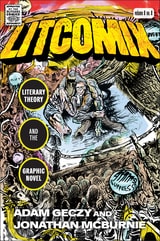
Litcomix
Literary Theory and the Graphic NovelAdam Geczy
Rutgers University Press, 2023
Using the methodology of Georg Lukács and his detailed defense of literary realism as a socially embedded practice, Litcomix tackles difficult questions about reading graphic novels as literature. What critical standards should we use to measure the quality of a graphic novel? How does the genre contribute to our understanding of ourselves and the world? What qualities distinguish it from other forms of literature?
LitComix hones its theoretical approach through case studies taken from across the diverse world of comics, from Yoshihiro Tatsumi’s groundbreaking manga to the Hernandez Brothers’ influential alt-comix. Whether looking at graphic novel adaptations of Proust or considering how Jack Kirby’s use of intertextuality makes him the Balzac of comics, this study offers fresh perspectives on how we might appreciate graphic novels as literature.
Literary Theory
An IntroductionTerry Eagleton
University of Minnesota Press, 1996
Literature and Social Practice
Edited by Philippe Desan, Priscilla Parkhurst Ferguson, and Wendy Griswold
University of Chicago Press, 1989
Convinced that literature and society are essentially related to each other, the contributors to this collection attempt to define the various sociological practices of literature and to give expression to this enterprise and the commitments of its partisans. In various ways, the essays assembled here seek to integrate text, institution, and individual (both author and critic) as necessary parts of the analysis of literature. Diverse, sometimes contradictory approaches to literature (Marxism, publishing history, new historicism, and others) are utilized as the contributors explore such topics as text, author-function, and appropriation; the reality of representation; the sociology of exchange; the uses of "serious" fiction; poetry and politics; publishing history; and the literary field.
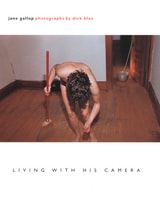
Living with His Camera
Jane Gallop
Duke University Press, 2003
Living with His Camera is Gallop’s nuanced meditation on photography and the place it has in her private life and in her family. A reflection on family, it attempts—like Blau’s photographs themselves—to portray the realities of family life beyond the pieties of conventional representations. Living with His Camera is about some of the most pressing issues of visuality and some of the most basic issues of daily life. Gallop considers intimate photographs of moments both dramatic and routine: of herself giving birth to son Max or crying in the midst of an argument with Blau, pouring herself cereal as Max colors at the breakfast table, or naked, sweeping the floor. With her trademark candor, humor, and critical acumen, Gallop mixes personal reflection with close readings of Roland Barthes’s Camera Lucida, Susan Sontag’s On Photography, Kathryn Harrison’s novel Exposure, and Pierre Bourdieu’s Photography.
Presenting his photographs and her text, Living with His Camera is a portrait of a couple whose professional activity is part of their private lives and whose private life is viewed through their professional gazes. While most of us set aside rigorous thought when we turn to the sentimental realm of home life, Gallop and Blau look at each other not only with great affection but also with the keen focus of a sharp, critical gaze.
Local Transcendence
Essays on Postmodern Historicism and the DatabaseAlan Liu
University of Chicago Press, 2008
In the essays collected in Local Transcendence, Alan Liu takes the pulse of such postmodern historicism by tracking two leading indicators of its acceleration in the late twentieth and early twenty-first centuries: postmodern cultural criticism—including the new historicism, the new cultural history, cultural anthropology, the new pragmatism, and postmodern and postindustrial theory—and digital information technology. What is the relation between the new historicist anecdote and the database field, Liu asks, and can either have a critical function in the age of postmodern historicism? Local Transcendence includes two previously unpublished essays and a synthetic introduction in which Liu traverses from his earlier work on the theory of historicism to his recent studies of information culture to propose a theory of contingent method incorporating a special inflection of history: media history.

Log Construction
In The Ohio Country, 1750-1850Donald A. Hutslar
Ohio University Press, 1992
Hutslar’s extensive fieldwork is valuable to students of vernacular architecture and preservationists and this abridged paperback edition of his book is a boon to travelling or local history buffs who can refer to this wealth of information at their leisure.
Lost Russia
Photographing the Ruins of Russian ArchitectureWilliam Craft Brumfield
Duke University Press, 1995
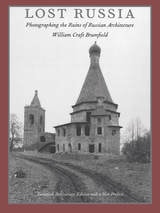
The twentieth century in Russia has been a cataclysm of rare proportions, as war, revolution, famine, and massive political terror tested the limits of human endurance. The results of this assault on Russian culture are particularly evident in ruined architectural monuments, some of which are little known even within Russia itself. Over the past four decades William Craft Brumfield, noted historian and photographer of Russian architecture, has traveled throughout Russia and photographed many of these neglected, lost buildings, poignant and haunting in their ruin. Lost Russia provides a unique view of Brumfield’s acclaimed work, which illuminates Russian culture as reflected in these remnants of its distinctive architectural traditions.
Capturing the quiet, ineffable beauty that graces these buildings, these photographs are accompanied by a text that provides not only a brief historical background for Russian architecture, but also Brumfield’s personal impressions, thoughts, and insights on the structures he views. Churches and monasteries from the fifteenth to the twentieth century as well as abandoned, ruined manor houses are shown—ravaged by time, willful neglect, and cultural vandalism. Brumfield also illustrates examples of recent local initiatives to preserve cultural landmarks from steady decline and destruction.
Concluding with photographs of the remarkable log architecture found in Russia’s far north, Lost Russia is a book for all those concerned with the nation’s cultural legacy, history, and architecture, and with historic and cultural preservation generally. It will also interest those who appreciate the fine art of exceptional photography.
Luckpilled
Compassion, Justice, and Hope in a World Nobody DeservesAaron Rabinowitz
Rutgers University Press, 2027
What if everything we experience comes down to luck? Humans have struggled with anxiety about the pervasiveness of luck since the concept first arose in ancient societies, and attempts to address the problem have shaped the modern world. Yet the problem of luck has persisted because resolving it requires letting go of a tenacious group of deeply rooted illusions centered on the need to feel that people mostly get what they deserve.
In Luckpilled: Compassion, Justice, and Hope in a World Nobody Deserves, Aaron Rabinowitz combines cutting-edge work on the philosophy, psychology, politics, and pedagogy of luck to argue that we are better off embracing the pervasiveness of luck and abandoning harmful illusions that preserve an unjust status-quo. Using the luckpilling techniques offered in this book can help readers to cultivate compassion, empathy, gratitude and humility, as well as a stronger connection to activities they find meaningful.