Results by title
434 books match the query 'Criticism & Theory' and 9 start with l

Largesse
Jean Starobinski
University of Chicago Press, 1997
Jean Starobinski, noted literary critic and intellectual historian from the University of Geneva, was selected as the third curator in the program. In his exhibition and accompanying essay, Starobinski explores the theme of largesse in its broadest sense. Arguing that gift giving and receiving are fundamental human gestures, he examines graphic and textual representations from the offering of the apple to Eve to Salome's gift of the head of John the Baptist, from the giving of laws to the gift of death. Charity, the poetic gift, and the benefits of Fortune all play a role in Starobinski's extended meditation on the act of donation. Lavishly illustrated and
dazzling in its scope and imagination, Largesse is an exemplar of the rich intellectual work that can result from crossing disciplinary boundaries and considering history as a dense network of themes and allusions.
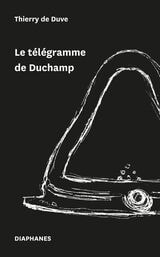
Le télégramme de Duchamp
French EditionThierry De Duve
Diaphanes, 2026
A new interpretation of the reception and legacy of Marcel Duchamp's controversial Fountain.
In 1917, Marcel Duchamp sent a “telegram” in the form of a urinal signed “R. Mutt.” When it arrived at its destination forty years later, it was both celebrated and vilified for proclaiming that anything could be art. From, that moment on, the entire Western art world was reconfigured as “Post-Duchamp.”
This new work from celebrated art historian and philosopher Thierry de Duve marks the completion of his decades-long effort to understand how Duchamp's Fountain marked a turning point in art history and to resolve the unprecedented problems this piece poses for philosophical aesthetics. Beyond shedding new light on the piece's initial reception and correcting certain historical errors, Le télégramme de Duchamp offers a bold interpretation of Fountain. Duve argues that Duchamp's urinal heralded the demise of the fine arts system and the advent of what he terms the system of “art in general." He further asserts, however, that this system did not originate in the 1960s but can be traced back to the 1880s. Duve's new book, therefore, shows that Duchamp was neither the creator nor agent of this new system, but rather its brilliant messenger.
Learning to Look
A Handbook for the Visual ArtsJoshua C. Taylor
University of Chicago Press, 1981
This handy guide to the visual arts is designed to provide a comprehensive view of art, moving from the analytic study of specific works to a consideration of broad principles and technical matters. Forty-four carefully selected illustrations afford an excellent sampling of the wide range of experience awaiting the explorer.
The second edition of Learning to Look includes a new chapter on twentieth-century art. Taylor's thoughtful discussion of pure forms and our responses to them gives the reader a few useful starting points for looking at art that does not reproduce nature and for understanding the distance between contemporary figurative art and reality.
Leonardo's Nephew
Essays on Art and ArtistsJames Fenton
University of Chicago Press, 2000
"Ingenious. . . . Intrigued by emerging and unstable reputations, [Fenton] introduces us to Leonardo da Vinci's half-brother's son Pierino: a precocious sculptor celebrated by Vasari but virtually forgotten since."—Publishers Weekly
"Not surprisingly, Fenton displays throughout the passionate attentiveness of a scholar, the enthusiasm of an amateur, and the urbane cleverness of an English journalist."—Washington Post Book World
"[Fenton] is not, like Baudelaire, a poet moonlighting as art critic; he is something else again—a poetic art historian." —Karen Wright, Observer
"These essays educate, enlighten, surprise and thrill, unfailingly."—Robin Lippincott, New York Times Book Review
Liquidity, Flows, Circulation
The Cultural Logic of EnvironmentalizationEdited by Mathias Denecke, Holger Kuhn, and Milan Stürmer
Diaphanes, 2022
Placed at the intersection of art, media, and cultural studies as well as economic theory, Liquidity, Flows, Circulation investigates the cultural logic of environmentalization. As flows, circulations, and liquidity resurface in all aspects of recent culture and contemporary art, this volume investigates the hypothesis of a genuine cultural logic of environmentalization through these three concepts.
It thus brings together two areas of research that have been largely separate. On the one hand, this volume takes up discussions about ecologies with and without nature and environmentalization as a contemporary form of power and capital. On the other hand, it takes its cue from Fredric Jameson’s notion that each stage of capitalism is accompanied by a genuine cultural logic. The volume introduces this current of materialist thinking into the ongoing discussions of ecologies and environmentalization. By analyzing contemporary art, architecture, theater, films, and literature, the fifteen contributions by scholars and artists explore different fields where liquid forms, semantics flow, or processes of circulation emerge as a contemporary cultural logic.
Literature and the Arts
Interdisciplinary Essays in Memory of James Anderson WinnAnna Battigelli
University of Delaware Press, 2024
Lives of the Imaginary Artists in Cold War California
Monica Steinberg
University of Chicago Press, 2025
This book explores how a group of real California artists created imaginary artists, engaging with the political climate of the Cold War era and frustrating the discipline of art history. They employed pseudonymity, obfuscation, anonymity, (auto)biografiction, imaginary portraiture, heteronymity, role-playing, doubling, and alter ego. Often laced with humor, these exploits facilitated stylistic experimentation, provoking reactions from art viewers and governing authorities alike, and disrupting reliance on documentation and attribution within art history.
In the 1950s and early 1960s, Ed Kienholz, Walter Hopps, Robert Alexander, Wally Hedrick, George Herms, and Wallace Berman activated imagined and secret identities, provoking reactions within a conservative environment gripped by communist paranoia. As political concerns shifted in the 1960s and 1970s to movements for peace and equality, artists including Billy Al Bengston, Ed Ruscha, Joe Goode, Lynda Benglis, Larry Bell, Judy Chicago, Lowell Darling, and Eleanor Antin redirected these tactics to probe the rise of celebrity culture and the administrative state. These practices also became the precursor for later interventions by Bruce Conner, Asco, Allen Ruppersberg, Senga Nengudi, and others.
Considering a compelling range of visual material, including paintings, sculptures, and performed intrusions as well as publications, postcards, and advertisements, Monica Steinberg examines why these imaginary artists appeared when and where they did—and to what ends.
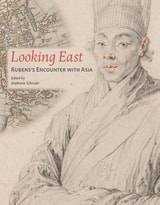
Looking East
Rubens’s Encounter with AsiaStephanie Schrader
J. Paul Getty Trust, The, 2013
Peter Paul Rubens’s fascinating depiction of a man wearing Korean costume of around 1617, in the collection of the J. Paul Getty Museum, has been considered noteworthy since it was made. Published to accompany an exhibition of Rubens’s Man in Korean Costume at the J. Paul Getty Museum from March 5 to June 9, 2013, Looking East: Rubens’s Encounter with Asia explores the various facets of Rubens’s compelling drawing of this Asian man that appears in later Rubens works. This large drawing was copied in Rubens’s studio during his own time and circulated as a reproductive print in the eighteenth century. Despite the drawing’s renown, however, the reasons why it was made and whether it actually depicts a specific Asian person remain a mystery. The intriguing story that develops involves a shipwreck, an unusual hat, the earliest trade between Europe and Asia, the trafficking of Asian slaves, and the role of Jesuit missionaries in Asia.
The book’s editor, Stephanie Schrader, traces the interpretations and meanings ascribed to this drawing over the centuries. Could Rubens have actually encountered a particular Korean man who sailed to Europe, or did he instead draw a model wearing Asian clothing or simply hear about such a person? What did Europeans really know about Korea during that period, and what might the Jesuits have had to do with the production of this drawing? All of these questions are asked and explored by the book’s contributors, who look at the drawing from various points of view.
Louise Bourgeois' Spider
The Architecture of Art-WritingMieke Bal
University of Chicago Press, 2001
Known for her commentary on the issue of temporality in art, Bal argues that art must be understood in relationship to the present time of viewing as opposed to the less-immediate contexts of what has preceded the viewing, such as the historical past of influences and art movements, biography and interpretation. In ten short chapters, or "takes," Bal demonstrates that the closer the engagement with the work of art, the more adequate the result of the analysis. She also confronts issues of biography and autobiography—key themes in Bourgeois's work—and evaluates the consequences of "ahistorical" experiences for art criticism, drawing on diverse sources such as Bernini and Benjamin, Homer and Eisenstein.
This short, beautiful book offers both a theoretical model for analyzing art "out of context" and a meditation on a key work by one of the most engaging artists of our era.