Results by title
304 books match the query 'Death' and 25 start with l
Language and Death
The Place of NegativityGiorgio Agamben
University of Minnesota Press, 2006

Learning Politics From Sivaram
The Life and Death of a Revolutionary Tamil Journalist in Sri LankaMark P. Whitaker
Pluto Press, 2007
This remarkable book is both an intimate portrait of the man and a fascinating account of the political dilemmas that he faced—and that still face us today. It explains how an educated man adopts a position of supporting violence. And while his position softens, Sivaram remains critical of the liberal principles that govern Western policy. Written by a close friend, this unique account highlights some of the most difficult political questions facing us today.
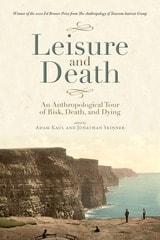
Leisure and Death
An Anthropological Tour of Risk, Death, and DyingAdam Kaul
University Press of Colorado, 2018
This anthropological study examines the relationship between leisure and death, specifically how leisure practices are used to meditate upon—and mediate—life. Considering travelers who seek enjoyment but encounter death and dying, tourists who accidentally face their own mortality while vacationing, those who intentionally seek out pleasure activities that pertain to mortality and risk, and those who use everyday leisure practices like social media or dogwalking to cope with death, Leisure and Death delves into one of the most provocative subsets of contemporary cultural anthropology.
These nuanced and well-developed ethnographic case studies deal with different and distinct examples of the intertwining of leisure and death. They challenge established conceptions of leisure and rethink the associations attached to the prospect of death. Chapters testify to encounters with death on a personal and scholarly level, exploring, for example, the Cliffs of Moher as not only one of the most popular tourist destinations in Ireland but one of the most well-known suicide destinations as well, and the estimated 30 million active posthumous Facebook profiles being repurposed through proxy users and transformed by continued engagement with the living. From the respectful to the fascinated, from the macabre to the morbid, contributors consider how people deliberately, or unexpectedly, negotiate the borderlands of the living.
An engaging, timely book that explores how spaces of death can be transformed into spaces of leisure, Leisure and Death makes a significant contribution to the burgeoning interdisciplinary literature on leisure studies and dark tourism. This book will appeal to students, scholars, and laypeople interested in tourism studies, death studies, cultural studies, heritage studies, anthropology, sociology, and marketing.
Contributors: Kathleen M. Adams, Michael Arnold, Jane Desmond, Keith Egan, Maribeth Erb, James Fernandez, Martin Gibbs, Rachel Horner-Brackett, Shingo Iitaka, Tamara Kohn, Patrick Laviolette, Ruth McManus, James Meese, Bjorn Nansen, Stravoula Pipyrou, Hannah Rumble, Cyril Schafer
Lesbian Death
Desire and Danger between Feminist and QueerMairead Sullivan
University of Minnesota Press, 2022
Engaging with fears of lesbian death to explore the value of lesbian beyond identity
The loss of lesbian spaces, as well as ideas of the lesbian as anachronistic has called into question the place of lesbian identity within our current culture. In Lesbian Death, Mairead Sullivan probes the perception that lesbian status is in retreat, exploring the political promises—and especially the failures—of lesbian feminism and its usefulness today.
Lesbian Death reads how lesbian is conceptualized in relation to death from the 1970s onward to argue that lesbian offers disruptive potential. Lesbian Death examines the rise of lesbian breast cancer activism in San Francisco in conversation with ACT UP, the lesbian separatist manifestos “The C.L.I.T. Papers,” the enduring specter of lesbian bed death, and the weaponization of lesbian identity against trans lives.
By situating the lesbian as a border figure between feminist and queer, Lesbian Death offers a fresh perspective on the value of lesbian for both feminist and queer projects, even if her value is her death.
Life And Death In Intensive Care
Joan Cassell
Temple University Press, 2005
Life Death
Jacques Derrida
University of Chicago Press, 2020
One of Jacques Derrida’s most provocative works, Life Death deconstructs a deeply rooted dichotomy of Western thought: life and death. In rethinking the relationship between life and death, Derrida undertakes a multi-disciplinary analysis of a range of topics across philosophy, linguistics, and the life sciences. Derrida gave this seminar over fourteen sessions between 1975 and 1976 at the École normale supérieure in Paris to prepare students for the agrégation, a notoriously competitive exam. The theme for the exam that year was “Life and Death,” but Derrida made a critical modification to the title by dropping the coordinating conjunction. The resulting title of Life Death poses a philosophical question about the close relationship between life and death. Through close readings of Freudian psychoanalysis, the philosophy of Nietzsche and Heidegger, French geneticist François Jacob, and epistemologist Georges Canguilhem, Derrida argues that death must be considered neither as the opposite of life nor as the truth or fulfillment of it, but rather as that which both limits life and makes it possible. Derrida thus not only questions traditional understandings of the relationship between life and death but also ultimately develops a new way of thinking about what he calls “life death.”

Life and Death in Central Apulia
Burial Practices and Italic Communities Between the Sixth and Third Centuries BCEBice Peruzzi
University of Wisconsin Press, 2027
Long overshadowed in ancient historiography, the Peucetians of Central Apulia are brought into focus for the first time in Life and Death in Central Apulia. Carefully examining Peucetian burial assemblages, archaeologist Bice Peruzzi traces a social history of this Italic people from the sixth to the third centuries BCE. She demonstrates that, far from being passive recipients of the more “advanced” cultures of their Greek or Roman neighbors, the Peucetians made nuanced, deliberate, and informed choices in the preparation and treatment of their dead, reflecting the complexities of individual, social, and cultural identities of the deceased. This indicates a mature culture, in full interaction with other Mediterranean peoples, and is visible and worthy of scholarly attention in its own right. This detailed study offers a fresh look at ancient Italy beyond the historiographic dominance of Greece and Rome and represents the recovery of one thread of a vibrant, ancient Mediterranean cultural tapestry.
Life and Death in a Venetian Convent
The Chronicle and Necrology of Corpus Domini, 1395-1436Sister Bartolomea Riccoboni
University of Chicago Press, 2000
While the chronicle recounts the history of the nuns' collective life, the necrology provides highly individualized biographies of nearly fifty women who died in the convent between 1395 and 1436. We follow the fascinating stories that led these women, from adolescent girls to elderly widows, to join the convent; and we learn of their cultural backgrounds and intellectual accomplishments, their ascetic practices and mystical visions, their charity and devotion to each other and their fortitude in the face of illness and death.
The personal and social meaning of religious devotion comes alive in these texts, the first of their kind to be translated into English.
Life and Death in the Ancient City of Teotihuacan
A Modern Paleodemographic SynthesisRebecca Storey
University of Alabama Press, 1992
Cities arose independently in both the Old World and in the pre-Columbian New World. Lacking written records, many of these New World cities can be studied only through archaeology, including the earliest pre-Columbian city, Teotihuacan, Mexico, one of the largest cities of its time (150 B.C. to A.D. 750). Thus, an important question is how similar New World cities are to their Old World counterparts.
Before recent times, the dense populations of cities made them unhealthy places because of poor sanitation and inadequate food supplies. Storey's research shows clearly that although Teotihuacan was a very different environment and culture from 17th-century London, these two great cities are comparable in terms of health problems and similar death rates.

Life and Death in the Central Highlands
An American Sergeant in the Vietnam War, 1968-1970James T. Gillam
University of North Texas Press, 2010
Life and Death on the New York Dance Floor, 1980–1983
Tim Lawrence
Duke University Press, 2016
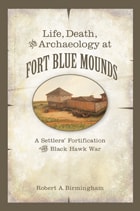
Life, Death, and Archaeology at Fort Blue Mounds
A Settlers’ Fortification of the Black Hawk WarRobert A. Birmingham
Wisconsin Historical Society Press, 2012
Life, Death, and Archaeology at Fort Blue Mounds is an archaeological detective story illuminating the lives of white settlers in the lead-mining region during the tragic events of the historically important conflict known as the Black Hawk War.
Focusing on the strategically located Fort Blue Mounds in southwestern Wisconsin, Robert A. Birmingham summarizes the 1832 conflict and details the history of the fort, which played a major role not only in U.S. military and militia operations but also in the lives of the white settlers who sought refuge there. Birmingham then transports us to the site decades later, when he and fellow Wisconsin Historical Society archaeologists and dedicated volunteers began their search for the fort. The artifacts they unearthed provide fascinating—and sometimes surprising—insights into the life, material culture, and even the food of the frontier.
Recommended for readers interested in the Black Hawk War, frontier life, Native American history, military history, and archaeology, Life, Death, and Archaeology at Fort Blue Mounds is grounded by a sense of place and the discovery of what a careful examination of our surroundings can tell us about the past.
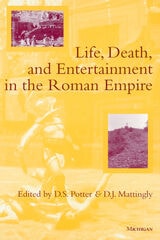
Life, Death, and Entertainment in the Roman Empire
D. S. Potter and D. J. Mattingly, Editors
University of Michigan Press, 1999
D. J. Mattingly is Professor of Roman Archaeology, University of Leicester.
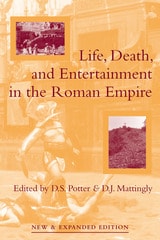
Life, Death, and Entertainment in the Roman Empire
D. S. Potter and D. J. Mattingly, Editors
University of Michigan Press, 2010
"[T]his handsomely-produced volume performs admirably as a series of introductions to sources, approaches, and the state of scholarship on major topics in Roman social history . . . Collections of essays come and go, but this one will stay in wide use. Each essay can stand alone but, tied together by the theme of dominance, the whole is greater than the sum of its parts."
---Donald Kyle, Bryn Mawr Classical Review
"This collection of essays is intended to serve as a coursebook for introductory lecture series on Roman civilization; the essays are concentrated on fundamental aspects of Roman society, and no prior knowledge of antiquity on the reader's part is assumed. . . . The book as a whole is entirely successful in its projected aim: an immense range of detailed information about antiquity is presented in readable and largely sophisticated discussion. . . . Increasingly we need to be able to suggest to our students reading that is introductory but also in-depth and challenging, and this book is one possible reading that we can offer."
---Ellen O'Gorman, Classical Review
Life, Death, and Entertainment gives those with a general interest in Roman antiquity a starting point, informed by the latest developments in scholarship, for understanding the extraordinary range of Roman society. Family structure, slavery, gender identity, food supply, religion, and entertainment---all crucial parts of the Roman world---are discussed here, in a single volume that offers an approachable guide for readers of all backgrounds. The collection unites a series of general introductions on each of these topics, bringing readers in touch with a broad range of evidence, as well as with a wide variety of approaches to basic questions about the Roman world.
The newly expanded edition includes historian Keith Hopkins' pathbreaking article on Roman slaves. Volume editor David Potter has contributed two new translations of documents from emperors Hadrian and Marcus Aurelius. Hadrian's letters document a reorganization of the festival cycle in the Empire and reassert the importance of the Olympic Games; the letter to Marcus provides the most important surviving evidence for how gladiatorial games were actually organized.
Contributors to the volume include Greg S. Aldrete, Hazel Dodge, Bruce W. Frier, Maud W. Gleason, Ann E. Hanson, Keith Hopkins, David J. Mattingly, and David S. Potter.
D.S. Potter is Professor of Classics and Arthur F. Thurnau Professor, University of Michigan.
D.J. Mattingly is Professor of Roman Archaeology, University of Leicester, and a Fellow of the British Academy.
Cover illustrations: top left, Karanis Excavation, courtesy Kelsey Museum; bottom right, Monte Testacchio, courtesy David J. Mattingly; center, Pollice Verso by Jean-Léon Gérôme, courtesy Phoenix Art Museum, Museum Purchase.
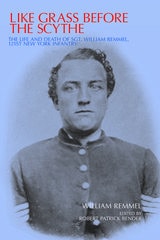
Like Grass before the Scythe
The Life and Death of Sgt. William Remmel 121st New York InfantryWilliam Remmel
University of Alabama Press, 2007
Sergeant William Remmel was a German immigrant who had settled with his parents and family in far upstate New York. His letters collected in Like Grass before the Scythe cover more than two full years of his service and provide details on military and social history in the eastern theater of operations and on the experience of the home front in upstate New York among a largely immigrant, working-class family and community.
Remmel wrote in English and apparently his parents responded in German. In addition to the important material on an immigrant family’s experience, Remmel also deals with the question of slavery, illness and hospital care (when he was wounded), the problem of hard war/total war, as well as the campaigns of Chancellorsville, Gettysburg, and the Shenandoah Valley in 1864.
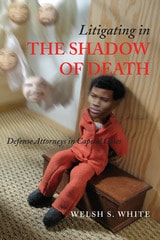
Litigating in the Shadow of Death
Defense Attorneys in Capital CasesWelsh S. White
University of Michigan Press, 2005
"Anyone who cares about capital punishment should read this compelling, lucid account of the obstacles defense attorneys face and the strategies they adopt."
--John Parry, University of Pittsburgh School of Law
"With its compelling narratives of cases, strategies, and ethical dilemmas, Litigating in the Shadow of Death is difficult to put down. . . . This pathbreaking book encapsulates the experience of the most respected capital defenders in America and shows how they save even the worst of the worst from execution. It also shows how sleeping and otherwise incompetent lawyers bring death sentences to their clients. Litigating in the Shadow of Death explores the lawyers' tasks at every stage of the criminal process--investigation, client interviewing, conferring with victims' families, plea bargaining, trial, appeal, and post-conviction proceedings."
--Albert W. Alschuler, Julius Kreeger Professor of Law and Criminology, University of Chicago
"A unique and profoundly important contribution to the literature on the death penalty. White allows the leading capital defense attorneys to speak in their own voices. His work reveals a new source of arbitrariness in the death system--whether the penalty is imposed turns more on who is your lawyer than on how evil was your deed or your character. Litigating in the Shadow of Death offers concrete guidelines for better lawyering, protection of the innocent, and understanding the artistry of the best capital attorneys. This is vivid, gripping stuff."
--Andrew Taslitz, Professor of Law, Howard University
"A most illuminating book by a splendid writer and an eminent critic of the capital punishment system."
--Yale Kamisar, Professor of Law, University of San Diego
"Welsh White has written another excellent book on the death penalty--this one on how defense attorneys in capital cases successfully prevent the state from executing their clients. Based on original research, Litigating in the Shadow of Death is informative and insightful. This is a book that all serious students of American capital punishment must read."
--Richard Leo, University of California, Irvine
Welsh S. White was Bessie McKee Walthour Endowed Chair and Professor of Law at the University of Pittsburgh.
Living Up to Death
Paul Ricoeur
University of Chicago Press, 2009
When French philosopher Paul Ricoeur died in 2005, he bequeathed to the world a highly regarded, widely influential body of work which established him as one of the greatest thinkers of our time. He also left behind a number of unfinished projects that are gathered here and translated into English for the first time.
Living Up to Death consists of one major essay and nine fragments. Composed in 1996, the essay is the kernel of an unrealized book on the subject of mortality. Likely inspired by his wife’s approaching death, it examines not one’s own passing but one’s experience of others dying. Ricoeur notes that when thinking about death the imagination is paramount, since we cannot truly experience our own passing. But those we leave behind do, and Ricoeur posits that the idea of life after death originated in the awareness of our own end posthumously resonating with our survivors.
The fragments in this volume were written over the course of the last few months of Ricoeur’s life as his health failed, and they represent his very last work. They cover a range of topics, touching on biblical scholarship, the philosophy of language, and the idea of selfhood he first addressed in Oneself as Another. And while they contain numerous philosophical insights, these fragments are perhaps most significant for providing an invaluable look at Ricoeur’s mind at work.
As poignant as it is perceptive, Living Up to Death is a moving testimony to Ricoeur’s willingness to confront his own mortality with serious questions, a touching insouciance, and hope for the future.
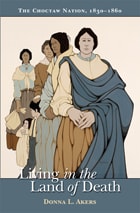
Living in the Land of Death
The Choctaw Nation, 1830-1860Donna L. Akers
Michigan State University Press, 2004
With the Indian Removal Act of 1830, the Choctaw people began their journey over the Trail of Tears from their homelands in Mississippi to the new lands of the Choctaw Nation. Suffering a death rate of nearly 20 percent due to exposure, disease, mismanagement, and fraud, they limped into Indian Territory, or, as they knew it, the Land of the Dead (the route taken by the souls of Choctaw people after death on their way to the Choctaw afterlife). Their first few years in the new nation affirmed their name for the land, as hundreds more died from whooping cough, floods, starvation, cholera, and smallpox.
Living in the Land of the Dead depicts the story of Choctaw survival, and the evolution of the Choctaw people in their new environment. Culturally, over time, their adaptation was one of homesteads and agriculture, eventually making them self-sufficient in the rich new lands of Indian Territory. Along the Red River and other major waterways several Choctaw families of mixed heritage built plantations, and imported large crews of slave labor to work cotton fields. They developed a sub-economy based on interaction with the world market. However, the vast majority of Choctaws continued with their traditional subsistence economy that was easily adapted to their new environment.
The immigrant Choctaws did not, however, move into land that was vacant. The U.S. government, through many questionable and some outright corrupt extralegal maneuvers, chose to believe it had gained title through negotiations with some of the peoples whose homelands and hunting grounds formed Indian Territory. Many of these indigenous peoples reacted furiously to the incursion of the Choctaws onto their rightful lands. They threatened and attacked the Choctaws and other immigrant Indian Nations for years. Intruding on others’ rightful homelands, the farming-based Choctaws, through occupation and economics, disrupted the traditional hunting economy practiced by the Southern Plains Indians, and contributed to the demise of the Plains ways of life.
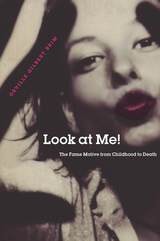
Look at Me!
The Fame Motive from Childhood to DeathOrville Gilbert Brim
University of Michigan Press, 2010
Four million adults in the United States say that becoming famous is the most important goal in their lives. In any random sampling of one hundred American adults, two will have fame as their consuming desire. What motivates those who set fame as their priority, where did the desire come from, how does the pursuit of fame influence their lives, and how is it expressed? Based on the research of Orville Gilbert Brim, award-winning scholar in the field of child and human development, Look at Me! answers those questions.
Look at Me! examines the desire to be famous in people of all ages, backgrounds, and social status and how succeeding or failing affects their lives and their personalities. It explores the implications of the pursuit of fame throughout a person's lifetime, covering the nature of the desire; fame, money, and power; the sources of fame; how people find a path to fame; the kinds of recognition sought; creating an audience; making fame last; and the resulting, often damaged, life of the fame-seeker.
In our current age of celebrity fixation and reality television, Brim gives us a social-psychological perspective on the origins of this pervasive desire for fame and its effects on our lives.
"Look at Me! is a fascinating in-depth study of society's obsession with fame. If you ever wondered what it's like to be famous, why fame comes to some and is sought by others, it's all here . . ."
---Jeffrey L. Bewkes, Chairman and CEO, Time Warner
"In a voice filled with wisdom and insight, daring and self-reflection, Orville Brim masterfully traces the developmental origins and trajectory of fame. Look at Me! lets us see---with new eyes---the cultural priorities and obsessions that feed our individual hunger and appetites. A rare and rewarding book."
---Sara Lawrence-Lightfoot, Emily Hargroves Fisher Professor of Education at Harvard University and author of Respect and The Third Chapter
Orville Gilbert Brim has had a long and distinguished career. He is the former director of the John D. and Catherine T. MacArthur Foundation Research Network on Successful Midlife Development, former president of the Foundation for Child Development, former president of the Russell Sage Foundation, and author and coauthor of more than a dozen books about human development, intelligence, ambition, and personality.
Cover image ©iStockphoto.com/susib
Looking and Seeing/Seeing and Looking
Damon Potter and Truong Tran
Omnidawn, 2023
This book brings together different perspectives under two titles, considering the lives and experiences of two friends, one Vietnamese American and one white. Looking And Seeing is a poetic work of yearning, regret, and righteous indignation. In Truong Tran’s poetry, what is said and what is written reveal our complexities. Composed as an investigation of his own being and body as a brown person moving through white spaces, this collection moves alongside Tran’s friend and collaborator Damon Potter. Seeing and Looking offers a record of Potter’s perspective as a white man examining who he is and wants to be and the complications of trying to be good while also benefiting from histories of oppression. Potter considers death—both his own future death and the deaths of his friends—while grappling with how to witness horrors, wonders, and his self.

Love
Tomas Espedal
Seagull Books, 2022
Love narrates celebrated Norwegian writer Tomas Espedal’s search for death. The decision blossoms within I—the I-person—"like some interior bloom, black and beautiful” on a warm spring day in May, and it is this resolution that fills his self-imposed final year with meaning: Death. It can be so beautiful. One must create this beauty for oneself. One must submit to this naturalness, one must choose it, like pulling the duvet over oneself in bed or jumping off a bridge. But almost immediately life deals I a wildcard: a new love affair brings some of the best days he’s ever known and threatens his pact with death. Will he be able to leave Aka and the child she’s carrying? He has put an endpoint on his life to intensify experience but is he sure that disappearing from their lives, becoming an absent father, is the best thing for all of them? Set against Espedal’s constant reference, the ebb and flow of the seasons, something close to ecstasy propels this most introspective of narratives towards a universal truth.
Love Is Strong as Death
A Biography of Franz RosenzweigPaul Mendes-Flohr
University of Chicago Press, 2026
Franz Rosenzweig (1886–1929) was one of the central figures of the Jewish cultural and intellectual renaissance in Weimar Germany. His masterwork, The Star of Redemption (1921), is a classic of existential thought and Jewish philosophy, and his considerable legacy also includes his collaboration with Martin Buber on a key translation of the Hebrew Bible into German and the establishment of an education center in Frankfurt that brought together the most important young German-Jewish intellectuals of its time.
Rosenzweig’s personal biography is no less fascinating than his ideas and accomplishments. Drawing on unprecedented access to Rosenzweig’s unpublished personal correspondence, Paul Mendes-Flohr skillfully weaves together the threads of Rosenzweig’s life to give us a moving portrait of this towering figure—from his near-conversion to Christianity to his tragic diagnosis with ALS. Mendes-Flohr also closely explores Rosenzweig’s relationship with Margrit Huessy, who was a vital intellectual partner for Rosenzweig, as well as a muse and lover. He worked out many of his ideas about love both in conversation and consort with her, and Mendes-Flohr shows the importance of intimacy—both romantic and platonic—in the development of Rosenzweig’s thought.
Love Is Strong as Death provides a unique and insightful look at one of the most important modern Jewish thinkers.
Love and Death in Renaissance Italy
Thomas V. Cohen
University of Chicago Press, 2004
Each of the chapters in this history chronicles a domestic drama around which the lives of ordinary Romans are suddenly and violently altered. You might read the gruesome murder that opens the book—when an Italian noble takes revenge on his wife and her bastard lover as he catches them in delicto flagrante—as straight from the pages of Boccaccio. But this tale, like the other stories Cohen recalls here, is true, and its recounting in this scintillating work is based on assiduous research in court proceedings kept in the state archives in Rome.
Love and Death in Renaissance Italy contains stories of a forbidden love for an orphan nun, of brothers who cruelly exact a will from their dying teenage sister, and of a malicious papal prosecutor who not only rapes a band of sisters, but turns their shambling father into a pimp! Cohen retells each cruel episode with a blend of sly wit and warm sympathy and then wraps his tales in ruminations on their lessons, both for the history of their own time and for historians writing today. What results is a book at once poignant and painfully human as well as deliciously entertaining.
Love... and Death
Talks on Contemporary and Perennial ThemesAbraham Kaplan
University of Michigan Press, 2025

Lovewell's Fight
War, Death, and Memory in Borderland New EnglandRobert E. Cray
University of Massachusetts Press, 2014
In May 1725, during a three-year conflict between English colonists and the Eastern Abenaki Nation, a thirty-four-man expedition led by Captain John Lovewell set out to ambush their adversaries, acquire some scalp bounties, and hasten the end of the war. Instead, the Abenakis staged a surprise attack of their own at Pigwacket, Maine, that left more than a third of the New Englanders dead or severely wounded. Although Lovewell himself was slain in the fighting, he emerged a martyred hero, celebrated in popular memory for standing his ground against a superior enemy force.
In this book, Robert E. Cray revisits the clash known as “Lovewell's Fight” and uses it to illuminate the themes of war, death, and memory in early New England. He shows how a military operation plagued from the outset by poor decision-making, and further marred by less-than-heroic battlefield behavior, came to be remembered as early America's version of the Alamo. The government of Massachusetts bestowed payouts, pensions, and land on survivors and widows of the battle, while early chroniclers drafted a master narrative for later generations to emboss. William Henry Longfellow, Nathaniel Hawthorne, and Henry David Thoreau kept the story alive for later generations. Although some nineteenth-century New Englanders disapproved of Lovewell's notoriety as a scalp hunter, it did not prevent the dedication of a monument in his honor at the Fryeburg, Maine, battlesite in 1904.
Even as the actual story of “Lovewell's Fight” receded into obscurity—a bloody skirmish in a largely forgotten war—it remained part of New England lore, one of those rare military encounters in which defeat transcends an opponent's victory to assume the mantle of legend.