Results by title
170 books match the query 'Death, Grief, Loss' and 9 start with l
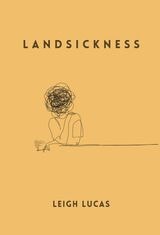
Landsickness
Leigh Lucas
Tupelo Press, 2024
Landsickness explores the inelegant progress of grief and pursues a relentless search for evidence of the beloved’s presence through the physics of splashes, the history of seasickness, and the science of depression. While full of tenderness, the poems employ humor and honesty to observe the ugliness of grief and the failure of elegy to restore the dead.
From the funeral to the office of her dead-end job to navigating the streets of New York, the speaker experiences a series of false starts as she learns to cope with her new life. Still, there is a real sense of progression in the collection’s end, even as the speaker continues to ask herself: “Why am I obsessed with the physics of his fall?"
Late Invocation for Magic
Jim Daniels
Michigan State University Press, 2026
In poems selected from his long career, Jim Daniels focuses on Detroit and other Rust Belt cities, where issues of class and race and justice play out in the streets and kitchens and backyards and garages of the Americans trying to live and make a living there. Known for his courage, clarity, and accessibility, Daniels examines the tension between our idealized country and the messier cultural and economic divides, often focusing on those who can’t afford or have access to “magic.”
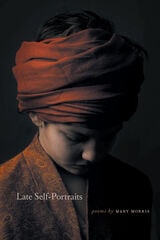
Late Self-Portraits
Mary Morris
Michigan State University Press, 2022
From “Dinner with Hades”:
He shows me a birthday cake, candled. My name is written in pomegranate
seeds. It’s like vertigo. Just before he seeks to devour, he halts to birdsong—
sound of goldfinch, bluebird, hawk, lilting of sparrows. Of whippoorwill
and dove. Wings flap, so many wings, a cool breeze as leaves unfurl into a
once forgotten green and I am back on earth, held in my mother’s arms.
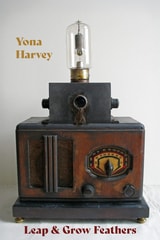
Leap & Grow Feathers
Yona Harvey
Four Way Books, 2026
Both an instruction and a divination, Leap & Grow Feathers is an extraordinary transmission. In her third full-length collection, Yona Harvey listens — to her predecessors, her instincts, and her environment — gleaning sense from the static fraying our nerves, knowing the personal and the historical travel along the same frequency. Responding to the physical disruption and emotional disassociation of of the COVID-19 pandemic, the poet argues that the societal insistence on returning to “business as usual” reflects an institutional, academic, and political ineptitude to provide either physiological healing or social repair, a structural denial that erodes our humanity. As authoritarianism and ecological devastation progressively encroach on our lives, these poems prioritize hoodoo, spirit, intuition, and ancestral conversations in their readings, invoking the carekeeping and persistence of Harriet Tubman, Nikki Giovanni, and the countless forbears, unnamed and named, who traveled the Middle Passage and the Kalunga Crossing. This book channels the power and promise of that legacy as well as the full emotional range of sisterhood, the heartache and borrowed strength and shared laughter. Its humor, whitespace, sparseness, and longform narratives elicit reader participation and, in turn, enduring consideration. "This float. This bob. This drown. This rock. // (This Rock. This Rock.) // This Great Goddamn." What do we find in this vastness, the simultaneity of the ever expanding time that lies ahead and full presence of history consolidating here now? An invitation to join Harvey in her vow: “May I never pretend, / May eye be I.” This collection unveils our vision so we can see it all, not only yesterday’s “Nina Simone lyric / Spun out over a newborn Sunday” in this very moment but also the music unfurling over each incipient morning of the future world we might build together. Leap & Grow Feathers describes and directs: everything we need to survive, to shelter one another, and to protect the Earth lives already in our bodies, our lineages, and our lore.
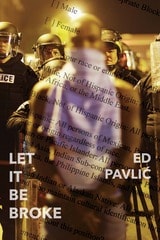
Let It Be Broke
Ed Pavlic
Four Way Books, 2020
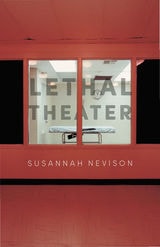
Lethal Theater
Susannah Nevison
The Ohio State University Press, 2019
Reckons with the rituals of violence that underpin the American prison system, asking readers to consider the act and complications of looking at violence and suffering.
In Lethal Theater, Susannah Nevison offers a stark and lyrical reckoning with the hidden architectures of the American prison system. These poems inhabit the charged territory where medicine and punishment converge, revealing how the body becomes both patient and instrument under state control. Moving through histories of wartime confinement, interrogation, and isolation, Nevison writes a poetry of witness to the carceral state, illuminating what is so often kept from view.
With precision and moral force, Nevison examines the shadows cast by medical experimentation on imprisoned bodies, the blurred boundary between hospital anesthesia and the drugs used in lethal injection protocols, and the rituals of surveillance that shape life behind bars. This is a work rooted in the medical humanities of confinement, an inquiry into how suffering is recorded, observed, and, at times, rendered invisible.
Lethal Theater makes visible the brutal logics beneath state-sanctioned pain and insists on the urgency—and responsibility—of looking closely at what the nation asks its incarcerated to endure.

Letters from the Black Ark
D.S. Marriott
Omnidawn, 2023
The poems in this collection center on the word “dub,” which accrues a subtle lyrical connotation throughout its various forms and meanings—to bestow, vest, crown, and also to suspend, reverb, echo, and sever. Dub poetry plays with revealing and concealing, while also pointing the way to the conditions that produce black poetic music. In D.S. Marriott’s poetry, tragic catastrophes of current black existence—London knife crime, the Windrush scandal, Grenfell, and deadly race violence—are portrayed as questions of language. To speak this language, as Marriott’s poem show, is to take on the forces that cause rupture. Throughout these poems of loss, exile, and obliteration, the poet foresees his downfall and metamorphosis, ultimately realizing too late that he cannot transcend the reverberations and echoes laden with black social death.
Levee
Paul Otremba
Four Way Books, 2019
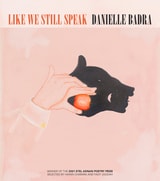
Like We Still Speak
Danielle Badra
University of Arkansas Press, 2021
Conversation and memory are at the heart of Danielle Badra’s Like We Still Speak, winner of the 2021 Etel Adnan Poetry Prize. In her elegiac and formally inventive debut, Badra carries on talking with the sister and father she has lost, often setting her words alongside theirs and others’ in polyphonic poems that can be read in multiple directions. Badra invites the reader to engage in this communal space where she investigates inheritance, witnessing, intimacy, and survival.
“This is a deeply spiritual book, all the more so because of its clarity and humility. Yet, we cannot walk away from the addictive command that so many of these poems ask us to follow: to read them along plural paths whose order changes while their immeasurable spirit remains unbound. Each poem is a singular vessel—of narratives, embodiments that correspond with memories, memories that recollect passion. . . . Like We Still Speak is a sanctum. Inside it, we are enthralled by beauty, consoled by light, sustained by making.”
—Fady Joudah and Hayan Charara, from the Preface