Results by title
603 books match the query 'Description and travel' and 27 start with l
Lake Country
A Series of JourneysKathleen Stocking
University of Michigan Press, 1994
Lake Effect
Along Superior’s ShoresErika Alin
University of Minnesota Press, 2003
Personal reflections on the natural splendors and human history of the Lake Superior shoreline
The 2,900-mile shoreline of Lake Superior offers some of the most beautiful scenery in the world: stunning juxtapositions of shape, color, and texture, from the birch and evergreen forests of Minnesota’s north shore and the maple-clad slopes of Wisconsin to Ontario’s granite outcrops and Michigan's sandstone shelves. Inhabited by hundreds of species of mammals, birds, and insects, the diverse ecosystems around Superior have also experienced human habitation for millennia.
In Lake Effect, writer Erika Alin explores both the natural and the human landscapes of Lake Superior, meditating on the rich geological, historical, and cultural events that have shaped the region. She begins her journey around Superior at the St. Louis River near Duluth and continues along the shores of the lake to Temperance River State Park, Grand Marais’s Artist’s Point, and Lake Superior Provincial Park. Following the Michigan and Wisconsin coasts, Alin visits the Keweenaw Peninsula, the Porcupine Mountains, and Chequamegon Bay before concluding at the south shore’s Brule River. Inspired by these and other places on the lake, Alin’s engaging essays delve into such diverse topics as the origins of river names, early Native American settlement, the exploits of seventeenth-century French-Canadian voyageurs, the breeding habits of ring-billed gulls, the contributions of women botanists, Canada’s Group of Seven painters, and aboriginal rock art. A holistic and deeply personal reflection on Superior’s shoreline, Lake Effect reveals a profound sensitivity to the natural world and a penetrating historical imagination.
Lake Superior
Grace Lee Nute
University of Minnesota Press, 2000
The captivating history of the world’s largest freshwater lake.
This classic history of Lake Superior, from the earliest explorations to the explosion of industry on its shores, takes the reader on a tour from Duluth to Isle Royale, from Thunder Bay to Sault Ste. Marie, from Pictured Rocks to the Apostle Islands. Grace Lee Nute tells the fascinating stories of the Native Americans, voyageurs, missionaries, and others who created the way of life that many generations have known on the edge of this magnificent body of water.
Land Between the Rivers
The Southern Illinois CountryC. William Horrell, Henry Dan Piper, John W. Voigt
Southern Illinois University Press, 1973
Surveying the area in words and pictures, the authors sensitively and appreciatively portray the region’s special qualities. Land Between the Rivers, a perennial classic since it was first published in 1973, provides an uncommon portrayal of American life in a distinct region, a memorable journey in both time and place.
Land and Wine
The French TerroirCharles Frankel
University of Chicago Press, 2014
For centuries, France has long been the world’s greatest wine-producing country. Its wines are the global gold standard, prized by collectors, and its winemaking regions each offer unique tasting experiences, from the spice of Bordeaux to the berry notes of the Loire Valley. Although grape variety, climate, and the skill of the winemaker are essential in making good wine, the foundation of a wine’s character is the soil in which its grapes are grown. Who could better guide us through the relationship between the French land and the wine than a geologist, someone who deeply understands the science behind the soil? Enter scientist Charles Frankel.
In Land and Wine, Frankel takes readers on a tour of the French winemaking regions to illustrate how the soil, underlying bedrock, relief, and microclimate shape the personality of a wine. The book’s twelve chapters each focus in-depth on a different region, including the Loire Valley, Alsace, Burgundy, Champagne, Provence, the Rhône valley, and Bordeaux, to explore the full meaning of terroir. In this approachable guide, Frankel describes how Cabernet Franc takes on a completely different character depending on whether it is grown on gravel or limestone; how Sauvignon yields three different products in the hills of Sancerre when rooted in limestone, marl, or flint; how Pinot Noir will give radically different wines on a single hill in Burgundy as the vines progress upslope; and how the soil of each château in Bordeaux has a say in the blend ratios of Merlot and Cabernet-Sauvignon. Land and Wine provides a detailed understanding of the variety of French wine as well as a look at the geological history of France, complete with volcanic eruptions, a parade of dinosaurs, and a menagerie of evolution that has left its fossils flavoring the vineyards.
Both the uninitiated wine drinker and the confirmed oenophile will find much to savor in this fun guide that Frankel has spiked with anecdotes about winemakers and historic wine enthusiasts—revealing which kings, poets, and philosophers liked which wines best—while offering travel tips and itineraries for visiting the wineries today.
Landscape Of Desire
Greg Gordon
Utah State University Press, 2003
Landscape of Desire powerfully documents and celebrates a place and the evolutions that occur when human beings are intimately connected to their surroundings. Greg Gordon accomplishes this with a tapestry of writing that interweaves land use history, natural history, experiential education, and personal reflection. He tracks the geomorphology of southern Utah as well as the creatures and plants his student group encounters, the history lessons (planned and unplanned), the trials and joys of gathering so many individuals into a cohesive will, and his own personal epiphanies, restraints, insights, and disillusionments.
Landscape of Desire examines the plight of the western landscape. It discusses a wide range of issues, including mining, grazing, dams, recreation, wilderness, and land management. Since recreation has replaced extraction industries as the primary use of wilderness, especially in southern Utah, Gordon addresses its impactful qualities. He overviews the history of the conflict between preservation and development and places these issues in a cultural context. The text is presented in a narrative format, following the individuals of one field course Gordon lead that explored Muddy Creek and the Dirty Devil River from Interstate 70 to Lake Powell. Though each chapter focuses on the geologic formation the group is traveling through, the plants, animals, ecology, and human impacts are all tightly woven into the narrative. Not only does the land affect the members of the field course, but their attitudes and insights affect the land.
In Landscape of Desire Gordon achieves a vision of wholeness of this popular and contested region of Utah that centers around the implications of being human and also stewards of the wild.
Las Vegas
The Great American PlaygroundRobert D. Mccracken
University of Nevada Press, 1996
Las Vegas: The Great American Playground, illustrated with many fine historical photographs, traces the city’s history from its first Native American occupants more than 10,000 years ago to its present status as a premier tourist destination. It is the story of a group of colorful, enterprising individuals who made the desert bloom with undreamed-of possibilities.
Leavetakings
EssaysCorinna Cook
University of Alaska Press, 2020
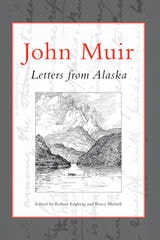
Letters From Alaska
John Muir
University of Alaska Press, 2009
John Muir (1838–1914), founder of the Sierra Club, was one of the most famous and influential environmental conservationists of all time. From 1879 to 1880 Muir traveled the waters of southeastern Alaska in a Tlingit Indian dugout canoe and reported his encounters in a series of letters published in the San Francisco Daily Evening Bulletin. Collected here are Muir’s original letters, bearing the immediacy and candor of his best work and providing a rare account of southeastern Alaska history, alongside breathtaking observations of glaciers and the untamed landscape. Through Muir we encounter gold miners, rogue towns, Taku Inlet, Glacier Bay, profiles of Tlingit Indians, and the infancy of the tourist industry. This collection of work by one of America’s foremost naturalists provides a magnificent look into early conservationist thought and one individual’s encounter with nature.
Letters from Alabama
Chiefly Relating to Natural HIstoryPhilip Henry Gosse, introduction by Harvey H. Jackson III, edited by Virginia Hamilton
University of Alabama Press, 1993
A naturalist's captivating portrait of Alabama's wildlife, landscapes, and people.
Philip Henry Gosse (1810-1888), a British naturalist, left home at age 17 and made his way to Alabama in 1838, where he had heard educated people were in demand. He was employed by Judge Reuben Saffold at Pleasant Hill in Dallas County as a teacher for about a dozen children of local landowners, but his principal interest was natural history. During the eight months he lived in th Black Belt he watched, listened, thought, took notes, and made sketches--activities that eventually led to Letters from Alabama. He lived among Alabamians, talked and listened to them, saw them at their best and their worst, and came to understand their hopes and fears. They were a part of the natural world, and he paid attention to them as any good scientist would. With the skills of a scientist and the temperament of an artist, Gosse set down an account of natural life in frontier Alabama that has no equal. Written to no one in particular, a common literary device of the period, the letters were first published in a magazine, and in 1859 appeared as a book. By that time Gosse was an established scholar and one of England’s most noted scientific illustrators.
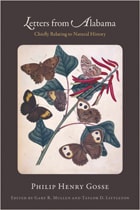
Letters from Alabama
Chiefly Relating to Natural HistoryPhilip Henry Gosse, Edited by Gary R. Mullen and Taylor D. Littleton
University of Alabama Press, 2013
New and improved edition of a naturalist's captivating portrait of Alabama's wildlife, landscapes, and people.
Philip Henry Gosse (1810–1888), a British naturalist, left home at age seventeen and made his way to Alabama in 1838. He was employed by Judge Reuben Saffold and other planters near Pleasant Hill in Dallas County as a teacher for about a dozen of their children, but his principal interest was natural history. Letters from Alabama is a personalized record of Gosse’s perceptive observations during his eight-month residence in this small antebellum community. The work addresses a Victorian readership, including entomologists, who Gosse believed were relatively uninformed about the novelty and beauty of this “hilly region of the State of Alabama.” Written in an engaging literary style and organized as a series of epistolary discussions, the book is unparalleled in its detailed evocations of the natural history and cultural conditions of frontier Alabama. By the time Letters from Alabama appeared in 1859, Gosse’s scientific publications and fine illustrations had led to his being elected a Fellow of the Royal Society of London.
Edited by Gary R. Mullen and Taylor D. Littleton, this authoritative edition features thirty grayscale lithographs shot directly from the 1859 edition, reset type for easier reading, a new introduction and index by the two foremost scholars of Gosse in Alabama, a new appendix that provides modern scientific and common names for the plant and animal species described by Gosse, and a four-color cover featuring one of the plates from Gosse’s Entomologia Alabamensis.

Letters from Spain
A Seventeenth-Century French Noblewoman at the Spanish Royal CourtMarie Gigault de Bellefonds
Iter Press, 2021
This volume includes her surviving letters from Madrid to her friend Madame de Coulanges and an appendix of her letters sent from Paris and Turin. The letters from Spain, written between 1679 and 1681, paint a vivid and engaging picture of the royal court and its new queen.

Letters from Togo
Susan Blake
University of Iowa Press, 1991
With her delightful prose and insight for detail Blake introduces us to Mahouna, her housekeeper, who runs a cold drink business from his refrigerator in a country where electricity is unreliable; to American Lee Ann and her Togolese family, who works at the American school to earn the fees for a private education for her children; and to the suave René, wearing silk shirts and a most seductive smile, who teeters on the edge of the Togolese and expatriate worlds.
Since Lomé is both an overgrown village and a cosmopolitan city, Blake's exhilarating, often humorous experiences range from buying a car to attending a traditional tom-tom funeral, from visiting people who hunt with bows and arrows to enduring faculty meetings, from negotiating the politics of buying produce to lecturing on Afro-American literature at the English Club. Together, her enlivening letters trace the pattern of adjusting to a foreign environment and probe the connections between Africa and this curious, energetic American. Not "out of Africa" but within it, they take advantage of time and perspective to penetrate the universal experience of being a stranger in a strange land.
Letters from the Leelanau
Essays of People and PlaceKathleen Stocking
University of Michigan Press, 1990
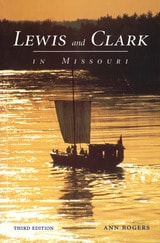
Lewis and Clark in Missouri
Ann Rogers
University of Missouri Press, 2002
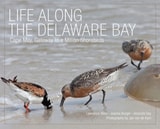
Life Along the Delaware Bay
Cape May, Gateway to a Million ShorebirdsNiles, Lawrence
Rutgers University Press, 2012
The Delaware Bay is the second largest and most diverse bay on the East Coast. It has a rich cultural history, has played an important role in the region’s commerce and tourism, and has spectacular and vital natural resources. Birdwatchers gather along its shores to watch the spectacle of thousands of spawning horseshoe crabs, the dense flocks of migrant shorebirds, the fall hawk migration, and the huge migration of monarch butterflies.
Life Along the Delaware Bay focuses on the area as an ecosystem, the horseshoe crab as a keystone species within that system, and the crucial role that the bay plays in the migratory ecology of shorebirds. An abundance of horseshoe crabs spawning on the Delaware Bay beaches results in an abundance of eggs brought to the surface, providing a source of high-quality food and bringing hundreds of thousands of shorebirds to the bay to forage in late May and early June. A dramatic decline in horseshoe crabs has resulted in a rapid and dramatic decline in birds, particularly the red knot. This decline has sounded an alarm throughout the world, prompting a host of biologists to converge on the bay each spring, to understand the biology and conservation of red knots and other shorebirds.
Lawrence Niles, Joanna Burger, and Amanda Dey examine current efforts to protect the bay and identify new efforts that must take place to ensure it remains an intact ecological system. Over three hundred stunning color photographs and maps capture the beauty and majesty of this unique treasure—one that must be protected today and for generations to come.
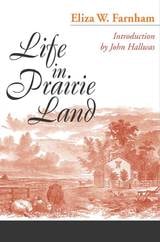
Life in Prairie Land
Eliza W. Farnham
University of Illinois Press, 1988
Life in Prairie Land is a complex portrait of the midwestern wilderness during the 1830s--beautiful and ugly, beneficent and threatening. Farnham's vivid recreation of her experiences on the Illinois frontier offers a realistic depiction of the harsh pioneer lifestyle as well as a romantic view of an Edenic landscape.
Life in Prairie Land includes descriptions of Farnham's encounters with early settlers and Native Americans, her eye-opening experiences with birth and death, the flora and fauna that surrounded her, and the developing towns she passed through in her travels. Farnham's years on the Illinois frontier showed her the possibilities of a less restrictive society and planted the seeds that would later grow into firmly held and eloquently expressed views on women's equality.
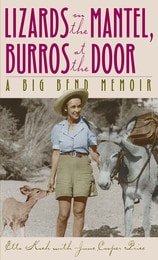
Lizards on the Mantel, Burros at the Door
A Big Bend MemoirBy Etta Koch with June Cooper Price
University of Texas Press, 1999
A woman who went West with her husband in the 1840s must have expected hardships and privation, but during the 1940s, when Etta Koch stopped off in Big Bend with her young family and a 23-foot travel trailer in tow, she anticipated no more than a civilized camping trip between her old home in Ohio and a new one in Arizona. It was only when she found herself moving into an old rock house without plumbing or electricity in the new Big Bend National Park that Etta realized, "From the sheltered life of a city girl of moderate circumstances, I too would have to face the reality of frontier living."
In this book based on her journals and letters, Etta Koch and her daughter June Cooper Price chronicle their family's first years (1944-1946) in the Big Bend. Etta describes how her photographer husband Peter Koch became captivated by the region as a place for natural history filmmaking-and how she and their three young daughters slowly adapted to a pioneer lifestyle during his months' long absences on the photo-lecture circuit. In vivid, often humorous anecdotes, she describes making the rock house into a home, getting to know the Park Service personnel and other neighbors, coping with the local wildlife, and, most of all, learning to love the rugged landscape and the hardy individuals who call it home.
Lone Star Vistas
Travel Writing on Texas, 1821-1861By Astrid Haas
University of Texas Press, 2021
Every place is a product of the stories we tell about it—stories that do not merely describe but in fact shape geographic, social, and cultural spaces. Lone Star Vistas analyzes travelogues that created the idea of Texas. Focusing on the forty-year period between Mexico’s independence from Spain (1821) and the beginning of the US Civil War, Astrid Haas explores accounts by Anglo-American, Mexican, and German authors—members of the region’s three major settler populations—who recorded their journeys through Texas. They were missionaries, scientists, journalists, emigrants, emigration agents, and military officers and their spouses. They all contributed to the public image of Texas and to debates about the future of the region during a time of political and social transformation. Drawing on sources and scholarship in English, Spanish, and German, Lone Star Vistas is the first comparative study of transnational travel writing on Texas. Haas illuminates continuities and differences across the global encounter with Texas, while also highlighting how individual writers’ particular backgrounds affected their views on nature, white settlement, military engagement, Indigenous resistance, African American slavery, and Christian mission.
Long Way Round
Through the Heartland by RiverJohn Hildebrand
University of Wisconsin Press, 2022
Wisconsin is in the midst of an identity crisis, torn by new political divisions and the old gulf between city and countryside. Cobbling rivers together, from the burly Mississippi to the slender wilds of Tyler Forks, Hildebrand navigates the beautiful but complicated territory of home. In once prosperous small towns, he discovers unsung heroes—lockmasters, river rats, hotelkeepers, mechanics, environmentalists, tribal leaders, and perennial mayors—struggling to keep their communities afloat.
While history doesn't flow in a circle, it doesn't always move in a straight line either. Hildebrand charts the improbable ox-bows along its course. Long Way Round shows us the open road as a river with possibility around the next bend.
Looking for America on the New Jersey Turnpike, Second Edition
Angus Kress Gillespie
Rutgers University Press, 2024
When Angus Gillespie and Michael Rockland wrote Looking for America on the New Jersey Turnpike in 1989, they simply wanted to express their fascination with a road that many commuters regarded with annoyance or indifference. Little did they expect that it would be hailed as a classic, listed by the state library alongside works by Whitman and Fitzgerald as one of the ten best books ever written about New Jersey or by a New Jerseyan.
Now Looking for America on the New Jersey Turnpike is back in a special updated and expanded edition, examining how this great American motorway has changed over the past thirty-five years. You’ll learn how the turnpike has become an icon inspiring singers and poets. And you’ll meet the many people it has affected, including the homeowners displaced by its construction, the highway patrol and toll-takers who work on it, and the drivers who speed down its lanes every day.
Los Angeles
The Development, Life, and Structure of the City of Two Million in Southern CaliforniaAnton Wagner
J. Paul Getty Trust, The, 2022
No book on the emergence of Los Angeles, today a metropolis of more than four million people, has been more influential or elusive than this volume by Anton Wagner. Originally published in German in 1935 as Los Angeles: Werden, Leben und Gestalt der Zweimillionenstadt in Südkalifornien, it is one of the earliest geographical investigations of a city understood as a series of layered landscapes. Wagner demonstrated that despite its geographical disadvantages, Los Angeles grew rapidly into a dominant urban region, bolstered by agriculture, real estate development, transportation infrastructure, tourism, the oil and automobile industries, and the film business. Although widely reviewed upon its initial publication, his book was largely forgotten until reintroduced by architectural historian Reyner Banham in his 1971 classic Los Angeles: The Architecture of Four Ecologies.
This definitive translation is annotated by Edward Dimendberg and preceded by his substantial introduction, which traces Wagner's biography and intellectual formation in 1930s Germany and contextualizes his work among that of other geographers. It is an essential work for students, scholars, and curious readers interested in urban geography and the rise of Los Angeles as a global metropolis.
“This fine new translation by Timothy Grundy of Anton Wagner's Los Angeles with Edward Dimendberg's lucidly probing introduction constitutes a major contribution to urban history and our understanding of one of the world's most enigmatic and significant cities.”
—Thomas S. Hines, Research Professor of History and Architecture and Urban Design, UCLA
“Edward Dimendberg has done a remarkable job bringing Anton Wagner's classic study of Los Angeles to a wider readership. This landmark publication will enable many strands of urban scholarship to enter into dialogue for the first time.”
—Matthew Gandy, Professor of Geography, University of Cambridge, and author of Natura Urbana: Ecological Constellations in Urban Space (2022)
“Anton Wagner was a prescient and troubling historical figure. Nearly a century ago, with his camera in hand, he walked Los Angeles in fervent exploration of metropolitan growth. This beautiful and expert book takes Wagner every bit as seriously as he took Los Angeles.”
—William Deverell, Director, Huntington-USC Institute on California and the West
"Anton Wagner’s geographic and ethnographic history of the urbanization of Los Angeles has long been unavailable to English-speaking readers. This early study, accompanied by Edward Dimendberg’s comprehensive introduction, will be of interest to all who, like Reyner Banham, admire its impressive scholarship and firsthand account of a city and ecology already in the throes of dynamic transformation."
—Joan Ockman, Vincent Scully Visiting Professor of Architectural History, Yale School of Architecture
"Encompassing copious photographs, insightful commentary, and thorough reconstruction of Wagner’s life and times, this new translation of Anton Wagner’s Los Angeles provides the missing link in scholarship about the metropolis during the early twentieth century. Its continuing relevance and controversial edge will appeal to urban researchers and college students beyond Southern California."
—Michael Dear, Professor Emeritus of City & Regional Planning, University of California, Berkeley
"Scholars of Los Angeles, or any city, must rejoice at this first proper English-language publication of Wagner's brilliant, if problematic, urban studies masterpiece. The edition is made accessible and relevant by Edward Dimendberg's indispensable prefatory material and contextualization."
—Roger Keil, Professor of Environmental and Urban Change, York University
“Finally translating this fascinating book into English fills an important gap in our historical knowledge of Los Angeles and its interpretation. Edward Dimendberg's invaluable introduction situates Anton Wagner in a comprehensive intellectual context. Of more than merely historical interest, this in-depth picture of Los Angeles in 1933 is essential reading for anyone interested in cities.”
—Margaret Crawford, Professor of Architecture, University of California, Berkeley
“This key text from 1935 for understanding Los Angeles urbanism is finally available in an excellent English translation by Timothy Grundy. Revelatory introductory essays by Anthony Vidler and Edward Dimendberg explain how German geographer (and later Nazi Party member) Anton Wagner was able to map and conceptualize the radical originality of this archetypal American metropolis in ways that deeply influenced Reyner Banham and so many subsequent writers on the city.”
—Robert Fishman, Taubman College of Architecture and Planning, University of Michigan
"Expertly annotated by Edward Dimendberg, Anton Wagner’s book on the growth of Los Angeles, which first appeared in German in 1935, is a landmark study in the history of urbanization. At the same time, it can be read as an example of transnational and comparative history, in which an observer from one country commented on developments in another. This volume will interest historians of the modern city, both in America and in Germany."
—Andrew Lees, Distinguished Professor of History Emeritus, Rutgers University
“Blending his wide knowledge and his acute wit, Edward Dimendberg has meticulously reconstructed the genesis of a forgotten doctoral thesis, which had remained unread for more than eighty years, despite its acknowledgement by Reyner Banham. This pioneering scholarly study of the Southern Californian metropolis is now available for the first time in English, inscribed with subtlety in both its German and its American contexts on the basis of thorough investigations.”
—Jean-Louis Cohen, Sheldon H. Solow Professor in the History of Architecture, Institute of Fine Arts, New York University
"This is the odyssey of a book written and published in 1930s Nazi Germany, forgotten after the war, and rediscovered by Reyner Banham in the ‘70s. Los Angeles is a seminal text of modern architectural history and confronts readers in the present with the paradox of an unknown classic.“
—Wolfgang Schivelbusch, author of The Railway Journey
“Finally, a translation of Anton Wagner’s Los Angeles, with extensive notes and a superb and deeply researched introduction by Edward Dimendberg, has arrived. It turns out that it was worth the wait. This volume is not only an important historic document, but a still-unrivaled portrait of a great city.”
—Robert Bruegmann, Distinguished Professor Emeritus of Art History, Architecture, and Urban Planning at the University of Illinois at Chicago and author of Sprawl: A Compact History
"Scholars of Los Angeles can rejoice that Anton Wagner’s legendary study of early 1930s Los Angeles is at last available in a masterful translation, with a luminous introduction by Edward Dimendberg that captures Wagner’s analytical brilliance as well as his troubling politics and racial views. An essential addition to any library of Southern California."
—Louis S. Warren, W. Turrentine Jackson Professor of Western U.S. History, University of California, Davis
“Anton Wagner’s study provides an invaluable and frequently perceptive window into the evolution of Los Angeles during the early twentieth century, showing how human agency transformed regional resources into a booming major city. The translation is immensely enhanced by Edward Dimendberg’s skillful provision of context, including fascinating intellectual history.”
—Stephen Bell, Professor of Geography and History, UCLA
"Los Angeles: The Development, Life, and Structure of the City of Two Million in Southern California has always had an elusive presence in the conversation about the explosive growth of the Southern California metropolis at the beginning of the twentieth century: an arcane text known to exist, but only accessible to very few. This expert first translation in English almost ninety years after it originally appeared in German is prefaced by a complex and engaging introduction by Edward Dimendberg that situates the original study in a multidisciplinary conversation. It elucidates the many ways this landmark essay on Los Angeles’s urban geography was not only filtered into subsequent scholarship on the city—Reyner Banham’s iconic Los Angeles: The Architecture of Four Ecologies in particular—but also how it resonates with contemporary debates about cities as complex social organisms. This book will be essential reading not only for historians of Los Angeles but for those interested in the theorization of the modern metropolis more broadly. That the volume editor addresses Wagner’s problematic views on race and territorial conquest front and center, within their historic context, only adds to the significance of this undertaking."
—Martino Stierli, The Philip Johnson Chief Curator of Architecture and Design, The Museum of Modern Art, New York
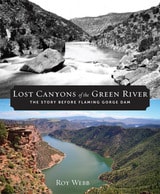
Lost Canyons of the Green River
The Story before Flaming Gorge DamRoy Webb
University of Utah Press, 2012
After more than 50 years of plans to dam the Green River, it finally happened in 1963 as part of the Colorado River Storage Project. Today many people enjoy boating and fishing on the resultant Flaming Gorge Reservoir, but few know about what lies under the water. Compared to Glen Canyon, Flaming Gorge has received little attention. In Lost Canyons of the Green River, Roy Webb takes the reader back in time to discover what lay along this section of the Green River before the Flaming Gorge Dam was built, and provides a historical account of this section of the Colorado River system.
A historian and a lifetime lover of rivers, Webb has spent decades exploring the region, digging into archives, and running the length of the Green River. The book chronicles the history that is most closely linked to the river and its bottomlands, sharing the stories of those who traveled the Green through Flaming Gorge and the other canyons now flooded by the reservoir, as well as those who lived, trapped, farmed, or ranched along its banks. In depicting the river of the past, Webb considers his book “a guidebook for a river you can no longer run.”
Finalist for the Utah Book Award in Nonfiction.
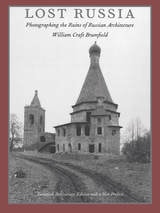
Lost Russia
Photographing the Ruins of Russian ArchitectureWilliam Craft Brumfield
Duke University Press, 1995
The twentieth century in Russia has been a cataclysm of rare proportions, as war, revolution, famine, and massive political terror tested the limits of human endurance. The results of this assault on Russian culture are particularly evident in ruined architectural monuments, some of which are little known even within Russia itself. Over the past four decades William Craft Brumfield, noted historian and photographer of Russian architecture, has traveled throughout Russia and photographed many of these neglected, lost buildings, poignant and haunting in their ruin. Lost Russia provides a unique view of Brumfield’s acclaimed work, which illuminates Russian culture as reflected in these remnants of its distinctive architectural traditions.
Capturing the quiet, ineffable beauty that graces these buildings, these photographs are accompanied by a text that provides not only a brief historical background for Russian architecture, but also Brumfield’s personal impressions, thoughts, and insights on the structures he views. Churches and monasteries from the fifteenth to the twentieth century as well as abandoned, ruined manor houses are shown—ravaged by time, willful neglect, and cultural vandalism. Brumfield also illustrates examples of recent local initiatives to preserve cultural landmarks from steady decline and destruction.
Concluding with photographs of the remarkable log architecture found in Russia’s far north, Lost Russia is a book for all those concerned with the nation’s cultural legacy, history, and architecture, and with historic and cultural preservation generally. It will also interest those who appreciate the fine art of exceptional photography.
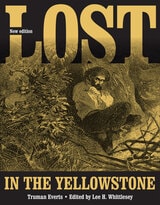
Lost in the Yellowstone
"Thirty-Seven Days of Peril" and a Handwritten Account of Being LostTruman Everts; Edited by Lee H. Whittlesey
University of Utah Press, 2015
In 1870, Truman Everts visited what would two years later become Yellowstone National Park, traveling with an exploration party intent on mapping and investigating that mysterious region. Scattered reports of a mostly unexplored wilderness filled with natural wonders had caught the public’s attention and the fifty-four-year-old Everts, near-sighted and an inexperienced woodsman, had determined to join the expedition. He was soon separated from the rest of the party and from his horse, setting him on a grueling quest for survival. For over a month he wandered Yellowstone alone and injured, with little food, clothing, or other equipment. In “Thirty-seven Days of Peril” he recounted his experiences for the readers of Scribner’s Monthly.
In June 1996, Everts’s granddaughter arrived at Mammoth Hot Springs in Yellowstone National Park to meet with park archivist Lee Whittlesey. She brought two documents that her father had kept hidden and both were handwritten by Everts. One was a brief autobiography that gave new insight into his early life. The other was a never-published alternative account of his confused 1870 journey through Yellowstone. Both have been added to this volume, further enhancing Everts’s unlikely tale of survival.
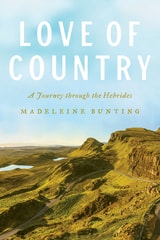
Love of Country
A Journey through the HebridesMadeleine Bunting
University of Chicago Press, 2017
After years of hearing about Scotland as a place deeply interwoven with the story of her family, Madeleine Bunting was driven to see for herself this place so symbolic and full of history. Most people travel in search of the unfamiliar, to leave behind the comfort of what’s known to explore some suitably far-flung corner of the globe. From the first pages, it’s clear that Madeleine Bunting’s Love of Country marks a different kind of journey—one where all paths lead to a closer understanding of home, but a home bigger than Bunting’s corner of Britain, the drizzly, busy streets of London with their scream of sirens and high-rise developments crowding the sky. Over six years, Bunting returned again and again to the Hebrides, fascinated by the question of what it means to belong there, a question that on these islands has been fraught with tenacious resistance and sometimes tragedy. With great sensitivity, she takes readers through the Hebrides’ history of dispossession and displacement, a history that can be understand only in the context of Britain’s imperial past, and she shows how the Hebrides have been repeatedly used to define and imagine Britain. In recent years, the relationship between Britain and Scotland has been subject to its most testing scrutiny, and Bunting’s travels became a way to reflect on what might be lost and what new possibilities might lie ahead.
For all who have wondered how it might feel to stand face-out at the edge of home, Love of Country is a revelatory journey through one of the world’s most remote, beautiful landscapes that encourages us to think of the many identities we wear as we walk our paths, and how it is possible to belong to many places while at the same time not wholly belonging to any.
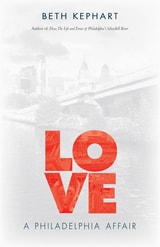
Love
A Philadelphia AffairBeth Kephart
Temple University Press, 2017
Philadelphia has been at the heart of many books by award-winning author Beth Kephart, but none more so than the affectionate collection Love. This volume of personal essays and photographs celebrates the intersection of memory and place. Kephart writes lovingly, reflectively about what Philadelphia means to her. She muses about meandering on SEPTA trains, spending hours among the armor in the Philadelphia Museum of Art, and taking shelter at Independence Mall during a downpour.
In Love, Kephart shares her loveof Reading Terminal Market at Thanksgiving: “This abundant, bristling market is, in November, the most unlonesome place around.” She waxes poetic about the shoulder-to-shoulder crowds, the mustard in a Salumeria sandwich, and the “coins slipped between the lips of Philbert the pig.”
Kephart also extends her journeys to the suburbs, Glenside and Ardmore—and beyond, to Lancaster County, Pennsylvania; Stone Harbor, New Jersey; and Wilmington, Delaware. What emerges is a valentine to the City of Brotherly Love and its environs. In Love, Philadelphia is “more than its icons, bigger than its tagline.”