Results by title
91 books match the query 'Desire' and 6 start with l
Land and Desire in Early Zionism
Boaz Neumann
Brandeis University Press, 2011
Landscape Of Desire
Greg Gordon
Utah State University Press, 2003
Landscape of Desire powerfully documents and celebrates a place and the evolutions that occur when human beings are intimately connected to their surroundings. Greg Gordon accomplishes this with a tapestry of writing that interweaves land use history, natural history, experiential education, and personal reflection. He tracks the geomorphology of southern Utah as well as the creatures and plants his student group encounters, the history lessons (planned and unplanned), the trials and joys of gathering so many individuals into a cohesive will, and his own personal epiphanies, restraints, insights, and disillusionments.
Landscape of Desire examines the plight of the western landscape. It discusses a wide range of issues, including mining, grazing, dams, recreation, wilderness, and land management. Since recreation has replaced extraction industries as the primary use of wilderness, especially in southern Utah, Gordon addresses its impactful qualities. He overviews the history of the conflict between preservation and development and places these issues in a cultural context. The text is presented in a narrative format, following the individuals of one field course Gordon lead that explored Muddy Creek and the Dirty Devil River from Interstate 70 to Lake Powell. Though each chapter focuses on the geologic formation the group is traveling through, the plants, animals, ecology, and human impacts are all tightly woven into the narrative. Not only does the land affect the members of the field course, but their attitudes and insights affect the land.
In Landscape of Desire Gordon achieves a vision of wholeness of this popular and contested region of Utah that centers around the implications of being human and also stewards of the wild.
Lesbian Death
Desire and Danger between Feminist and QueerMairead Sullivan
University of Minnesota Press, 2022
Engaging with fears of lesbian death to explore the value of lesbian beyond identity
The loss of lesbian spaces, as well as ideas of the lesbian as anachronistic has called into question the place of lesbian identity within our current culture. In Lesbian Death, Mairead Sullivan probes the perception that lesbian status is in retreat, exploring the political promises—and especially the failures—of lesbian feminism and its usefulness today.
Lesbian Death reads how lesbian is conceptualized in relation to death from the 1970s onward to argue that lesbian offers disruptive potential. Lesbian Death examines the rise of lesbian breast cancer activism in San Francisco in conversation with ACT UP, the lesbian separatist manifestos “The C.L.I.T. Papers,” the enduring specter of lesbian bed death, and the weaponization of lesbian identity against trans lives.
By situating the lesbian as a border figure between feminist and queer, Lesbian Death offers a fresh perspective on the value of lesbian for both feminist and queer projects, even if her value is her death.

Lesbian Rule
Cultural Criticism and the Value of DesireAmy Villarejo
Duke University Press, 2003
Integrating cinema studies, queer and feminist theory, and cultural studies, Villarejo illuminates the contexts within which the lesbian is rendered visible. Toward that end, she analyzes key portrayals of lesbians in public culture, particularly in documentary film. She considers a range of films—from documentaries about Cuba and lesbian pulp fiction to Exile Shanghai and The Brandon Teena Story—and, in doing so, brings to light a nuanced economy of value and desire.
Lost in the City
Tree of Desire and Serafin: Two novels by Ignacio SolaresBy Ignacio Solares
University of Texas Press, 1998
Cristina, the young protagonist of Tree of Desire, and her little brother Joaquín run away from a home that is outwardly normal, but inwardly disfunctional. Lost on the streets of Mexico City, they confront some of the most terrifying aspects of city life. Or is it all a dream? The story suggests, without confirming, that sexual abuse has driven Cristina to her desperate escape. But is it an escape? Are they awakening from a dream, or reentering a nightmare?
Serafín, too, is lost in the city. Searching for his father who has deserted the family, he is virtually helpless amid the city dangers. Serafín finds compassion in surprising places, but will he survive to return to his mother and their rural village?
These two novels by one of Mexico's premier writers illuminate many aspects of contemporary Mexican life. Solares describes Mexico's different social classes with Dickensian realism. His focus on young protagonists, unusual in Mexican literature, opens a window onto problems of children's vulnerability that know no national borders. At the same time, his use of elements of the fantastic and the paranormal, and his evocative writing style, make reading his novels a most pleasurable experience.
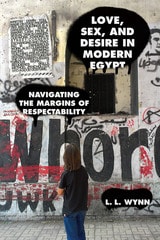
Love, Sex, and Desire in Modern Egypt
Navigating the Margins of RespectabilityBy L. L. Wynn
University of Texas Press, 2018
Cairo is a city obsessed with honor and respectability—and love affairs. Sara, a working-class woman, has an affair with a married man and becomes pregnant, only to be abandoned by him; Ayah and Zeid, a respectably engaged couple, argue over whether Ayah’s friend is a prostitute or a virgin; Malak, a European belly dancer who sometimes gets paid for sex, wants to be loved by a man who won’t treat her like a whore just because she’s a dancer; and Alia, a Christian banker who left her abusive husband, is the mistress of a wealthy Muslim man, Haroun, who encourages business by hosting risqué parties for other men and their mistresses.
Set in transnational Cairo over two decades, Love, Sex, and Desire in Modern Egypt is an ethnography that explores female respectability, male honor, and Western theories and fantasies about Arab society. L. L. Wynn uses stories of love affairs to interrogate three areas of classic anthropological theory: mimesis, kinship, and gift. She develops a broad picture of how individuals love and desire within a cultural and political system that structures the possibilities of, and penalties for, going against sexual and gender norms. Wynn demonstrates that love is at once a moral horizon, an attribute that “naturally” inheres in particular social relations, a social phenomenon strengthened through cultural concepts of gift and kinship, and an emotion deeply felt and desired by individuals.