63 books match the query 'Detroit' and 7 start with l
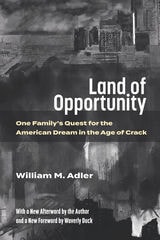
cover of Land of Opportunity: One Family's Quest for the American Dream in the Age of Crack

Land of Opportunity

One Family's Quest for the American Dream in the Age of Crack

William M. Adler

University of Michigan Press, 2021

Part true crime, part work of urban sociology, Land of Opportunity is a meticulously researched account of the rise and fall of the Chambers brothers, who ran a multi-million-dollar crack cocaine operation in Detroit in the 1980s.   Descended from Arkansas sharecroppers, BJ, Larry, and Willie Chambers moved to Detroit seeking economic opportunity, and built a successful drug empire by applying strict business principles to their trade; their business grossed an estimated $55 million annually until the brothers were sent to prison in 1989.  Reading the Chambers brothers in the context of the fall of the Detroit auto-industry and its impact on the city’s economy and residents, Land of Opportunity demonstrates how for the Chambers brothers, crack dealing was a rational career choice; and through the Chambers brothers’ story, Adler provides bottom-up history of late Second Great Migration, deindustrialization, the War on Drugs, and crack era in both Detroit and the United States.
[more]
cover of Learning Race, Learning Place: Shaping Racial Identities and Ideas in African American Childhoods

Learning Race, Learning Place

Shaping Racial Identities and Ideas in African American Childhoods

Winkler, Erin N

Rutgers University Press, 2012

In an American society both increasingly diverse and increasingly segregated, the signals children receive about race are more confusing than ever. In this context, how do children negotiate and make meaning of multiple and conflicting messages to develop their own ideas about race? Learning Race, Learning Place engages this question using in-depth interviews with an economically diverse group of African American children and their mothers.

Through these rich narratives, Erin N. Winkler seeks to reorient the way we look at how children develop their ideas about race through the introduction of a new framework—comprehensive racial learning—that shows the importance of considering this process from children’s points of view and listening to their interpretations of their experiences, which are often quite different from what the adults around them expect or intend. At the children’s prompting, Winkler examines the roles of multiple actors and influences, including gender, skin tone, colorblind rhetoric, peers, family, media, school, and, especially, place. She brings to the fore the complex and understudied power of place, positing that while children’s racial identities and experiences are shaped by a national construction of race, they are also specific to a particular place that exerts both direct and indirect influence on their racial identities and ideas.

[more]
cover of Liquor Store Theatre

Liquor Store Theatre

Maya Stovall

Duke University Press, 2020
For six years Maya Stovall staged Liquor Store Theatre, a conceptual art and anthropology video project---included in the Whitney Biennial in 2017---in which she danced near the liquor stores in her Detroit neighborhood as a way to start conversations with her neighbors. In this book of the same name, Stovall uses the project as a point of departure for understanding everyday life in Detroit and the possibilities for ethnographic research, art, and knowledge creation. Her conversations with her neighbors—which touch on everything from economics, aesthetics, and sex to the political and economic racism that undergirds Detroit's history—bring to light rarely acknowledged experiences of longtime Detroiters. In these exchanges, Stovall enacts an innovative form of ethnographic engagement that offers new modes of integrating the social sciences with the arts in ways that exceed what either approach can achieve alone.
[more]
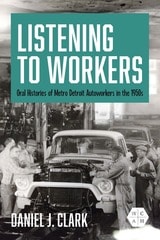
cover of Listening to Workers: Oral Histories of Metro Detroit Autoworkers in the 1950s

Listening to Workers

Oral Histories of Metro Detroit Autoworkers in the 1950s

Daniel J. Clark

University of Illinois Press, 2024

Historians and readers alike often overlook the everyday experiences of workers. Drawing on years of interviews and archival research, Daniel J. Clark presents the rich, interesting, and sometimes confounding lives of men and women who worked in Detroit-area automotive plants in the 1950s.

In their own words, the interviewees frankly discuss personal matters like divorce and poverty alongside recollections of childhood and first jobs, marriage and working women, church and hobbies, and support systems and workplace dangers. Their frequent struggles with unstable jobs and economic insecurity upend notions of the 1950s as a golden age of prosperity while stories of domestic violence and infidelity open a door to intimate aspects of their lives. Taken together, the narratives offer seldom-seen accounts of autoworkers as complex and multidimensional human beings.

Compelling and surprising, Listening to Workers foregoes the union-focused strain of labor history to provide ground-level snapshots of a blue-collar world.
[more]
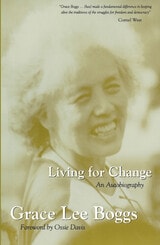
cover of Living For Change: An Autobiography

Living For Change

An Autobiography

Grace Lee Boggs

University of Minnesota Press, 1998
"Grace Lee Boggs has made a fundamental difference in keeping alive the traditions of the struggles for freedom and democracy." Cornel West "More than a deeply moving memoir, this is a book of revelation. Grace Lee Boggs, Chinese American, middle class, highly educated, discovers through her encounters with remarkable rebels, blue collars as well as philosophers, where the body is buried: who is doing what to whom in our society. It is an adventure that is truly liberating." Studs Terkel "It seems to me that the life of Grace Lee Boggs has been an exercise of will. Through sheer will, without waiting for social conditions to come around and without waiting to explore her identity, she turned her back on who she was and barged into new territories. She was a woman who barged into men's territory; she was a Chinese who barged into black territory; she was an intellectual who barged into workers territory." from a letter from Louis Tsen "Throught these pages walk causes, gatherings, confrontations, movements, and the men and women who made them: workers, and students, and committees of the People; Christians, Black Muslims, Black Panthers, Labor Unions; C.L.R. James. Rev. Cleage, Rev. Cleveland, Coleman Young, Malcolm and Martin; artists, musicians, poets, actors, strikers, and seekers of revolution." from the foreword by Ossie Davis Living for Change is a sweeping account of the life of an untraditional radical from the end of the thirties, through the cold war, the civil rights era, and the rise of Black Power, the Nation of Islam, and the Black Panthers to the present efforts to rebuild our crumbling urban communities. This fascinating autobiography traces the story of a woman who transcended class and racial boundaries to pursue her passionate belief in a better society. Grace Lee Boggs was raised in New York City during a time when her father was not allowed to buy land for their home because he was Chinese. Educated at Barnard and Bryn Mawr, Boggs was in her twenties when radical politics beckoned, and she was inspired to become a revolutionary focusing on the black community. During her early years as an activist in New York, Boggs began a twenty-year friendship and collaboration with C. L. R. James, the brilliant and influential West Indian Marxist to whom she devotes a revelatory chapter of this book. In 1953, she moved to Detroit where, she writes, "radical history had been made and could be made again." It was also the home of James Boggs, an African American auto worker (and later author and revolutionary theoretician) who would become one of the movement's freshest and most persuasive voices, as well as Grace's husband. Beginning with their work together on the newsletter Correspondence, Grace and James formed the core of a network that over the years would include Malcolm X, Lyman Paine, Ping Ferry, Ossie Davis and Ruby Dee, Kwame Nkrumah, Stokely Carmichael, and inner-city youth. Rich in the personalities and anecdotes of twentieth-century progressive activism, Living for Change is an involving and inspiring look at a remarkable woman who continues to dedicate her life to social justice. Grace Lee Boggs is a first-generation Chinese American who has been a speaker, writer, and movement activist in the African American community for fifty-five years.
[more]
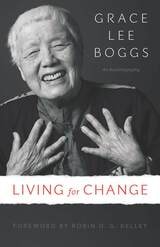
cover of Living for Change: An Autobiography

Living for Change

An Autobiography

Grace Lee Boggs

University of Minnesota Press, 2016

No one can tell in advance what form a movement will take. Grace Lee Boggs’s fascinating autobiography traces the story of a woman who transcended class and racial boundaries to pursue her passionate belief in a better society. Now with a new foreword by Robin D. G. Kelley, Living for Change is a sweeping account of a legendary human rights activist whose network included Malcolm X and C. L. R. James. From the end of the 1930s, through the Cold War, the Civil Rights era, and the rise of the Black Panthers to later efforts to rebuild crumbling urban communities, Living for Change is an exhilarating look at a remarkable woman who dedicated her life to social justice.
[more]
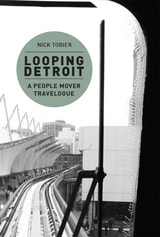
cover of Looping Detroit: A People Mover Travelogue

Looping Detroit

A People Mover Travelogue

Nick Tobier

Michigan Publishing Services, 2016

Equal parts urban culture and poetic travelogue, Looping Detroit is a collection of observations each taking place in and around one station stop of Detroit’s People Mover. Built in 1987, the People Mover was and is largely regarded as a public transit boondoggle—costly, circumscribed, and, in light of these, a particularly egregious investment within a city lacking sufficient public transportation. At a time when Detroit’s downtown development is booming, with tremendous investment in a downtown that was ignored for decades, the very real possibility exists that this new interest will parallel the same investment patterns that brought the over invested People Mover to a fragment of the city.

Looping Detroit invites artists and writers to ride the small loop as an explorer, mining the environs around each station as a poetic ramble, a psycho geographic wander, a cultural inquiry that simultaneously ponders the poetics of circulating above the city streets while probing the greater narrative of Detroit’s public transit conundrum.

Contributors include award-winning Detroit novelists Lolita Hernandez and Michael Zardoorian, poets Gloria House and Walter Lacy, music producer Cornelius Harris, Chace MicWrite Morris, frontman of the Detroit hip-hop trio Coldmen Young, and radio producer Zak Rosen.
[more]