Results by title
230 books match the query 'Doctrines' and 5 start with l
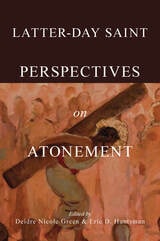
Latter-day Saint Perspectives on Atonement
Edited by Deidre Nicole Green and Eric D. Huntsman
University of Illinois Press, 2024
The Church of Jesus Christ of Latter-day Saints and other Christians have always shared a fundamental belief in the connection between personal salvation and the suffering, death, and resurrection of Jesus Christ. While having faith in and experiencing the atonement of Christ remains a core tenet for Latter-day Saints, some thinkers have in recent decades reconsidered traditional understandings of atonement.
Deidre Nicole Green and Eric D. Huntsman edit a collection that brings together multiple and diverse approaches to thinking about Latter-day Saint views on this foundational area of theology. The essayists draw on and go beyond a wide range of perspectives, classical atonement theories, and contemporary reformulations of atonement theory. The first section focuses on scriptural and historical foundations while the second concentrates on theological explorations. Together, the contributors evaluate what is efficacious and ethical in the Latter-day Saint outlook and offer ways to reconceive those views to provide a robust theological response to contemporary criticisms about atonement.
Contributors: Nicholas J. Frederick, Fiona Givens, Deidre Nicole Green, Sharon J. Harris, J.B. Haws, Eric D. Huntsman, Benjamin Keogh, Ariel Bybee Laughton, Adam S. Miller, Jenny Reeder, T. Benjamin Spackman, and Joseph M. Spencer
Learning to Trust in Freedom
Signs from Jewish, Christian, and Muslim TraditionsDavid B. Burrell, C.S.C.
University of Scranton Press, 2010
True religious faith cannot be confirmed by any external proofs. Rather, it is founded on a basic act of trust—and the common root of that trust, for Jewish, Christian, and Islamic traditions, is a belief in the divine creation of the universe. But with Learning to Trust in Freedom, David B. Burrell asks the provocative question: How do we reach that belief, and what is it about the universe that could possibly testify to its divine origins? Even St. Augustine, he points out, could only find faith after a harrowing journey through the lures of desire—and it is that very desire that Burrell seizes on as a tool with which to explore the origin and purpose of the world. Delving deep into the intertwinings of desire and faith, and drawing on St. John of the Cross, Edith Stein, and Charles Taylor, Burrell offers a new understanding of free will, trust, and perception.

Letters to a Fellow Seeker
A Short Introduction to the Quaker WaySteve Chase
QuakerPress, 2012
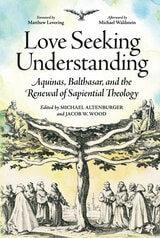
Love Seeking Understanding
Aquinas, Balthasar, and the Renewal of Sapiential TheologyMichael Altenburger
Catholic University of America Press, 2024
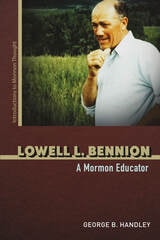
Lowell L. Bennion
A Mormon EducatorGeorge B. Handley
University of Illinois Press, 2023
Known in his lifetime for a tireless dedication to humanitarian causes, Lowell L. Bennion was also one of the most important theologians and ethicists to emerge in the Church of Jesus Christ of Latter-day Saints in the twentieth century.
George B. Handley’s intellectual biography delves into Bennion’s thought and extraordinary intellectual life. Rejecting the idea that individual LDS practice might be at odds with lived experience, Bennion insisted the gospel favored the growth of individuals acting and living in the present. He also focused on the need for ongoing secular learning alongside religious practice and advocated for an idea of social morality that encouraged Latter-day Saints to seek out meaningful transformations of character and put their ethical commitments into practice. Handley examines Bennion’s work against the background of a changing institution that once welcomed his common-sense articulation of LDS ideas and values but became discomfited by how his thought cast doubt on the Church’s beliefs about race and other issues.