Results by title
715 books match the query 'Ethnic relations' and 23 start with l
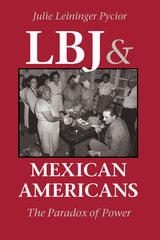
LBJ and Mexican Americans
The Paradox of PowerBy Julie Leininger Pycior
University of Texas Press, 1997
T. R. Fehrenbach Award, 1997
As he worked to build his Great Society, Lyndon Johnson often harkened back to his teaching days in the segregated "Mexican" school at Cotulla, Texas. Recalling the poverty and prejudice that blighted his students' lives, Johnson declared, "It never occurred to me in my fondest dreams that I might have the chance to help the sons and daughters of those students and to help people like them all over this country. But now I do have that chance—and I'll let you in on a secret—I mean to use it."
This book explores the complex and sometimes contradictory relations between LBJ and Mexican Americans. Julie Pycior shows that Johnson's genuine desire to help Mexican Americans—and reap the political dividends—did not prevent him from allying himself with individuals and groups intent on thwarting Mexican Americans' organizing efforts. Not surprisingly, these actions elicited a wide range of response, from grateful loyalty to, in some cases, outright opposition. Mexican Americans' complicated relationship with LBJ influenced both their political development and his career with consequences that reverberated in society at large.
La Harpe's Post
Tales of French-Wichita Contact on the Eastern PlainsGeorge H. Odell
University of Alabama Press, 2002
This major contribution to contact period studies points to the Lasley Vore site in modern Oklahoma as the most likely first meeting place of Plains Indians and Europeans more than 300 years ago.
In 1718, Jean-Baptiste Bénard, Sieur de la Harpe, departed St. Malo in Brittany for the New World. La Harpe, a member of the French bourgeoisie, arrived at Dauphin Island on the Gulf coast to take up the entrepreneurial concession provided by the director of the French colony, Jean Baptiste LeMoyne de Bienville. La Harpe's charge was to open a trading post on the Red River just above a Caddoan village not far from present-day Texarkana. Following the establishment of this post, La Harpe ventured farther north to extend his trade market into the region occupied by the Wichita Indians. Here he encountered a Tawakoni village with an estimated 6,000 inhabitants, a number that swelled to 7,000 during the ten-day visit.
Despite years of ethnohistoric and archaeological research, no scholar had successfully established where this important meeting took place. Then in 1988, George Odell and his crew surveyed and excavated an area 13 miles south of Tulsa, along the Arkansas River, that revealed undeniable association of Native American habitation refuse with 18th-century European trade goods.
Odell here presents a full account of the presumed location of the Tawakoni village as revealed through the analysis of excavated materials from nine specialist collaborators. In a strikingly well-written narrative report, employing careful study and innovative analysis supported by appendixes containing the excavation data, Odell combines documentary history and archaeological evidence to pinpoint the probable site of the first European contact with North American Plains Indians.
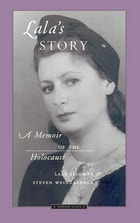
Lala's Story
A Memoir of the HolocaustLala Fishman
Northwestern University Press, 1997
Born into a middle-class Jewish family in 1932, Lala Weintraub grew up in Lvov, Poland. When the Nazis came, Lala—who had blond hair and blue eyes—survived by convincing them she was a Christian. This book tells her remarkable story. Fiercely determined and greatly aided by her Aryan looks, she managed to convince everyone—German soldiers, interrogators, fellow Poles—that she was a Polish gentile. Within a year after the Germans captured Lvov, many of Lala's family members were missing and presumed dead.
Lala's Story follows her as she moves from town to town, driven by her fear of being discovered. More than a story of survival, this is the story of a young girl's resolute struggle to defy, resist, and ultimately defeat the evil forces pursuing her.
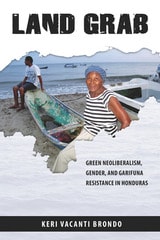
Land Grab
Green Neoliberalism, Gender, and Garifuna Resistance in HondurasKeri Vacanti Brondo
University of Arizona Press, 2013
Employing approaches from feminist political ecology, critical race studies, and ethnic studies,Keri Vacanti Brondo illuminates three contemporary development paradoxes in Honduras: the recognition of the rights of indigenous people at the same time as Garifuna are being displaced in the name of development; the privileging of foreign research tourists in projects that promote ecotourism but result in restricting Garifuna from traditional livelihoods; and the contradictions in Garifuna land-rights claims based on native status when mestizos are reserving rights to resources as natives themselves.
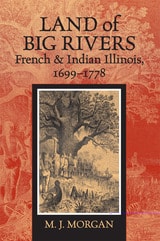
Land of Big Rivers
French and Indian Illinois, 1699-1778M. J. Morgan
Southern Illinois University Press, 2010
Drawing on research from a variety of academic fields, such as archaeology, history, botany, ecology, and physical science, M. J. Morgan explores the intersection of people and the environment in early eighteenth-century Illinois Country—a stretch of fecund, alluvial river plain along the Mississippi river. Arguing against the traditional narrative that describes Illinois as an untouched wilderness until the influx of American settlers, Morgan illustrates how the story began much earlier.
She focuses her study on early French and Indian communities, and later on the British, nestled within the tripartite environment of floodplain, riverine cliffs and bluffs, and open, upland till plain/prairie and examines the impact of these diverse groups of people on the ecological landscape. By placing human lives within the natural setting of the period—the abundant streams and creeks, the prairies, plants and wildlife—she traces the environmental change that unfolded across almost a century. She describes how it was a land in motion; how the occupying peoples used, extracted, and extirpated its resources while simultaneously introducing new species; and how the flux and flow of life mirrored the movement of the rivers. Morgan emphasizes the importance of population sequences, the relationship between the aboriginals and the Europeans, the shared use of resources, and the effects of each on the habitat.
Land of Big Rivers is a unique, many-themed account of the big-picture ecological change that occurred during the early history of the Illinois Country. It is the first book to consider the environmental aspects of the Illinois Indian experience and to reconsider the role of the French and British in environmental change in the mid-Mississippi Valley. It engagingly recreates presettlement Illinois with a remarkable interdisciplinary approach and provides new details that will encourage understanding of the interaction between physical geography and the plants, animals, and people in the Illinois Country. Furthermore, it exhibits the importance of looking at the past in the context of environmental transformation, which is especially relevant in light of today’s global climate change.
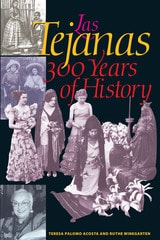
Las Tejanas
300 Years of HistoryBy Teresa Palomo Acosta and Ruthe Winegarten
University of Texas Press, 2003
Winner, Texas Reference Source Award, Reference Round Table, Texas Library Association, 2003
T.R. Fehrenbach Award, Texas Historical Commission, 2004
Since the early 1700s, women of Spanish/Mexican origin or descent have played a central, if often unacknowledged, role in Texas history. Tejanas have been community builders, political and religious leaders, founders of organizations, committed trade unionists, innovative educators, astute businesswomen, experienced professionals, and highly original artists. Giving their achievements the recognition they have long deserved, this groundbreaking book is at once a general history and a celebration of Tejanas' contributions to Texas over three centuries.
The authors have gathered and distilled a wide range of information to create this important resource. They offer one of the first detailed accounts of Tejanas' lives in the colonial period and from the Republic of Texas up to 1900. Drawing on the fuller documentation that exists for the twentieth century, they also examine many aspects of the modern Tejana experience, including Tejanas' contributions to education, business and the professions, faith and community, politics, and the arts. A large selection of photographs, a historical timeline, and profiles of fifty notable Tejanas complete the volume and assure its usefulness for a broad general audience, as well as for educators and historians.
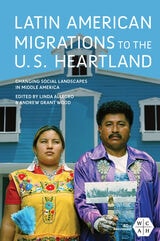
Latin American Migrations to the U.S. Heartland
Changing Social Landscapes in Middle AmericaEdited by Linda Allegro and Andrew Grant Wood
University of Illinois Press, 2019
Filled with varied and eye-opening perspectives, Latin American Migrations to the U.S. Heartland reveals how identities, economies, and geographies are changing as Latin Americans adjust to their new homes, jobs, and communities.
Contributors: Linda Allegro, Tisa M. Anders, Scott Carter, Caitlin Didier, Miranda Cady Hallett, Edmund Hamann, Albert Iaroi, Errol D. Jones, Jane Juffer, László J. Kulcsár, Janelle Reeves, Jennifer F. Reynolds, Sandi Smith-Nonini, and Andrew Grant Wood.
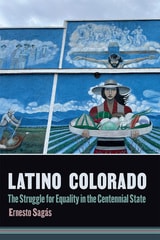
Latino Colorado
The Struggle for Equality in the Centennial StateErnesto Sagás
University Press of Colorado, 2026
Author Ernesto Sagás also explores the ways in which Latinos—as a racialized, subordinate group—have historically interacted with Colorado’s Anglo society in carving out their own spaces while struggling for social and legal equality. He presents a demographic and socioeconomic profile of Latinos in Colorado based on field research and the latest US Census data to dispel common stereotypes while also pointing out areas of concern for state policymakers.
Latino Colorado sheds light on this marginalized community and advances the understanding of the state’s racialized dynamics. It is about everyone in the American West—Anglos, Latinos, and others—and how they interact with and continue to (re)define one another in real and imagined ways in the most mythologized of American regions.
Latino Lives in America
Making It HomeLuis R. Fraga, John A. Garcia, Rodney E. Hero, Michael Jones-Correa, Valerie Martinez-Ebers and Gary Segura
Temple University Press, 2010
Latinos are the largest and fastest growing ethnic group in the United States, with increased levels of political mobilization and influence. In the timely and thoroughgoing Latino Lives in America, six prominent Latino scholars explore the profound implications of Latinos’ population growth and geographic dispersion for American politics and society, tracking key changes and continuities in Latinos' attitudes, behavior, and social experiences.
Utilizing a unique set of “narratives” from focus group interviews, supplemented with quantitative findings from the 2006 Latino National Survey, the authors provide a snapshot of Latino life in America. The Latinos interviewed provide their thoughts regarding their sense of belonging and group identification, assimilation and transnationalism, housing, education, civic engagement, and perceptions of discrimination, as well as their experiences in new destinations, where they are trying to realize the “Americano” dream.
Latino Lives in America uses these conversations and the survey data to offer both a micro and macro look at how Latinos are transforming various aspects of American politics, culture, and life and how their experiences in the United States are changing them and their families.
Latino Los Angeles
Transformations, Communities, and ActivismEdited by Enrique C. Ochoa and Gilda L. Ochoa
University of Arizona Press, 2005
Latinos in Michigan
David A. Badillo
Michigan State University Press, 2003
Latvians in Michigan
Silvija D. Meija
Michigan State University Press, 2005
Latvians have contributed to the cultural mosaic and economy of Michigan far more than one might imagine. There are three large Latvian communities in Michigan—Kalamazoo, Detroit, and Grand Rapids—with several smaller enclaves elsewhere in the state. An underlying goal of Latvians who now live in Michigan, as well as other parts of the United States and Canada, is to maintain their language and culture. More than five thousand Latvians came to Michigan after World War II, found gainful employment, purchased homes, and became a part of the Michigan population. Most sought to reeducate themselves and struggled to educate their children in Michigan’s many colleges and universities. Latvians in Michigan examines Latvia and its history, and describes how World War II culminated in famine, death, and eventual flight from their homeland by many Latvian refugees. After the war ended, most Latvian emigrants eventually made their way to Sweden or Germany, where they lived in displaced persons camps. From there, the emigrants were sponsored by individuals or organizations and they moved once again to other parts of the world. Many came to the United States, where they established new roots and tried to perpetuate their cultural heritage while establishing new lives.
Laughing Whitefish
Robert Traver
Michigan State University Press, 2011

Legacies of Anti-Semitism in France
Jeffrey Mehlman
University of Minnesota Press, 1983
Legacies of Anti-Semitism in France was first published in 1983. Minnesota Archive Editions uses digital technology to make long-unavailable books once again accessible, and are published unaltered from the original University of Minnesota Press editions.
These four essays—on Blanchot, Lacan, Giraudoux, and Gide—have as their focus the barely imaginable coherence which the writings of four major contemporaries take on when read in the light of France's pre-World War II heritage of anti-Jewish thought. As the essays delve into such crucial topics as the inaugural silence in Blanchot's sense of literature, the "style" of Lacan, Giraudoux's relation to Racine, and the sexual politics of Gide, they engage a realm that at times seems—or seemed—anti-Semitic in its essence. Negotiating the complex ramifications of a lost tradition and the structure of its obliteration, Jeffrey Mehlman, in his conclusion, speculates on the emblematic value of Walter Benjamin's perpetually deferred "journey to Palestine via France" and its import for textual interpretation.
A French version of Mehlman's essay on Blanchot, published in Tel quel,spurred an impassioned journalistic debate in Paris and London. Broadening still further the context of that inquiry, Legacies will prove a source of provocation and insight to all who are interested in the intellectual history of contemporary France.
Letter to My Children
From Romania to America via AuschwitzRudolph Tessler
University of Missouri Press, 1999
"Sixty-seven members of my family—my mother, her father, my three sisters, three of my brothers, aunts, uncles, and cousins—were murdered at Auschwitz."
As Rudolph Tessler's mother stepped from the train in Auschwitz, shortly before she was sent to the gas chamber, she heard "Hello, Esther." In a polite tone, a young German SS officer greeted her as he would any old friend. His family lived down the road from the Tessler family in Viseu, their hometown in northern Romania. They, like the rest of the town, admired Esther for her wonderful cooking, particularly the delicious cakes she brought them each Christmas. Now he ushered her and six of her children to their deaths.Throughout Letter to My Children, Tessler offers vivid glimpses of the senselessness that surrounded him during World War II. Of the thousands packed in trains and transported from Viseu to Auschwitz, just a small group survived to see liberation. Among the survivors were Tessler, his father, and two of his brothers. This is the amazing story of their experiences as Hasidic Jews caught in the chaos and terror of the Holocaust.
Tessler's upbringing had emphasized community and family devotion—traits not forgotten in the concentration camps, where he and his family members often rescued one another from certain death. Few fathers and sons survived the concentration camps together. In spite of the odds, Tessler and his brother Buroch managed to stick together, sharing their father's labor assignments to protect him from death, preserving not only their family bond but also their spirituality. Tessler's father, always a source of strength and guidance to his family, provided counsel to many prisoners in the camp and eventually assumed the role of rabbi.
Despite an environment in which their captors tried to reduce them to animals, Tessler's remaining family and seven other Jews from Viseu made a special effort to observe their faith. Bending rules in ways that risked their lives, they worked together to smuggle wheat, grind it into flour, and bake matzos to distribute for Passover. The group also secretly gathered to pray on the eve of Rosh Hashanah. These religious observances offered some comfort in the camp.
In addition to vividly portraying the daily struggles of camp life, Letter to My Children follows Tessler beyond liberation, recounting his days as a displaced person struggling for a new life in the midst of the devastation of postwar Europe, as an American immigrant striving to rebuild his family and succeed in business, and as a philanthropist for education and health care. Recalling the age-old way of life in Viseu that was erased by the Holocaust, this inspiring story conveys the hope, determination, and perseverance that made Tessler a survivor.
Lithuanians in Michigan
Marius K. Grazulis
Michigan State University Press, 2009
In Lithuanians in Michigan Marius Grazulis recounts the history of an immigrant group that has struggled to maintain its identity. Grazulis estimates that about 20 percent of the 1.6 million Lithuanians who immigrated to the United States arrived on American shores between 1860 and 1918.
While first-wave immigrants stayed mostly on the east coast, by 1920 about one-third of newly immigrated Lithuanians lived in Michigan, working in heavy industry and mining.
With remarkable detail, Grazulis traces the ways these groups have maintained their ethnic identity in Michigan in the face of changing demographics in their neighborhoods and changing interests among their children, along with the challenges posed by newly arriving "modern" Lithuanian immigrants, who did not read the same books, sing the same songs, celebrate the same holidays, or even speak the same language that previous waves of Lithuanian immigrants had preserved in America. Anyone interested in immigrant history will find Lithuanians in Michigan simultaneously familiar, fascinating, and moving.
Little Saigons
Staying Vietnamese in AmericaKarin Aguilar–San Juan
University of Minnesota Press, 2009
Karin Aguilar-San Juan examines the contradictions of Vietnamese American community and identity in two emblematic yet different locales: Little Saigon in suburban Orange County, California (widely described as the capital of Vietnamese America) and the urban "Vietnamese town" of Fields Corner in Boston, Massachusetts. Their distinctive qualities challenge assumptions about identity and space, growth amid globalization, and processes of Americanization.
With a comparative and race-cognizant approach, Aguilar-San Juan shows how places like Little Saigon and Fields Corner are sites for the simultaneous preservation and redefinition of Vietnamese identity. Intervening in debates about race, ethnicity, multiculturalism, and suburbanization as a form of assimilation, this work elaborates on the significance of place as an integral element of community building and its role in defining Vietnamese American-ness.
Staying Vietnamese, according to Aguilar-San Juan, is not about replicating life in Viet Nam. Rather, it involves moving toward a state of equilibrium that, though always in flux, allows refugees, immigrants, and their U.S.-born offspring to recalibrate their sense of self in order to become Vietnamese anew in places far from their presumed geographic home.
Living as Equals
How Three White Communities Struggled to Make Interracial Connections During the Civil Rights EraPhyllis Palmer
Vanderbilt University Press, 2008
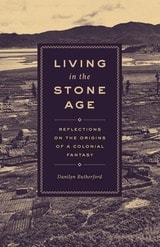
Living in the Stone Age
Reflections on the Origins of a Colonial FantasyDanilyn Rutherford
University of Chicago Press, 2018
Living in the Stone Age answers this question by following the adventures of officials sent to the New Guinea highlands in the 1930s to establish a foothold for Dutch colonialism. These officials became deeply dependent on the good graces of their would-be Papuan subjects, who were their hosts, guides, and, in some cases, friends. Danilyn Rutherford shows how, to preserve their sense of racial superiority, these officials imagined that they were traveling in the Stone Age—a parallel reality where their own impotence was a reasonable response to otherworldly conditions rather than a sign of ignorance or weakness. Thus, Rutherford shows, was born a colonialist ideology.
Living in the Stone Age is a call to write the history of colonialism differently, as a tale of weakness not strength. It will change the way readers think about cultural contact, colonial fantasies of domination, and the role of anthropology in the postcolonial world.
Locating Filipino Americans
Rick Bonus
Temple University Press, 2000
Locating Filipino Americans, an ethnographic study of Filipino American communities in Los Angeles and San Diego, present a multi-disciplinary cultural analysis of the relationship between ethnic identity and social space. Author Rick Bonus argues that alternative community spaces enable Filipino Americans to respond to and resist the ways in which the larger society has historically and institutionally rendered them invisible, silenced, and racialized. Bonus focuses on the "Oriental" stores, the social halls and community centers, and the community newspapers to demonstrate how ethnic identities are publicly constituted and communities are transformed. Delineating the spaces formed by diasporic consciousness, Bonus shows how community members appropriate elements from their former homeland and from their new settlements in ways defined by their critical stances against racism, homogenization, complete assimilation, and exclusionary citizenship. Locating Filipino Americans is one of the few books that offers a grounded approach to theoretical analyses of ethnicity and contemporary culture in the U.S.
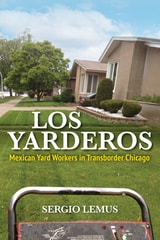
Los Yarderos
Mexican Yard Workers in Transborder ChicagoSergio Lemus
University of Illinois Press, 2025
Sergio Lemus explores the lives of these migrants and looks at the struggles they face as they work to make the city their home. Drawing on fieldwork in South Chicago, Lemus tells the stories of first and second-generation yarderos and discusses the historical, economic, cultural, and political ramifications they face as they acquire their working-class identity. Lemus’s compassionate portrait places them within America’s ongoing tradition as a nation of immigrants while analyzing their place within today’s transborder cultural moment.
Perceptive and humane, Los Yarderos reveals how a group of Mexican immigrants navigates the crossings of the borders that divide class, color hierarchies, gender, and belonging.
Lost in a Labyrinth of Red Tape
The Story of an Immigration that FailedArmin Schmid and Renate Schmid
Northwestern University Press, 1996
Loyal but French
The Negotiation of Identity by French-Canadian Descendants in the United StatesMark Paul Richard
Michigan State University Press, 2008
Richard’s work challenges prevailing notions of "assimilation." As he shows, “acculturation” better describes the roundabout process by which some ethnic groups join their host society. He argues that, for more than a century, the French- Canadians in Lewiston, Maine, pursued the twin objectives of ethnic preservation and acculturation. These were not separate goals but rather intertwined processes. Underscored with statistics compiled by the author, Loyal but French portrays the French-Canadian history of Lewiston, from the 1880s through the 1990s, in this light.