162 books match the query 'Europe, Eastern' and 6 start with l
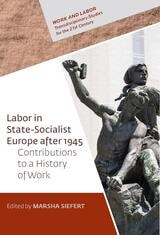
cover of Labor in State-Socialist Europe, 1945–1989: Contributions to a History of Work

Labor in State-Socialist Europe, 1945–1989

Contributions to a History of Work

Marsha Siefert

Central European University Press, 2020

Labor regimes under communism in East-Central Europe were complex, shifting, and ambiguous. This collection of sixteen essays offers new conceptual and empirical ways to understand their history from the end of World War II to 1989, and to think about how their experiences relate to debates about labor history, both European and global.

The authors reconsider the history of state socialism by re-examining the policies and problems of communist regimes and recovering the voices of the workers who built them. The contributors look at work and workers in Albania, Bulgaria, Czechoslovakia, the German Democratic Republic, Hungary, Poland, Romania, and Yugoslavia. They explore the often contentious relationship between politics and labor policy, dealing with diverse topics including workers’ safety and risks; labor rights and protests; working women’s politics and professions; migrant workers and social welfare; attempts to control workers’ behavior and stem unemployment; and cases of incomplete, compromised, or even abandoned processes of proletarianization. Workers are presented as active agents in resisting and supporting changes in labor policies, in choosing allegiances, and in defining the very nature of work.
[more]
cover of Labour Statistics for a Market Economy: Challenges and Solutions in the Transition Countries of Central and Eastern Europe and the Former Soviet Union

Labour Statistics for a Market Economy

Challenges and Solutions in the Transition Countries of Central and Eastern Europe and the Former Soviet Union

Igor Chernyshev

Central European University Press, 1995
The International Labour Office is the moving force behind the adoption of the Labour Force Survey in Western countries as the only reliable means of gathering information about trends in employment and unemployment, and on pay. The countries of East-Central Europe and the former USSR have recognized their need of such statistiics and turned to the ILO to help them set up systems to provide data required by decision makers. This pioneering work shows how the old "command" economies are setting up brand new systems to classify occupations, to measure employment and unemployment, and to collect information on wages and labour costs, which will be useful to students of the area and essential for statisticians world-wide concerned with the challenge of instigating an entirely new statistical service.
[more]
cover of Late Enlightenment: Emergence of the Modern 'National Idea'

Late Enlightenment

Emergence of the Modern 'National Idea'

Marius Turda

Central European University Press, 2006
This volume represents the first in a four-volume series, a daring project by CEU Press which presents the most important texts that triggered and shaped the processes of nation-building in the many countries of Central and Southeast Europe. The series brings together scholars from Austria, Albania, Bosnia-Herzegovina, Bulgaria, Croatia, the Czech Republic, Greece, Hungary, the Republic of Macedonia, Poland, Romania, Serbia and Montenegro, Slovakia, Slovenia and Turkey. The editors have created a new interpretative synthesis that challenges the self-centered and "isolationist" historical narratives and educational canons prevalent in the region, in the spirit of of "coming to terms with the past." The main aim of the venture is to confront 'mainstream' and seemingly successful national discourses with each other, thus creating a space for analyzing those narratives of identity which became institutionalized as "national canons." The series will broaden the field of possible comparisons of the respective national cultures.
[more]
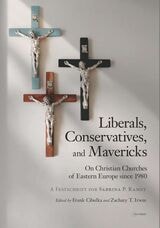
cover of Liberals, Conservatives, and Mavericks: On Christian Churches of Eastern Europe since 1980. A Festschrift for Sabrina P. Ramet

Liberals, Conservatives, and Mavericks

On Christian Churches of Eastern Europe since 1980. A Festschrift for Sabrina P. Ramet

Frank Cibulka

Central European University Press, 2025

No Church is monolithic—this is the preliminary premise of this volume on the public place of religion in a representative number of post-communist countries. The studies confirm that within any religious organization we can expect to find fissures, factions, theological or ideological quarrels, and perhaps even competing interest groups, such as missionary workers, regular clergy versus secular clergy, and sometimes even competing ecclesiastical hierarchies. The main focus of the book rests on the divisions arising within select Christian Churches, as they confront the processes of secularization and atheization. The coverage area includes Russia and the Ukraine, East-Central Europe and South-Eastern Europe. Some chapters focus on individual clergy who challenge the mainstream of their given Church either from a more liberal or from a more conservative perspective, while others deal with the divisive forces impacting the religious organizations.

This festschrift to honor Sabrina Ramet’s seminal contribution to the study of religion in the politics of the communist and post-communist world, brings together several generations of scholars from a variety of countries, both those well established in their fields of study as well as young promising academics.
[more]
cover of Literacy and Written Culture in Early Modern Central Europe

Literacy and Written Culture in Early Modern Central Europe

István György Tóth

Central European University Press, 2001
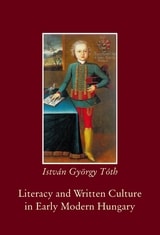
This unequalled volume’s key value is to place Hungary on the map of European literacy rates over the whole period between the initial stimuli of Renaissance and Reformation and the developed, state-organized educational systems of the (later) nineteenth century. 

Suitable for academics across a wide range of subject areas, Tóth’s work is a broad international comparative analysis, concentrating on the long-term development of literacy rates and the use of written and oral culture in early modern societies. Tóth also examines the social history of elementary schools and its teachers, and book reading among peasants and noblemen throughout the sixteenth to nineteenth centuries in Hungary. 

Literacy and Written Culture includes references to the development of libraries during the period and on the use of different languages – of particular importance is an examination of Latin usage. This volume is an extremely lively and stimulating guide providing fascinating insights into village life, legal and administrative issues and the role of the clergy. Its overall content contributes to major debates in the fields of language, literacy, linguistics and social history.
[more]
cover of Lost in Transition: Ethnographies of Everyday Life after Communism

Lost in Transition

Ethnographies of Everyday Life after Communism

Kristen Ghodsee

Duke University Press, 2011

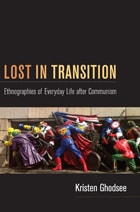
Lost in Transition tells of ordinary lives upended by the collapse of communism. Through ethnographic essays and short stories based on her experiences with Eastern Europe between 1989 and 2009, Kristen Ghodsee explains why it is that so many Eastern Europeans are nostalgic for the communist past. Ghodsee uses Bulgaria, the Eastern European nation where she has spent the most time, as a lens for exploring the broader transition from communism to democracy. She locates the growing nostalgia for the communist era in the disastrous, disorienting way that the transition was handled. The privatization process was contested and chaotic. A few well-connected foreigners and a new local class of oligarchs and criminals used the uncertainty of the transition process to take formerly state-owned assets for themselves. Ordinary people inevitably felt that they had been robbed. Many people lost their jobs just as the state social-support system disappeared. Lost in Transition portrays one of the most dramatic upheavals in modern history by describing the ways that it interrupted the rhythms of everyday lives, leaving confusion, frustration, and insecurity in its wake.
[more]