Results by title
81 books match the query 'Executive Branch' and 4 start with l
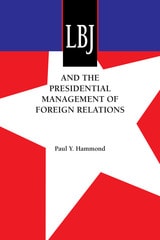
LBJ and the Presidential Management of Foreign Relations
By Paul Y. Hammond
University of Texas Press, 1993
In this insightful study, Paul Y. Hammond, an experienced analyst of bureaucratic politics, adapts and extends that approach to explain and evaluate the Johnson administration’s performance in foreign relations in terms that have implications for the post–Cold War era.
The book is structured around three case studies of Johnson’s foreign policy decision making. The first study examines economic and political development. It explores the way Johnson handled the provision of economic and food assistance to India during a crisis in India’s food policies. This analysis provides lessons not only for dealing with African famine in later years but also for assisting Eastern Europe and the former Soviet Union.
The second case study focuses on U.S. relations with Western Europe at a time that seemed to require a major change in the NATO alliance. Here, Hammond illuminates the process of policy innovation, particularly the costs of changing well-established policies that embody an elaborate network of established interests. The third case study treats the Vietnam War, with special emphasis on how Johnson decided what to do about Vietnam. Hammond critiques the rich scholarship available on Johnson’s advisory process, based on his own reading of the original sources.
These case studies are set in a larger context of applied theory that deals more generally with presidential management of foreign relations, examining a president’s potential for influence on the one hand and the constraints on his or her capacity to control and persuade on the other. It will be important reading for all scholars and policymakers interested in the limits and possibilities of presidential power in the post–Cold War era.
Learning While Governing
Expertise and Accountability in the Executive BranchSean Gailmard and John W. Patty
University of Chicago Press, 2013
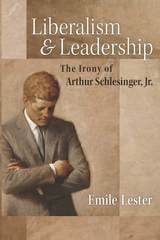
Liberalism and Leadership
The Irony of Arthur Schlesinger, Jr.Emile Lester
University of Michigan Press, 2019
Most scholars and pundits today view Franklin Delano Roosevelt and John F. Kennedy as aggressive liberal leaders, while viewing Schlesinger’s famous histories of their presidencies as celebrations of their steadfast progressive leadership. A more careful reading of Schlesinger’s work demonstrates that he preferred an ironic political outlook emphasizing the virtues of restraint, patience, and discipline. For Schlesinger, Roosevelt and Kennedy were liberal heroes and models as much because they respected the constraints on their power and ideals as because they tested traditional institutions and redefined the boundaries of presidential power.
Aggressive liberalism involves the use of inspirational rhetoric and cunning political tactics to expand civil liberties and insure economic equality. Schlesinger’s emphasis on the crucial role that irony has played and should play in liberalism poses a challenge to the aggressive liberalism advocated by liberal activists, political thinkers, and pundits. That his counsel was grounded in conservative insights as well as liberal values makes it accessible to leaders across the political spectrum.
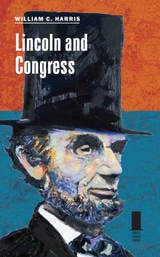
Lincoln and Congress
William C. Harris
Southern Illinois University Press, 2017
In Lincoln and Congress, William C. Harris reveals that the relationship between the president and Congress, though sometimes contentious, was cooperative rather than adversarial. During his time as president, Abraham Lincoln embodied his personal conviction that the nation’s executive should not interfere with the work of the legislature, and though often critical of him privately, in public congressional leaders compromised with and assisted the president to unite the North and minimize opposition to the war.
Despite the turbulence of the era and the consequent tensions within the government, the executive and legislative branches showed restraint in their dealings with each other. In fact, except in his official messages to Congress, Lincoln rarely lobbied for congressional action, and he vetoed only one important measure during his tenure as president. Many congressmen from Lincoln’s own party, although publicly supportive, doubted his leadership and sought a larger role for Congress in setting war policies. Though they controlled Congress, Republican legislators frequently differed among themselves in shaping legislation and in their reactions to events as well as in their relationships both with each other and with the president. Harris draws intriguing sketches of nineteenth-century congressional leaders and shows that, contrary to what historians have traditionally concluded, radical Republicans such as Representative Thaddeus Stevens and Senator Charles Sumner did not dominate their party or Congress. Harris includes the minority party’s role, showing that Northern Democrats and conservative Unionists of the border states generally opposed Republican policies but worked with them on support for the troops and on nonwar issues like the Pacific Railroad Bill.
Lincoln and Congress sheds new light on the influence of members of Congress and their relationship with Lincoln on divisive issues such as military affairs, finance, slavery, constitutional rights, reconstruction, and Northern political developments. Enjoyable both for casual Civil War readers and professional historians, this book provides an engaging narrative that helps readers redefine and understand the political partnership that helped the Union survive.