Results by title
151 books match the query 'Exhibitions' and 9 start with l

Largesse
Jean Starobinski
University of Chicago Press, 1997
Jean Starobinski, noted literary critic and intellectual historian from the University of Geneva, was selected as the third curator in the program. In his exhibition and accompanying essay, Starobinski explores the theme of largesse in its broadest sense. Arguing that gift giving and receiving are fundamental human gestures, he examines graphic and textual representations from the offering of the apple to Eve to Salome's gift of the head of John the Baptist, from the giving of laws to the gift of death. Charity, the poetic gift, and the benefits of Fortune all play a role in Starobinski's extended meditation on the act of donation. Lavishly illustrated and
dazzling in its scope and imagination, Largesse is an exemplar of the rich intellectual work that can result from crossing disciplinary boundaries and considering history as a dense network of themes and allusions.
Lenore Tawney
Mirror of the UniverseEdited by Karen Patterson
University of Chicago Press, 2019
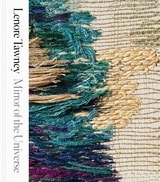
Raised and trained in Chicago before she moved to New York, Tawney had a storied career. She was known for employing an ancient Peruvian gauze weave technique to create a painterly effect that appeared to float in space rather than cling to the wall, as well as for being one of the first artists to blend sculptural techniques with weaving practices and, in the process, pioneered a new direction in fiber art. Despite her prominence on the New York art scene, however, she has only recently begun to receive her due from the greater art world. Accompanying a retrospective at the John Michael Kohler Arts Center, this catalog features a comprehensive biography of Tawney, additional essays on her work, and two hundred full-color illustrations, making it of interest to contemporary artists, art historians, and the growing audience for fiber art.
Copublished with the John Michael Kohler Arts Center.
Life on Display
Revolutionizing U.S. Museums of Science and Natural History in the Twentieth CenturyKaren A. Rader and Victoria E. M. Cain
University of Chicago Press, 2014
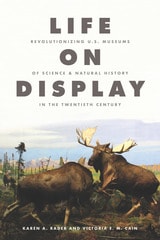
Rader and Cain explain why science and natural history museums began to welcome new audiences between the 1900s and the 1920s and chronicle the turmoil that resulted from the introduction of new kinds of biological displays. They describe how these displays of life changed dramatically once again in the 1930s and 1940s, as museums negotiated changing, often conflicting interests of scientists, educators, and visitors. The authors then reveal how museum staffs, facing intense public and scientific scrutiny, experimented with wildly different definitions of life science and life science education from the 1950s through the 1980s. The book concludes with a discussion of the influence that corporate sponsorship and blockbuster economics wielded over science and natural history museums in the century’s last decades.
A vivid, entertaining study of the ways science and natural history museums shaped and were shaped by understandings of science and public education in the twentieth-century United States, Life on Display will appeal to historians, sociologists, and ethnographers of American science and culture, as well as museum practitioners and general readers.
Lines of Connection
Drawing and Printmaking, 1400-1850Edina Adam
J. Paul Getty Trust, The, 2025
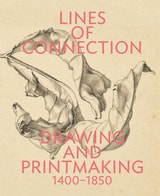
While often viewed and studied separately, drawings and prints have always been closely intertwined. They facilitated and generated the production of one another, and in some instances, clear distinctions between the two dissolved. Many artists created drawings specifically intended for translation into print, and an even greater number used prints as a training tool, copying from them to hone drawing skills. This reciprocal relationship goes even deeper, however, as innovative artists made fascinating hybrid works that blurred the boundaries between the two media, pushing against modern definitions and hierarchies.
Lines of Connection charts these historical and geographical continuities for the first time by bringing together works on paper of superb quality, foregrounding issues of artistic process and collaboration, technical innovation, and creative ingenuity. Featuring over 170 prints and drawings by such artists as Albrecht Dürer, Parmigianino, Hendrick Goltzius, Maria Sibylla Merian, Rembrandt van Rijn, and William Blake, this catalogue is a rich narrative introduction to the compelling, yet understudied, relationship between drawing and printmaking.
This volume is published to accompany an exhibition on view at The Art Institute of Chicago from March 15 to June 1, 2025 and at the J. Paul Getty Museum at the Getty Center from July 1 to September 14, 2025.
Look at me
Photographs from Mexico City by Jed FieldingJed Fielding
University of Chicago Press, 2009
Sight is central to the medium of photography. But what happens when the subjects of photographic portraits cannot look back at the photographer or even see their own image? An in-depth pictorial study of blind schoolchildren in Mexico, Look at me draws attention to (and distinctions between) the activity of sight and the consciousness of form.
Combining aspects of his earlier, acclaimed street work with an innovative approach to portraiture, Chicago-based photographer Jed Fielding has concentrated closely on these children’s features and gestures, probing the enigmatic boundaries between surface and interior, innocence and knowing, beauty and grotesque. Design, composition, and the play of light and shadow are central elements in these photographs, but the images are much more than formal experiments; they confront disability in a way that affirms life. Fielding’s sightless subjects project a vitality that seems to extend beyond the limits of self-consciousness. In collaborative, joyful participation with the children, he has made pictures that reveal essential gestures of absorption and the basic expressions of our creatureliness.
Fielding’s work achieves what only great art, and particularly great portraiture can: it launches and then complicates a process of identification across the barriers that separate us from each other. Look at me contains more than sixty arresting images from which we often want to look away, but into which we are nevertheless drawn by their deep humanity and palpable tenderness. This is a monograph of uncommon significance by an important American photographer.
Looking East
Rubens’s Encounter with AsiaStephanie Schrader
J. Paul Getty Trust, The, 2013
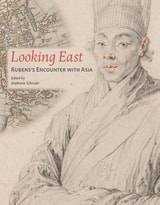
Peter Paul Rubens’s fascinating depiction of a man wearing Korean costume of around 1617, in the collection of the J. Paul Getty Museum, has been considered noteworthy since it was made. Published to accompany an exhibition of Rubens’s Man in Korean Costume at the J. Paul Getty Museum from March 5 to June 9, 2013, Looking East: Rubens’s Encounter with Asia explores the various facets of Rubens’s compelling drawing of this Asian man that appears in later Rubens works. This large drawing was copied in Rubens’s studio during his own time and circulated as a reproductive print in the eighteenth century. Despite the drawing’s renown, however, the reasons why it was made and whether it actually depicts a specific Asian person remain a mystery. The intriguing story that develops involves a shipwreck, an unusual hat, the earliest trade between Europe and Asia, the trafficking of Asian slaves, and the role of Jesuit missionaries in Asia.
The book’s editor, Stephanie Schrader, traces the interpretations and meanings ascribed to this drawing over the centuries. Could Rubens have actually encountered a particular Korean man who sailed to Europe, or did he instead draw a model wearing Asian clothing or simply hear about such a person? What did Europeans really know about Korea during that period, and what might the Jesuits have had to do with the production of this drawing? All of these questions are asked and explored by the book’s contributors, who look at the drawing from various points of view.

Lost and Found
Reclaiming the Japanese American IncarcerationKaren L. Ishizuka
University of Illinois Press, 2006
For decades, a fog of governmental cover-ups, euphemisms, and societal silence kept the victims the mass incarceration of Americans of Japanese descent during World War II from understanding their experiences. The Japanese American National Museum mounted a critically acclaimed exhibition with the twin goals of educating the general public and encouraging former inmates to come to grips with and tell their own history.
Combining heartfelt stories with first-rate scholarship, Lost and Found reveals the complexities of a people reclaiming the past. Author/curator Karen L. Ishizuka, a third-generation Japanese American, deftly blends official history with community memory to frame the historical moment of recovery within its cultural legacy. Detailing the interactive strategy that invited visitors to become part of the groundbreaking exhibition, Ishizuka narrates the processes of revelation and reclamation that unfolded as former internees and visitors alike confronted the experience of the camps. She also analyzes how the dual act of recovering—and recovering from—history necessitates private and public mediation between remembering and forgetting, speaking out and remaining silent.
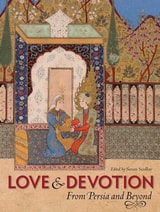
Love and Devotion
From Persia and BeyondEdited by Susan Scollay
Bodleian Library Publishing, 2012
Yusuf and Zulaykha. Khusrau and Shirin. Layla and Majnun. For hundreds of years, Persian poets have captivated audiences with recitations and reinterpretations of timeless tales of earthly and spiritual love. These tales were treasured not only in Iran, but also across the neighboring Mughal and Ottoman Empires.
In Love and Devotion, leading specialists in literature, art history, and philosophy reveal new perspectives on these evocative stories and the exquisite illustrated manuscripts that convey them. Particularly in courtly settings, poetry was a key component of Persian cultural life from the fourteenth through the eighteenth century, and elite patrons commissioned copies of lyrical poems and epics told in verse. Beautifully presented here in full-page reproductions are more than one hundred folios from these illustrated manuscripts, representing masterful works from Hafiz, Rumi, and many others. Echoes of works by Persian poets are manifest across European literature from Dante and Shakespeare to the present, and this lavishly illustrated book reveals new perspectives on the universal theme of love.
Lumen
The Art and Science of Light, 800–1600Kristen Collins
J. Paul Getty Trust, The, 2024
Through the manipulation of materials, such as gold, crystal, and glass, medieval artists created dazzling light-filled environments, evoking, in the everyday world, the layered realms of the divine. While contemporary society separates science and spirituality, the medieval world harnessed the science of light to better perceive and understand the sacred. From 800 to 1600, the study of astronomy, geometry, and optics emerged as a framework that was utilized by theologians and artists to comprehend both the sacred realm and the natural world.
Through essays written by contributors from the fields of art history, the history of science, and neuroscience, and with more than two hundred illustrations, including glimmering golden reliquaries, illuminated manuscripts, rock crystal vessels, astronomical instruments, and more, Lumen cuts across religious, political, and geographic boundaries to reveal the ways medieval Christian, Jewish, and Islamic artists, theologians, and thinkers studied light. To convey the sense of wonder created by moving light on precious materials, a number of contemporary artworks are placed in dialogue with historic objects.
This volume is published to accompany an exhibition on view at the J. Paul Getty Museum at the Getty Center from September 10 to December 8, 2024.