Results by title
520 books match the query 'Family' and 28 start with l
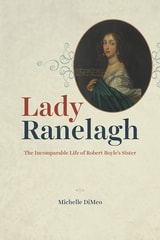
Lady Ranelagh
The Incomparable Life of Robert Boyle's SisterMichelle DiMeo
University of Chicago Press, 2021
Philosophers, mathematicians, politicians, and religious authorities sought her opinion on everything from decimalizing the currency to producing Hebrew grammars. She practiced medicine alongside distinguished male physicians, treating some of the most elite patients in London. Her medical recipes, political commentaries, and testimony concerning the philosophers’ stone gained international circulation. She was an important influence on Boyle and a formidable thinker in her own right.
Drawing from a wealth of new archival sources, Michelle DiMeo fills out Lady Ranelagh’s legacy in the context of a historically sensitive and nuanced interpretation of gender, science, and religion. The book re-creates the intellectual life of one of the most respected and influential women in seventeenth-century Europe, revealing how she managed to gain the admiration of diverse contemporaries, effect social change, and shape contemporary science.
Landbridge
Life in FragmentsY-Dang Troeung
Duke University Press, 2024
Larks
PoemsHan VanderHart
Ohio University Press, 2025
The core of Larks is rural and mythic and true, existential and domestic, tender while full of sharp grief and documentation. Circling genealogies of silence and harm in a southern family, Larks centers on the relationship and memories of three sisters and Ovid’s telling of Philomel. In a landscape inhabited as much by farm animals (cows, goats, chickens, and barn kittens) as by the family, the lyric poem parses and articulates the self’s history—from the experience of a sister’s home birth to the traumatic erasure (and recovery) of the speaker’s memory. A work of poetic memoir, Larks asks if poetry can hold the heaviest truths we carry. The answer is a resounding yes.
Las Palmas
Keith Jones
Omnidawn, 2026
The poems of Las Palmas conjure, walk beside, and tarry with the entangled grief of the long histories and violences in which we are all still embedded. Jones offers homage to the anguished beauties and truths that poet Jay Wright once said were “the disturbances” that “our ancestors create in us.” Grounded in musicality and haptics, Las Palmas seeks to salvage and mend while meditating on materiality, loss, cartography, kinship, displacement, coloniality, the “modern” world, and climate disasters. Throughout this collection, Keith Jones finds truth and community amid despair and the cruelest of circumstances, working through traumatic intimacies and mapping new imaginaries.
Las Palmas is the winner of the 2023 Omnidawn Poetry Chapbook Contest, selected by Brody Parrish Craig.
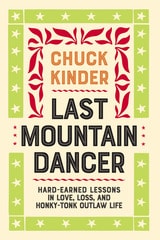
Last Mountain Dancer
Hard-Earned Lessons in Love, Loss, and Honky-Tonk Outlaw LifeChuck Kinder
West Virginia University Press, 2018
This gonzo-style metamemoir follows Chuck Kinder on a wild tour of the back roads of his home state of West Virginia, where he encounters Mountain State legends like Sid Hatfield, Dagmar, Robert C. Byrd, the Mothman, Chuck Yeager, Soupy Sales, Don Knotts, and Jesco White, the “Dancing Outlaw.”
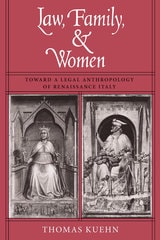
Law, Family, and Women
Toward a Legal Anthropology of Renaissance ItalyThomas Kuehn
University of Chicago Press, 1991
influence of law on Italian society during the Renaissance,
especially in the spheres of family and women. Kuehn's use
of legal sources along with letters, diaries, and
contemporary accounts allows him to present a compelling
image of the social processes that affected the shape and
function of the law.
The numerous law courts of Italian city-states
constantly devised and revised statutes. Kuehn traces the
permutations of these laws, then examines their use by
Florentines to arbitrate conflict and regulate social
behavior regarding such issues as kinship, marriage,
business, inheritance, illlegitimacy, and gender. Ranging
from one man's embittered denunciation of his father to
another's reaction to his kinsmen's rejection of him as
illegitimate, Law, Family, and Women provides
fascinating evidence of the tensions riddling family life in
Renaissance Florence. Kuehn shows how these same tensions,
often articulated in and through the law, affected women. He
examines the role of the mundualdus—a male legal guardian
for women—in Florence, the control of fathers over their
married daughters, and issues of inheritance by and through
women. An ambitious attempt to reformulate the agenda of
Renaissance social history, Kuehn's work will be of value to
both legal anthropologists and social historians.
Thomas Kuehn is professor of history at Clemson
University.
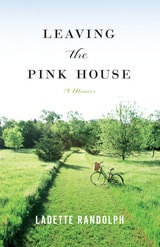
Leaving the Pink House
Ladette Randolph
University of Iowa Press, 2014
On September 12, 2001, Randolph and her husband bought a dilapidated farmhouse on twenty acres outside Lincoln, Nebraska, and set about gutting and rebuilding the house themselves. They had nine months to complete the work. The project, undertaken at a time of national unrest and uncertainty, led Randolph to reflect on the houses of her past and the stages of her life that played out in each, both painful and joyful. As the couple struggles to bring the dilapidated house back to life, Randolph simultaneously traces the contours of a life deeply shaped by the Nebraska plains, where her family has lived for generations, and how those roots helped her find the strength to overcome devastating losses as a young adult. Weaving together strands of departures and arrivals, new houses and deep roots, cycles of change and the cycles of the seasons, Leaving the Pink House is a richly layered and compelling memoir of the meaning of home and family, and how they can never really leave us, even if we leave them.
Legacy of a False Promise
A Daughter's ReckoningMargaret Fuchs Singer
University of Alabama Press, 2009
Margaret Fuchs was thirteen in June 1955 when she learned that her parents had been Communists while working for the U.S. government in the 1930s and '40s. This book chronicles the years during which her parents were exposed and her father was subpoenaed before the House Un-American Activities Committee. Eventually he named names, and subsequently lost his job as a law professor at American University, and was blacklisted from teaching ever again. Legacy of a False Promise also details the author's quest as an adult to learn whether or not her parents ever spied for the Soviet Union.
Based on eight years of research using family records, FBI files, American University archives, personal interviews, and the recently declassified Venona cables, Legacy of a False Promise offers unique insights into the McCarthy Era. Most "red-diaper babies" who have written on the subject had parents who refused to give in to HUAC's demands. Singer's work instead recounts the shame and series of betrayals that her father's decision to name names brought to her family. Furthermore, it explores the campaign of the liberal anti-Communist movement to publicize its political position while defending a fired ex-Communist professor, the nature and activities of secret Communist underground cells, and the motivation of New Deal government workers who spied for the Soviets.
This is a poignant meditation on family secrets, father-daughter relationships in times of crisis, teenage loneliness in the midst of trauma, and the effects of parents' actions on the lives of their children. It also serves as a timely reminder of the dangers of sacrificing civil liberties in the name of national security.
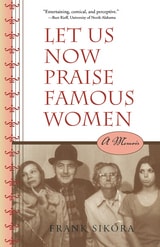
Let Us Now Praise Famous Women
A MemoirFrank Sikora
University of Alabama Press, 2005
An affectionate, humorous account of small town Alabama during the civil rights era.
When Frank Sikora's six-year-old daughter contracted pneumonia in 1962, his wife Millie vowed that would be the last winter she would spend in Ohio. Despite their misgivings about the racial tensions erupting there, they moved their family of six south, where Frank hoped to fulfill his dream of becoming a newspaper reporter. But when those dreams didn't materialize immediately, mounting bills, repossession, and eviction forced them to move in with Millie's parents, Dan and Minnie Belle Helms, in rural Wellington, Alabama.
With even slimmer prospects for employment in impoverished Calhoun County, the Sikoras came to depend heavily upon the Helmses and extended family members and all their lives became closely intertwined. The Helmses were uneducated, unpolished people, but Sikora's narration of his life with them—often humorous but never condescending—provides a compelling portrait of the attitudes and lifestyle of poor whites in Alabama during the second half of the 20th century, just as James Agee's monumental work, Let Us Now Praise Famous Men, illuminated the Depression years in Hale County, Alabama. Sikora illustrates how resourceful, southern women, in particular, held their families together through trying times.
Interwoven with this commentary on rural white culture in the Deep South is the story of Sikora's developing career as a newsman. Determined to succeed, he finally lands a job with the Gadsden Times reporting the news of black citizens. From that introduction to journalism, Sikora becomes one of Alabama's most acclaimed chroniclers of the civil rights movement, eventually writing some of the acknowledged masterpieces about the subject. Like his landmark book, Selma, Lord, Selma, Sikora's newest work tells the stories of ordinary Alabamians and their perspectives on extraordinary times.
Letters from Limbo
Jeanne Marie Beaumont
CavanKerry Press, 2016
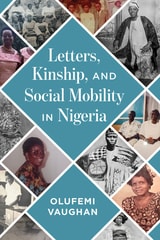
Letters, Kinship, and Social Mobility in Nigeria
Olufemi Vaughan
University of Wisconsin Press, 2023
Letter writing was a dominant form of communication for Western-educated elites in colonial Africa, especially in Nigeria. Exposure to the modern world and a growing sense of nationalism were among the factors that led people to begin exchanging letters, particularly in their interactions with British colonial authorities. Through careful textual analysis and broad contextualization, Vaughan reconstructs dominant storylines, including themes such as kinship, social mobility, Western education, modernity, and elite consolidation in colonial and post-colonial Nigeria. Vaughan brings his prodigious skills as an interdisciplinary scholar to bear on this wealth of information, bringing to life a portrait, at once intimate and expansive, of a community during a transformative period in African history.
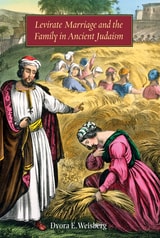
Levirate Marriage and the Family in Ancient Judaism
Dvora E. Weisberg
Brandeis University Press, 2009
Liberating Economics
Feminist Perspectives on Families, Work, and GlobalizationDrucilla K. Barker and Susan F. Feiner
University of Michigan Press, 2004
Rooted in the two disciplines, this book draws on the rich tradition of interdisciplinary work in feminist social science scholarship to construct a parallel between the notions that the "personal is political" and "the personal is economic."
Drucilla K. Barker is Professor of Economics and Women's Studies, Hollins University.
Susan F. Feiner is Associate Professor of Economics and Women's Studies, University of Southern Maine.
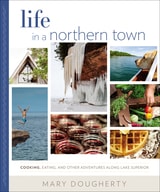
Life in a Northern Town
Cooking, Eating, and Other Adventures along Lake SuperiorMary Dougherty
Wisconsin Historical Society Press, 2017
—from the Introduction
In 2007, Mary Dougherty and her family moved from St. Paul to the tiny Bayfield Peninsula, surrounded by the waters of Lake Superior and Chequamegon Bay in far northwestern Wisconsin. There they set out to live their lives against a backdrop of waterfalls, beaches, farm stands, and a quintessential small town of 487 people. Through recipes, stories, and photos, this book explores what it means to nourish a family and a community. As Mary Dougherty incorporates what is grown and raised in northern Wisconsin into her family’s favorite dishes, she continues a cultural tradition begun by immigrants hundreds of years ago. The result is a one-of-a-kind collection of globally and regionally inspired recipes featuring local cheeses, meats, and produce from the farmers in and around Bayfield—pho made with beef bones from a farm in Mellen, Indian meatballs with curry powder made in Washburn, chowder with corn and potatoes from a farm stand in Ashland. As she knits herself into the Bayfield community, Dougherty comes to more fully grasp the intricate relationship between food and community.
Lights in Cold Rooms
A Psychologist Reflects on Family, Aging, Love & LossJoan Cusack Handler
CavanKerry Press, 2025
Lights in Cold Rooms shares Joan Cusack Handler’s personal experiences with depression as a licensed psychologist with forty years of experience treating patients. For many, including Handler, quarantine precluded the preferred treatment of psychotherapy. Handler turned to her own pathology to teach herself and others how to navigate both isolation and depression. Feelings of anxiousness and impending mortality intensified as she faced the death of her older sister and grappled with the guilt that erupted when she learned that an in-person memorial service was impossible. Opening both her personal history and pathology to public view, Handler chronicles her confrontation with eighty years of family dynamics and explores the path she took to return to a place of hope.
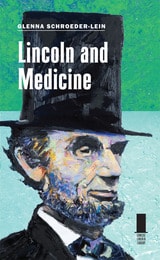
Lincoln and Medicine
Glenna R. Schroeder-Lein
Southern Illinois University Press, 2012
Since his assassination in 1865, Lincoln has been diagnosed with no less than seventeen conditions by doctors, historians, and researchers, including congestive heart failure, epilepsy, Marfan syndrome, and mercury poisoning. Schroeder-Lein offers objective scrutiny of the numerous speculations and medical mysteries that continue to be associated with the president’s physical and mental health, from the recent interest in testing Lincoln’s DNA and theories that he was homosexual, to analysis of the deep depressions, accidents, and illnesses that plagued his early years. Set within the broader context of the prevailing medical knowledge and remedies of the era, Lincoln and Medicine takes into account new perspectives on the medical history of Abraham Lincoln and his family, offering an absorbing and informative view into a much-mythologized, yet underinvestigated, dimension of one of the nation’s most famous leaders.
Best of the Best by the Univeristy Press Books for Public and Secondary School Libraries, 2013
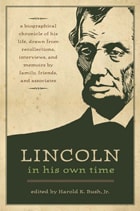
Lincoln in His Own Time
A Biographical Chronicle of His Life, Drawn from Recollections, Interviews, and Memoirs by Family, Friends, and AssociatesHarold K. Bush
University of Iowa Press, 2011
More than any other American before or since, Abraham Lincoln had a way with words that has shaped our national idea of ourselves. Actively disliked and even vilified by many Americans for the vast majority of his career, this most studied, most storied, and most documented leader still stirs up controversy. Showing not only the development of a powerful mind but the ways in which our sixteenth president was perceived by equally brilliant American minds of a decidedly literary and political bent, Harold K. Bush’s Lincoln in His Own Time provides some of the most significant contemporary meditations on the Great Emancipator’s legacy and cultural significance.
The forty-two entries in this spirited collection present the best reflections of Lincoln as thinker, reader, writer, and orator by those whose lives intertwined with his or those who had direct contact with eyewitnesses. Bush focuses on Lincoln’s literary interests, reading, and work as a writer as well as the evolving debate about his religious views that became central to his memory. Along with a star-struck Walt Whitman writing of Lincoln’s “inexpressibly sweet” face and manner, Elizabeth Keckly’s description of a bereaved Lincoln, “genius and greatness weeping over love’s idol lost,” and William Stoddard’s report of the “cheery, hopeful, morning light” on Lincoln’s face after a long night debating the fate of the nation, the volume includes selections from works by famous contemporary figures such as Hawthorne, Douglass, Stowe, Lowell, Twain, and Lincoln himself in addition to lesser-known selections that have been nearly lost to history. Each entry is introduced by a headnote that places the selection in historical and cultural context; explanatory endnotes provide information about people and places. A comprehensive introduction and a detailed chronology of Lincoln’s eventful life round out the volume.
Bush’s thoughtful collection reveals Lincoln as a man of letters who crafted some of the most memorable lines in our national vocabulary, explores the striking mythologization of the martyred president that began immediately upon his death, and then combines these two themes to illuminate Lincoln’s place in public memory as the absolute embodiment of America’s mythic civil religion. Beyond providing the standard fare of reminiscences about the rhetorically brilliant backwoodsman from the “Old Northwest,” Lincoln in His Own Time also maps a complex genealogy of the cultural work and iconic status of Lincoln as quintessential scribe and prophet of the American people.
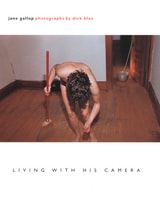
Living with His Camera
Jane Gallop
Duke University Press, 2003
Living with His Camera is Gallop’s nuanced meditation on photography and the place it has in her private life and in her family. A reflection on family, it attempts—like Blau’s photographs themselves—to portray the realities of family life beyond the pieties of conventional representations. Living with His Camera is about some of the most pressing issues of visuality and some of the most basic issues of daily life. Gallop considers intimate photographs of moments both dramatic and routine: of herself giving birth to son Max or crying in the midst of an argument with Blau, pouring herself cereal as Max colors at the breakfast table, or naked, sweeping the floor. With her trademark candor, humor, and critical acumen, Gallop mixes personal reflection with close readings of Roland Barthes’s Camera Lucida, Susan Sontag’s On Photography, Kathryn Harrison’s novel Exposure, and Pierre Bourdieu’s Photography.
Presenting his photographs and her text, Living with His Camera is a portrait of a couple whose professional activity is part of their private lives and whose private life is viewed through their professional gazes. While most of us set aside rigorous thought when we turn to the sentimental realm of home life, Gallop and Blau look at each other not only with great affection but also with the keen focus of a sharp, critical gaze.
Looking and Seeing/Seeing and Looking
Damon Potter and Truong Tran
Omnidawn, 2023
This book brings together different perspectives under two titles, considering the lives and experiences of two friends, one Vietnamese American and one white. Looking And Seeing is a poetic work of yearning, regret, and righteous indignation. In Truong Tran’s poetry, what is said and what is written reveal our complexities. Composed as an investigation of his own being and body as a brown person moving through white spaces, this collection moves alongside Tran’s friend and collaborator Damon Potter. Seeing and Looking offers a record of Potter’s perspective as a white man examining who he is and wants to be and the complications of trying to be good while also benefiting from histories of oppression. Potter considers death—both his own future death and the deaths of his friends—while grappling with how to witness horrors, wonders, and his self.
Loser Sons
Politics and AuthorityAvital Ronell
University of Illinois Press, 2013
Loss, A Love Story
Imagined Histories and Brief EncountersSophie Ratcliffe
Northwestern University Press, 2024
Part memoir, part imagined history, this unique personal essay depicts the intimate experience of childhood bereavement, lost love affairs, and the complicated realities of motherhood and marriage. Framed by an extended train journey, author Sophie Ratcliffe turns to the novels, novelists, and heroines who have shaped her emotional and romantic landscapes. She transports us with her to survey the messiness of everyday life, all while reflecting on steam propulsion and pop songs, handbags and honeymoons, Anna Karenina and Anthony Trollope, former lovers and forgotten muses. Frank, funny, tender, and transporting, Loss, A Love Story asks why we fall in, and out, of love—and how we might understand doing so amid the ongoing upheavals and unwritten futures of the twenty-first century.

Love Letter To Who Owns The Heavens
Corey Van Landingham
Tupelo Press, 2021
“What love poem / could be written when men can no longer / look up?” this book asks, always in a state of flux between doubt and belief—in wars, in gods, in fathers, in love. Through epistolary addresses to these figures of power and others, these poems attempt to make bodies concrete and dangerous, immediate and addressable, once again.
Love Makes a Family
Portraits of Lesbian, Gay, Bisexual, and Transgendered Parents and Their FamiliesGigi Kaeser
University of Massachusetts Press, 1999
This handsome volume combines interviews and photographs to document the experiences of lesbian, gay, bisexual, and transgendered parents and their children. It allows all of the family members to speak candidly about their lives, their relationships, and the ways in which they have dealt with the pressures of homophobia. Included in the book are people from a diverse array of racial, ethnic, and economic backgrounds, representing a wide range of family structures. Together, they provide clear evidence that family roles and responsibilities need not be based on gender, and that children thrive in an atmosphere in which understanding, respect, and love transcend the prejudices of the day.
Love and Marriage in the Middle Ages
Georges Duby
University of Chicago Press, 1993
Beautifully written in Duby's characteristically nuanced and powerful style, this collection is an ideal entree into Duby's thinking about marriage and the diversities of love, spousal decorum, family structure, and their cultural context in bodily and spiritual values. Love and Marriage in the Middle Ages will be of great interest to students in social and cultural history, medieval and early modern history, and women's studies, as well as those interested in the nature of social life in the Middle Ages.
Georges Duby (1919-1996) was a member of the Académie française and for many years held the distinguished chair in medieval history at the Collège de France. His books include The Three Orders; The Age of Cathedrals; The Knight, the Lady, and the Priest; Love and Marriage in the Middle Ages; and History Continues, all published by the University of Chicago Press.
Love in a Global Village
A Celebration of Intercultural Families in the MidwestJessie Carroll Grearson
University of Iowa Press, 2000
In praise of diversity, Jessie Grearson and Lauren Smith offer Love in a Global Village: A Celebration of Intercultural Families in the Midwest, an account of the triumphs of fifteen intercultural families and the perseverance of their relationships in midwestern America. The couples recount their courtships, their adventures and difficulties, and their individual choices to create families and build lives together despite differences of race, language, religion, and culture.
Welcomed into homes in towns like Kalona, Iowa, and Springfield, Missouri, Grearson and Smith introduce readers to unexpected fusions of culture in middle America. By focusing on small communities where intercultural relationships are exceptions rather than the norm, Smith and Grearson offer affirmation that multicultural households can endure and flourish almost anywhere.
Lucky Fish
Aimee Nezhukumatathil
Tupelo Press, 2011
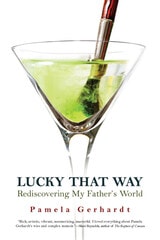
Lucky That Way
Rediscovering My Father's WorldPamela Gerhardt
University of Missouri Press, 2013
“I decide that from now on we should listen to him. His lip may be deflated and his left side paralyzed, but he knows. And he has made terrible mistakes. But he knows. He knows. We are lucky that way.”
Lucky That Way, a nuanced, richly engaging memoir, chronicles the joys and tribulations of a daughter who rediscovers her father as he nears the end of his life. Ernie Gerhardt, an artist and teacher, is largely estranged from his five children, but when he suffers a debilitating stroke, his daughter Pamela must fly to Las Vegas to tend to him. When she arrives to find Ernie newly and shockingly fragile, she is hit by an unexpected wave of tenderness.
As she watches over him in intensive care, she recalls turning points in her family history—the early death of her mother and her father’s turn to heavy drinking--and reflects on the idiosyncrasies that make an imperfect and unique family, on what it means to become old, on what happens when parents are no longer the caregivers but the cared-for, and on how a family copes with their responsibility to the elderly.
Written in a crisp, engaging style, the story is less about the drudgery of finding the right mix of medicines, at-home caregivers, and rehabilitation centers and more about the emotional ramifications of caring for the sick under the weight of sometimes flawed attachments.
People make mistakes, grow old, get sick, and pass on from this world. Lucky That Way examines the irritations and comforts of contemporary family bonds. Gerhardt sifts through the complicated, multi-layered relationships for both wry comedy and high drama and records a string of triumphs and mishaps as Ernie and his five adult children struggle to manage his life and find meaning before their time runs out.
The emerging theme of imperfect humans struggling with life's great mysteries will strike a chord of recognition with the tens of thousands of Baby-Boomers and Gen-Xers who are currently facing similar circumstances with their elderly loved ones. Pamela Gerhardt’s heartfelt story about a family coming to terms with their aging father’s illness and imminent death takes readers on an emotional roller coaster that highlights love, loss, humor, and sadness.
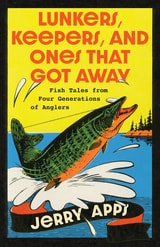
Lunkers, Keepers, and Ones that Got Away
Fish Tales from Four Generations of AnglersJerry Apps
Wisconsin Historical Society Press, 2025
From his first experiences going fishing with his pa as a boy, Jerry Apps was hooked. Eighty-some years later, Apps reflects on a lifetime of fishing and the memories and lessons hauled in along the way. As he recounts the simple pleasures of casting a line from shore on a warm summer evening or reeling in a lunker on opening day of trout season, he reminds us of the values fishing can teach people of all ages: persistence, resourcefulness, and the importance of caring for our natural world.
Along with his best-loved fish tales, Apps includes fishing photos from the family album and favorite angling locales, lingo, bait, and gear. He draws on interviews with fellow fishermen and -women, his own journal entries recorded over decades, and his popular newspaper column Outdoor Notebook. And, since it’s a tradition among fishing folks to pass along tales told by others, he shares stories that have come his way from extended family and friends—some of them funny, some poignant, many embellished, and all of them keepers. Humorous pen-and-ink illustrations made by artist Sid Boyum to commemorate the annual fishing season opener add charm to this delightful volume.
In Lunkers, Keepers, and Ones that Got Away, Apps captures the exciting, heartwarming, and nostalgia-inducing experiences that fishing brings to avid and casual anglers alike.