Results by title
340 books match the query 'Folklore' and 17 start with l
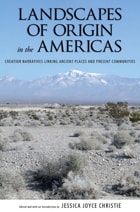
Landscapes of Origin in the Americas
Creation Narratives Linking Ancient Places and Present CommunitiesEdited and with an introduction by Jessica Joyce Christie
University of Alabama Press, 2009
By linking ancient places with present communities, Landscapes of Origin in the Americas explores how cultural landscapes sustain the continuity of origin narratives.
Landscape is a powerful factor in the operation of memory because of the associations narrators make between the local landscape and the events of the stories they tell. Ancestors and mythological events often become fixed in a specific landscape and act as timeless reference points.
In conventional anthropological literature, "landscape" is the term applied to the meaning local people bestow on their cultural and physical surroundings. In this work, the authors explore the cultural and physical landscapes an individual or cultural group has constructed to define the origins or beginnings of that cultural group as revealed through shared or traditional memory. The cultural landscapes of origins in diverse sites throughout the Americas are investigated through multidisciplinary research, not only to reveal the belief system and mythologies but also to place these origin beliefs in context and relationship to each other. In a continual interaction between the past, present, and future, time is subordinate to place, and history, as defined in Western academic terms, does not exist.
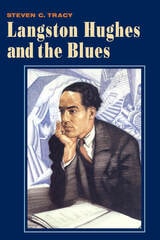
Langston Hughes and the Blues
Steven C. Tracy
University of Illinois Press, 2024
Latter-day Lore
Mormon Folklore StudiesEric A. Eliason
University of Utah Press, 2013

Legendary Ladies of Texas
Francis Edward Abernethy
University of North Texas Press, 1994
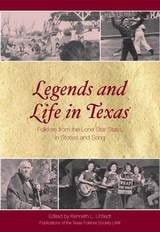
Legends and Life in Texas
Folklore from the Lone Star State, in Stories and SongKenneth L. Untiedt
University of North Texas Press, 2017
Legends and Lore of Southern Illinois
John W. Allen
Southern Illinois University Press, 1963
In the 1950s and ‘60s, John W. Allen told the people of southern Illinois about themselves—about their region, its history, and its folkways—in his series of newspaper articles, “It Happened in Southern Illinois.” Each installment of the series depicted a single item of interest—a town, a building, an enterprise, a person, an event, a custom. Originally published in 1963, Legends & Lore of Southern Illinois brings together a selection of these articles preserving a valuable body of significant local history and cultural lore.
During territorial times and early statehood, southern Illinois was the most populous and most influential part of the state. But the advent of the steamboat and the building of the National Road made the lands to the west and north more easily accessible, and the later settlers struck out for the more expansive and fertile prairies. The effect of this movement was to isolate that section of the state known as Egypt and halt its development, creating what Allen termed “an historical eddy.” Bypassed as it was by the main current of westward expansion and economic growth, its culture changed very slowly. Methods, practices, and the tools of the pioneer continued in use for a long time. The improved highways and better means of communication of the twentieth century brought a marked change upon the region, and daily life no longer differed materially from that of other areas.
Against such a cultural and historical backdrop, Mr. Allen wrote these sketches of the people of southern Illinois—of their folkways and beliefs, their endeavors, successes, failures, and tragedies, and of the land to which they came. There are stories here of slaves and their masters, criminals, wandering peddlers, politicians, law courts and vigilantes, and of boat races on the rivers. Allen also looks at the region’s earlier history, describing American Indian ruins, monuments, and artifacts as well as the native population’s encounters with European settlers.
Many of the vestiges of the region’s past culture have all but disappeared, surviving only in museums and in the written record. This new paperback edition of Legends & Lore of Southern Illinois brings that past culture to life again in Allen’s descriptive, engaging style.

Legends of the Capilano
E. Pauline Johnson
University of Manitoba Press, 2023
Legends of the Common Stream
John Hanson Mitchell
University of Massachusetts Press, 2021
While Mitchell never leaves the brook's shores, he draws from a range of traditions and takes readers on excursions to regions and cultures across the globe and across time, making the case that our contemporary separation from nature goes hand in hand with our alienation from the world of myth. This book seeks to restore these broken relationships and offers the reminder that while cultures may come and go, the stream goes on forever.
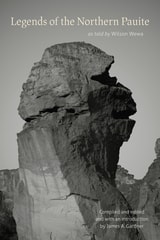
Legends of the Northern Paiute
as told by Wilson WewaWilson Wewa
Oregon State University Press, 2017
The legends in this volume were recorded, transcribed, reviewed, and edited by Wilson Wewa and James Gardner. Each legend was recorded, then read and edited out loud, to respect the creativity, warmth, and flow of Paiute storytelling. The stories selected for inclusion include familiar characters from native legends, such as Coyote, as well as intriguing characters unique to the Northern Paiute, such as the creature embodied in the Smith Rock pinnacle, now known as Monkey Face, but known to the Paiutes in Central Oregon as Nuwuzoho the Cannibal.
Wewa’s apprenticeship to Northern Paiute culture began when he was about six years old. These legends were passed on to him by his grandmother and other tribal elders. They are now made available to future generations of tribal members, and to students, scholars, and readers interested in Wewa’s fresh and authentic voice. These legends are best read and appreciated as they were told—out loud, shared with others, and delivered with all of the verve, cadence, creativity, and humor of original Paiute storytellers on those clear, cold winter nights in the high desert.
Lies to Live By
Lois Beardslee
Michigan State University Press, 2003
Lies To Live By brings together two selections of stories by Ojibwe storyteller Lois Beardslee. “Lies to Live By,” a series of interdependent tales, reflects the storyteller’s role in interpreting traditional stories for contemporary audiences, while preserving traditions based not in mysticism but in pragmatism. In “Calm Days,” three generations—the narrator, her grandfather, and her son—spend a week together on a remote island during the course of which they demonstrate the continuity of Ojibwe life. Together these stories weave the contemporary and the traditional to show how cultural diversity can be preserved even as cultural boundaries are transcended.

Life's Journey—Zuya
Oral Teachings from RosebudAlbert White Hat Sr
University of Utah Press, 2012
“Our people are very lucky to be here,” says Albert White Hat Sr. He has lived through a time when Indians were sent to boarding schools and were not permitted to practice their own rituals. Although the Lakota people can practice their beliefs openly once again, things have changed and old ways have been forgotten. As a teacher at Sinte Gleska University in South Dakota, White Hat seeks to preserve the link the Lakota people have with their past. In Life’s Journey—Zuya, White Hat has collected and translated the stories of medicine men, retaining the simplicity of their language so as not to interpret their words through a Western lens. This is Zuya, oral history that is lived and handed down over the generations.
White Hat also shares stories from his own experience. Using anecdotes he shows not only how the Lakota lifestyle has been altered but also how Lakota words have begun to take on new meanings that lack their original connotations and generate a different picture of Lakota philosophy. Language, interwoven with history, tells the people where they came from and who they are. By gathering the traditions and ceremonies in a single volume, with the history of how they evolved, he has secured the meaning of these practices for futre generations. Filled with warmth and humor, Life’s Journey—Zuya is an enjoyable and enlightening read.
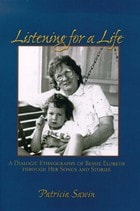
Listening For a Life
A Dialogic Ethnography of Bessie Eldreth through Her Songs and StoriesPatricia Sawin
Utah State University Press, 2004
Drawing on Bahktinian and feminist theory, Sawin pushes forward our understanding of the interactive roles of ethnographer and subject and in the process gives us a deeper understanding of folk singer and storyteller Bessie Eldreth and her greatest art, herself.
Living Folklore, 2nd Edition
An Introduction to the Study of People and Their TraditionsMartha Sims and Martine Stephens
Utah State University Press, 2011
Living Folklore is a comprehensive, straightforward introduction to folklore as it is lived, shared and practiced in contemporary settings. Drawing on examples from diverse American groups and experiences, this text gives the student a strong foundation—from the field's history and major terms to theories and interpretive approaches.
Living Folklore moves beyond genres and classifications, and encourages students who are new to the field to see the study of folklore as a unique approach to understanding people, communities, and day-to-day artistic communication.
This revised edition incorporates new examples, research, and theory along with added discussion of digital and online folklore.
Living Folklore
Introduction to the Study of People and their TraditionsMartha Sims and Martine Stephens
Utah State University Press, 2005
Living Folklore is a comprehensive, straightforward introduction to folklore as it is lived, shared and practiced in contemporary settings. Drawing on examples from diverse American groups and experiences, this text gives the student a strong foundation—from the field’s history and major terms to theories, interpretive approaches, and fieldwork.
Many teachers of undergraduates find the available folklore textbooks too complex or unwieldy for an introductory level course. It is precisely this criticism that Living Folklore addresses; while comprehensive and rigorous, the book is specifically intended to meet the needs of those students who are just beginning their study of the discipline. Its real strength lies in how it combines carefully articulated foundational concepts with relevant examples and a student-oriented teaching philosophy.
Living with Stories
Telling, Re-telling, and RememberingSchneider, William
Utah State University Press, 2008
Looking for Lost Lore
Studies in Folklore, Ethnology, and IconographyGeorge E. Lankford
University of Alabama Press, 2008
Lost Delta Found
Rediscovering the Fisk University-Library of Congress Coahoma County Study, 1941-1942John W. Work
Vanderbilt University Press, 2005
This remarkable book recovers three invaluable perspectives, long thought to have been lost, on the culture and music of the Mississippi Delta.
In 1941 and ’42 African American schol-ars from Fisk University—among them the noted composer and musicologist John W. Work III, sociologist Lewis Wade Jones, and graduate student Samuel C. Adams Jr.—joined folklorist Alan Lomax of the Library of Congress on research trips to Coahoma County, Mississippi. Their mission was “to document adequately the cultural and social backgrounds for music in the community.” Among the fruits of the project were the earliest recordings by the legendary blues singer and guitarist Muddy Waters.
The hallmark of the study was to have been a joint publication of its findings by Fisk and the Library of Congress. While this publication was never completed, Lost Delta Found is composed of the writings, interviews, notes, and musical transcriptions produced by Work, Jones, and Adams in the Coahoma County study. Their work captures, with compelling immediacy, a place, a people, a way of life, and a set of rich musical traditions as they existed in the 1940s.
Illustrated with photos and more than 160 musical transcriptions.