Results by title
329 books match the query 'Folklore & Mythology' and 10 start with l
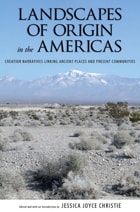
Landscapes of Origin in the Americas
Creation Narratives Linking Ancient Places and Present CommunitiesEdited and with an introduction by Jessica Joyce Christie
University of Alabama Press, 2009
By linking ancient places with present communities, Landscapes of Origin in the Americas explores how cultural landscapes sustain the continuity of origin narratives.
Landscape is a powerful factor in the operation of memory because of the associations narrators make between the local landscape and the events of the stories they tell. Ancestors and mythological events often become fixed in a specific landscape and act as timeless reference points.
In conventional anthropological literature, "landscape" is the term applied to the meaning local people bestow on their cultural and physical surroundings. In this work, the authors explore the cultural and physical landscapes an individual or cultural group has constructed to define the origins or beginnings of that cultural group as revealed through shared or traditional memory. The cultural landscapes of origins in diverse sites throughout the Americas are investigated through multidisciplinary research, not only to reveal the belief system and mythologies but also to place these origin beliefs in context and relationship to each other. In a continual interaction between the past, present, and future, time is subordinate to place, and history, as defined in Western academic terms, does not exist.

Last Cavalier
The Life and Times of John A. Lomax, 1867-1948Nolan Porterfield
University of Illinois Press, 1996
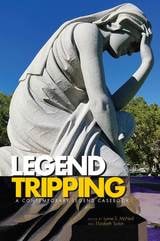
Legend Tripping
A Contemporary Legend CasebookLynne S. McNeill
Utah State University Press, 2018
The volume presents both insightful research and useful pedagogy, making this an invaluable resource in the classroom. Selected major articles on legend tripping, with introductory sections written by the editors, are followed by discussion questions and projects designed to inspire readers to engage critically with legend traditions and customs of legend tripping and to explore possible meanings and symbolics at work. Suggested projects incorporate digital technology as it appears both in legends and in modes of legend tripping.
Legend Tripping is appropriate for students, general readers, and folklorists alike. It is the first volume in the International Society for Contemporary Legend Research series, a set of casebooks providing thorough and up-to-date studies that showcase a variety of scholarly approaches to contemporary legends, along with variants of legend texts, discussion questions, and projects for students.
Contributors: S. Elizabeth Bird, Bill Ellis, Carl Lindahl, Patricia M. Meley, Tim Prizer
Liberating Shahrazad
Feminism, Postcolonialism, and IslamSuzanne Gauch
University of Minnesota Press, 2006
In Liberating Shahrazad, Suzanne Gauch analyzes how postcolonial writers and filmmakers from Algeria, Morocco, and Tunisia have reclaimed the storyteller in order to portray Muslim women in ways that highlight their power to shape their own destinies. Gauch looks at Maghrebian works that incorporate Shahrazad’s storytelling techniques into unexpected and unforeseen narratives. Highlighting the fluid nature of storytelling, Gauch demonstrates how these new depictions of Shahrazad—from artists such as Moufida Tlatli, Fatima Mernissi, Tahar Ben Jelloun, Assia Djebar, Leïla Sebbar—navigate the demands of a global marketplace, even as they reshape the stories told about the Islamic world.
In the face of both rising fundamentalism and proliferating Western media representations of Arab and Muslim women as silent, exploited, and uneducated victims, Gauch establishes how contemporary works of literature and film revive the voice of a long-silenced Shahrazad—and, ultimately, overthrow oppressive images of Muslim women. Suzanne Gauch is assistant professor of English and women’s studies at Temple University.
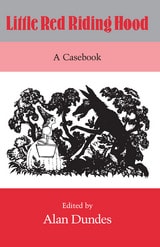
Little Red Riding Hood
A CasebookAlan Dundes
University of Wisconsin Press, 1989
Following versions of the tale by Perrault and the Brothers Grimm, the essays by an international group of scholars provide an impressive cross-section of theoretical approaches.
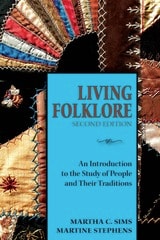
Living Folklore, 2nd Edition
An Introduction to the Study of People and Their TraditionsMartha Sims and Martine Stephens
Utah State University Press, 2011
Living Folklore is a comprehensive, straightforward introduction to folklore as it is lived, shared and practiced in contemporary settings. Drawing on examples from diverse American groups and experiences, this text gives the student a strong foundation—from the field's history and major terms to theories and interpretive approaches.
Living Folklore moves beyond genres and classifications, and encourages students who are new to the field to see the study of folklore as a unique approach to understanding people, communities, and day-to-day artistic communication.
This revised edition incorporates new examples, research, and theory along with added discussion of digital and online folklore.
Living Folklore
Introduction to the Study of People and their TraditionsMartha Sims and Martine Stephens
Utah State University Press, 2005
Living Folklore is a comprehensive, straightforward introduction to folklore as it is lived, shared and practiced in contemporary settings. Drawing on examples from diverse American groups and experiences, this text gives the student a strong foundation—from the field’s history and major terms to theories, interpretive approaches, and fieldwork.
Many teachers of undergraduates find the available folklore textbooks too complex or unwieldy for an introductory level course. It is precisely this criticism that Living Folklore addresses; while comprehensive and rigorous, the book is specifically intended to meet the needs of those students who are just beginning their study of the discipline. Its real strength lies in how it combines carefully articulated foundational concepts with relevant examples and a student-oriented teaching philosophy.
Living with Stories
Telling, Re-telling, and RememberingSchneider, William
Utah State University Press, 2008
Long Steel Rail
Norm Cohen
University of Illinois Press, 2000
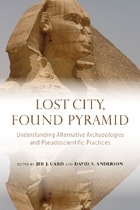
Lost City, Found Pyramid
Understanding Alternative Archaeologies and Pseudoscientific PracticesEdited by Jeb J. Card and David S. Anderson
University of Alabama Press, 2016
A critical investigation into how modern myths shape interpretations of the ancient past.
Lost City, Found Pyramid delves into the fascinating world of sensational “pseudoarchaeology,” from perennial discoveries of lost pyramids or civilizations to contemporary ghost-hunting and reality TV. It examines how nonscientific pursuit of myths and legends warps both public perceptions of archaeology and of human history itself.
A collection of twelve engaging and insightful essays, Lost City, Found Pyramid does far more than argue for the simple debunking of false archaeology. Rather, it brings into focus the value of understanding how and why pseudoarchaeology captures the public imagination. By comprehending pseudoarchaeology’s appeal as a media product, cultural practice, and communication strategy, archaeologists can enhance and enliven how they communicate about real archaeology in the classroom and in the public arena.
The first part of Lost City, Found Pyramid provides numerous case studies. Some examine the work of well-intentioned romantics who project onto actual archaeological data whimsical interpretative frameworks or quixotic “proofs” that confirm legends, such as that of the Lost White City of Honduras, or other alternative claims. Other case studies lay bare how false claims may inadvertently lead to the perpetuation of ethnic stereotypes, economic exploitation, political adventurism, and a misunderstanding of science.
Offering much of interest to scholars and students of archaeology, archaeology buffs, as well as policy-makers involved in the discovery, curation, and care of archaeological sites and relics, Lost City, Found Pyramid provides an invaluable corrective and hopeful strategy for engaging the public’s curiosity with the compelling world of archaeological discovery.