Results by title
198 books match the query 'Food' and 4 start with l
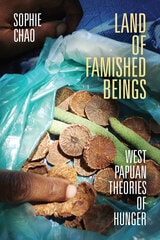
Land of Famished Beings
West Papuan Theories of HungerSophie Chao
Duke University Press, 2025
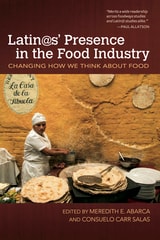
Latin@s' Presence in the Food Industry
Changing How We Think about FoodMeredith E. Abarca
University of Arkansas Press, 2016
The networks Latin@s create, the types of identities they fashion through food, and their relationship to the US food industry are analyzed to understand Latin@s as active creators of food-based communities, as distinctive cultural representations, and as professionals. This vibrant new collection acknowledges issues of labor conditions, economic politics, and immigration laws—structural vulnerabilities that certainly cannot be ignored—and strives to understand more fully the active and conscious ways that Latina@s create spaces to maneuver global and local food systems.
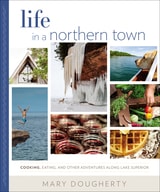
Life in a Northern Town
Cooking, Eating, and Other Adventures along Lake SuperiorMary Dougherty
Wisconsin Historical Society Press, 2017
—from the Introduction
In 2007, Mary Dougherty and her family moved from St. Paul to the tiny Bayfield Peninsula, surrounded by the waters of Lake Superior and Chequamegon Bay in far northwestern Wisconsin. There they set out to live their lives against a backdrop of waterfalls, beaches, farm stands, and a quintessential small town of 487 people. Through recipes, stories, and photos, this book explores what it means to nourish a family and a community. As Mary Dougherty incorporates what is grown and raised in northern Wisconsin into her family’s favorite dishes, she continues a cultural tradition begun by immigrants hundreds of years ago. The result is a one-of-a-kind collection of globally and regionally inspired recipes featuring local cheeses, meats, and produce from the farmers in and around Bayfield—pho made with beef bones from a farm in Mellen, Indian meatballs with curry powder made in Washburn, chowder with corn and potatoes from a farm stand in Ashland. As she knits herself into the Bayfield community, Dougherty comes to more fully grasp the intricate relationship between food and community.
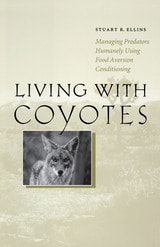
Living with Coyotes
Managing Predators Humanely Using Food Aversion ConditioningBy Stuart R. Ellins
University of Texas Press, 2005
The coyote may well be North America's most adaptable large predator. While humans have depleted or eliminated most other native predators, the coyote has defied all attempts to exterminate it, simultaneously expanding its range from coast to coast and from wilderness to urban areas. As a result, coyotes are becoming the focus of increasing controversy and emotion for people across the continent— from livestock growers who would like to eradicate coyotes to conservationists who would protect them at any cost.
In this thoughtful, well-argued, and timely book, Stuart Ellins makes the case that lethal methods of coyote management do not work and that people need to adopt a more humane way of coexisting with coyotes. Interweaving scientific data about coyote behavior and natural history with decades of field experience, he shows how endlessly adaptive coyotes are and how attempts to kill them off have only strengthened the species through natural selection. He then explains the process of taste aversion conditioning—which he has successfully employed—to stop coyotes from killing domestic livestock and pets. Writing frankly as an advocate of this effective and humane method of controlling coyotes, he asks, "Why are we mired in the use of archaic, inefficient, unsophisticated, and barbaric methods of wildlife management in this age of reason and high technology? This question must be addressed while there is still a wildlife to manage."