Results by title
835 books match the query 'France' and 27 start with l
La Mettrie
Medicine, Philosophy, and EnlightenmentKathleen Wellman
Duke University Press, 1992
Wellman’s study presents La Mettrie as an advocate of progressive medical theory and practice who consistently applied his medical concerns to the reform of philosophy, morals, and society. By examining his training with the Dutch physician Hermann Boerhaave, his satires lampooning the ignorance and venality of the medical profession, and his medical treatises on subjects ranging from vertigo to veneral disease, Wellman illuminates the medical roots of La Mettrie’s philosophy. She shows how medicine encouraged La Mettrie to undertake an impiricist critique of the philosophical tradition and provided the foundation for a medical materialism that both shaped his understanding of the possibilities of moral and social reform and led him to espouse the cause of the philosophers.
Elucidating the medical view of nature, human beings, and society that the Enlightenment and La Mettrie in particular bequethed to the modern world, La Mettrie makes an important contribution to our understanding of both that period and our own.

Lafayette and the Liberal Ideal 1814-1824
Politics and Conspiracy in an Age of ReactionSylvia Neely
Southern Illinois University Press, 1991
Sylvia Neely provides both the first scholarly study of Lafayette’s life after the French Revolution and a detailed analysis of French politics during the early Restoration.
Lafayette, advocating a liberalism based on the American example, used both legal and illegal means to overturn a conservative government. The personification of liberalism for many of his contemporaries, he and his friends Benjamin Constant, Voyer d’Argenson, and Charles Goyet saw themselves as fighters in an international struggle that set liberalism against the forces of reaction and obscurantism. Although he ultimately failed, Lafayette was convinced that the liberal ideals derived from the Enlightenment and from his personal mentor, George Washington, would prevail.
Neely makes Lafayette’s actions clear by considering seriously the principles that guided his life and by describing the political climate of the early nineteenth century. She discloses previously overlooked features of the revolutions of the 1820s which account for the divisions among the revolutionary groups. She also examines relationships between Lafayette and the prominent writers and thinkers of the period, among them Augustin Thierry, Jeremy Bentham, Lady Morgan, and Frances Wright.

Lakanal the Regicide
John Charles Dawson
University of Alabama Press, 1948
Revolution, Republic, and Reform: The Life of a French Enlightenment Statesman in an Age of Upheaval.
After being comparatively neglected for several generations, Joseph Lakanal received many posthumous honors. These memorials of esteem were the tribute of the men of the Third French Republic to an outstanding character of the First Republic, established by the National Convention in 1792.
In numerous towns and cities of France streets and boulevards were named for Lakanal, among them Paris, Tours, Toulouse, and Montpellier. Elementary schools received his name at Perigueux, Cette, Beziers. Secondary schools were named in his honor, such as the Lycee Lakanal at Paris and the College Lakanal at Beziers. At least two monuments were erected to his memory, the more imposing of which was a life-sized statue in bronze at Foix in his native Ariege. The ancient adage that a prophet is not without honor save in his own country was not true of Lakanal.
Lakanal belonged to a group of thinkers at the end of the eighteenth century known as Ideologists, a derogatory term applied to them by First Consul Bonaparte. When, during the period of the Consulate, Bonaparte had signed a Concordat with the Pope whereby Catholicism was restored to France, and when in 1802 he had sought to put into force the terms of the Concordat, he found a stumbling-block to his plans in the membership of the Class of Moral and Political Sciences of the lnstitut de France. In this group were to be found the most influential free-thinkers of the day: Lakanal, Garat, Cabanis, Volney, Ginguene, Mercier, Naigeon, Destutt de Tracy and others who had been consistently hostile to the Church, and who had become hostile to the ambition of Bonaparte.
On the political side, Lakanal was an austere democrat, and remained one all his life. Had he been willing to compromise, he would undoubtedly have gone far under Napoleon. His career is quite in contrast with that of Talleyrand, whose chameleon-like qualities enabled him to occupy high place in the Revolution, the Consulate, the Empire, the Restoration, and the more liberal government of Louis Philippe.
In his profound belief in democracy and public education, and in the wide variety of his knowledge and interest in the various sciences, Lakanal is to be compared with Thomas Jefferson. The two men were of the same school of thought and possessed much in, common. In his passion for public education Lakanal may also be compared to Horace Mann.
Land and Wine
The French TerroirCharles Frankel
University of Chicago Press, 2014
For centuries, France has long been the world’s greatest wine-producing country. Its wines are the global gold standard, prized by collectors, and its winemaking regions each offer unique tasting experiences, from the spice of Bordeaux to the berry notes of the Loire Valley. Although grape variety, climate, and the skill of the winemaker are essential in making good wine, the foundation of a wine’s character is the soil in which its grapes are grown. Who could better guide us through the relationship between the French land and the wine than a geologist, someone who deeply understands the science behind the soil? Enter scientist Charles Frankel.
In Land and Wine, Frankel takes readers on a tour of the French winemaking regions to illustrate how the soil, underlying bedrock, relief, and microclimate shape the personality of a wine. The book’s twelve chapters each focus in-depth on a different region, including the Loire Valley, Alsace, Burgundy, Champagne, Provence, the Rhône valley, and Bordeaux, to explore the full meaning of terroir. In this approachable guide, Frankel describes how Cabernet Franc takes on a completely different character depending on whether it is grown on gravel or limestone; how Sauvignon yields three different products in the hills of Sancerre when rooted in limestone, marl, or flint; how Pinot Noir will give radically different wines on a single hill in Burgundy as the vines progress upslope; and how the soil of each château in Bordeaux has a say in the blend ratios of Merlot and Cabernet-Sauvignon. Land and Wine provides a detailed understanding of the variety of French wine as well as a look at the geological history of France, complete with volcanic eruptions, a parade of dinosaurs, and a menagerie of evolution that has left its fossils flavoring the vineyards.
Both the uninitiated wine drinker and the confirmed oenophile will find much to savor in this fun guide that Frankel has spiked with anecdotes about winemakers and historic wine enthusiasts—revealing which kings, poets, and philosophers liked which wines best—while offering travel tips and itineraries for visiting the wineries today.
Landscape with Smokestacks
The Case of the Allegedly Plundered DegasHoward J. Treinens
Northwestern University Press, 2000

Last Train to Auschwitz
The French National Railways and the Journey to AccountabilitySarah Federman
University of Wisconsin Press, 2021
In the immediate decades after World War II, the French National Railways (SNCF) was celebrated for its acts of wartime heroism. However, recent debates and litigation have revealed the ways the SNCF worked as an accomplice to the Third Reich and was actively complicit in the deportation of 75,000 Jews and other civilians to death camps. Sarah Federman delves into the interconnected roles—perpetrator, victim, and hero—the company took on during the harrowing years of the Holocaust.
Grounded in history and case law, Last Train to Auschwitz traces the SNCF’s journey toward accountability in France and the United States, culminating in a multimillion-dollar settlement paid by the French government on behalf of the railways.The poignant and informative testimonies of survivors illuminate the long-term effects of the railroad’s impact on individuals, leading the company to make overdue amends. In a time when corporations are increasingly granted the same rights as people, Federman’s detailed account demonstrates the obligations businesses have to atone for aiding and abetting governments in committing atrocities. This volume highlights the necessity of corporate integrity and will be essential reading for those called to engage in the difficult work of responding to past harms.
Le Corbusier's Formative Years
Charles-Edouard Jeanneret at La Chaux-de-FondsH. Allen Brooks
University of Chicago Press, 1997
"There is much in this fine volume for anyone interested not just in architecture, but in the roots of human creativity and in the origins of the most powerful artistic current of our century. . . . This book is a life's work of scholarship. It has been well spent."—Toronto Globe and Mail

Le Corbusier
The City of Refuge, Paris 1929/33Brian Brace Taylor
University of Chicago Press, 1988
Brian Brace Taylor draws on extensive archival research to reconstruct each step of the architect's attraction to the commission, his design process and technological innovations, the social and philosophical compatibility of the Salvation Army with Le Corbusier's own ideas for urban planning, and finally, the many modifications required, first to eliminate defects and later to accommodate changes in the services the building provided. Throughout, Taylor focuses on Le Corbusier's environmental, technological, and social intentions as opposed to his strictly formal intentions. He shows that the City of Refuge became primarily a laboratory for the architect's own research and not simply a conventional solution to residents' requirements or the Salvation Army's program.

Le Jazz
Jazz and French Cultural IdentityMatthew F. Jordan
University of Illinois Press, 2010
In Le Jazz, Matthew F. Jordan deftly blends textual analysis, critical theory, and cultural history in a wide-ranging and highly readable account of how jazz progressed from a foreign cultural innovation met with resistance by French traditionalists to a naturalized component of the country's identity. Jordan draws on sources including ephemeral critical writing in the press and twentieth-century French literature to trace the country's reception of jazz, from the Cakewalk dance craze and the music's significance as a harbinger of cultural recovery after World War II to its place within French ethnography and cultural hybridity.
Countering the histories of jazz's celebratory reception in France, Jordan delves in to the reluctance of many French citizens to accept jazz with the same enthusiasm as the liberal humanists and cosmopolitan crowds of the 1930s. Jordan argues that some listeners and critics perceived jazz as a threat to traditional French culture, and only as France modernized its identity did jazz become compatible with notions of Frenchness. Le Jazz speaks to the power of enlivened debate about popular culture, art, and expression as the means for constructing a vibrant cultural identity, revealing crucial keys to understanding how the French have come to see themselves in the postwar world.

Legacies of Anti-Semitism in France
Jeffrey Mehlman
University of Minnesota Press, 1983
Legacies of Anti-Semitism in France was first published in 1983. Minnesota Archive Editions uses digital technology to make long-unavailable books once again accessible, and are published unaltered from the original University of Minnesota Press editions.
These four essays—on Blanchot, Lacan, Giraudoux, and Gide—have as their focus the barely imaginable coherence which the writings of four major contemporaries take on when read in the light of France's pre-World War II heritage of anti-Jewish thought. As the essays delve into such crucial topics as the inaugural silence in Blanchot's sense of literature, the "style" of Lacan, Giraudoux's relation to Racine, and the sexual politics of Gide, they engage a realm that at times seems—or seemed—anti-Semitic in its essence. Negotiating the complex ramifications of a lost tradition and the structure of its obliteration, Jeffrey Mehlman, in his conclusion, speculates on the emblematic value of Walter Benjamin's perpetually deferred "journey to Palestine via France" and its import for textual interpretation.
A French version of Mehlman's essay on Blanchot, published in Tel quel,spurred an impassioned journalistic debate in Paris and London. Broadening still further the context of that inquiry, Legacies will prove a source of provocation and insight to all who are interested in the intellectual history of contemporary France.
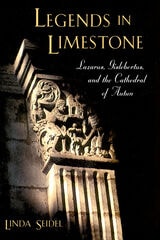
Legends in Limestone
Lazarus, Gislebertus, and the Cathedral of AutunLinda Seidel
University of Chicago Press, 1999
Legends in Limestone reveals how "Gislebertus, sculptor" was discovered and subsequently sanctified over the course of the last century. Seidel makes a compelling case for the identification of the name with an ancestor of the local ducal family, invoked for his role in the acquisition of the precious relics. With the aid of evidence drawn from the richly carved decoration of the building, she demonstrates how medieval visitors would have read a different holy narrative in the church fabric, one that constructed before their eyes an account of their patron saint's life.
Legends in Limestone, an absorbing study of one of France's most revered medieval monuments, provides fresh insights into modern and medieval interpretive practices.

Legislating the French Family
Feminism, Theater, and Republican Politics: 1870-1920Jean Elisabeth Pedersen
Rutgers University Press, 2003
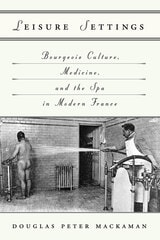
Leisure Settings
Bourgeois Culture, Medicine, and the Spa in Modern FranceDouglas P. Mackaman
University of Chicago Press, 1998
Taking us into the vibrant social world of France's great spas, Mackaman explores the links between class identity and vacationing. Mackaman shows how, after 1800, physicians and entrepreneurs zealously tried to break their milieu's strong association with aristocratic excess and indecency by promoting spas as a rational, ordered equivalent to the busy lives of the bourgeoisie. Rather than seeing leisure time as slothful, Mackaman argues, the bourgeoisie willingly became patients at spas and viewed this therapeutic vacation as a sensible, even productive, way of spending time. Mackaman analyzes this transformation, and ultimately shows how the premier vacation of an era made and was made by the bourgeoisie.
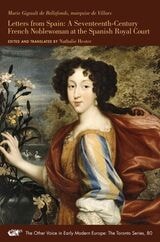
Letters from Spain
A Seventeenth-Century French Noblewoman at the Spanish Royal CourtMarie Gigault de Bellefonds
Iter Press, 2021
This volume includes her surviving letters from Madrid to her friend Madame de Coulanges and an appendix of her letters sent from Paris and Turin. The letters from Spain, written between 1679 and 1681, paint a vivid and engaging picture of the royal court and its new queen.
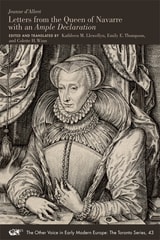
Letters from the Queen of Navarre with an Ample Declaration
Jeanne d’Albret
Iter Press, 2016
This edition presents in English, for the first time, Jeanne d’Albret’s Letters to the king, his mother, his brother, her own brother-in-law, and the queen of England, together with her Ample Declaration (1568) defending her decampment to the Protestant stronghold of La Rochelle. A historical-biographical introduction situates these writings in the larger context of Reformation politics and examines in detail the specific literary characteristics of her memoir. In her works, Jeanne d’Albret asserts her own position as legal sovereign of Béarn and Navarre and situates herself at the nexus of overlapping political, religious, and familial tensions.
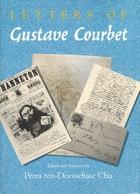
Letters of Gustave Courbet
Gustave Courbet
University of Chicago Press, 1992
pivotal figure in the emergence of modern painting, remains
an artist whose interests, attitudes, and friendships are
little understood. A voluminous correspondent, Courbet
himself, through his letters, offers a tantalizing avenue
toward a keener assessment of his character and
accomplishments. In her critical edition of over six hundred
of the artist's letters, Petra ten-Doesschate Chu presents
just such a look at the inner life of the artist; her
unparalleled feat of gathering together all of Courbet's
known letters, many heretofore unpublished and untranslated,
is sure to change our evaluation of Courbet's creativity and
of his place in nineteenth-century French life.
Beginning when Courbet left his provincial home at
eighteen and ending eight days before his death in exile in
Switzerland, this correspondence enables readers to follow
the artist's development from youth to mature artist of
international repute. Addressed to correspondents such as
the poet Charles Baudelaire, the painter Claude Monet, the
writers Champfleury, Victor Hugo, and Théeophile Gautier,
the political theorist Pierre-Joseph Proudhon, and the
politician Jules Simon, the letters offer numerous insights
into Courbet's life and art as well as the cultural and
political activity of his day. In fascinating detail, they
present the artist's relation to the contemporary media, his
deliberate choice of subject matter for Salon paintings, his
preoccupation with photography, and his participation in the
Commune.
Besides collecting, translating, and annotating the
letters, Chu provides an introduction, a chronology,
biographies of persons appearing frequently in the letters,
and a list of paintings and sculptures mentioned in the
letters. Her work is an essential resource of immediate use
to historians of art and culture, political and social
historians, and readers of biography.
Petra ten-Doesschate Chu is professor and head of the
Department of Art and Music at Seton Hall University.
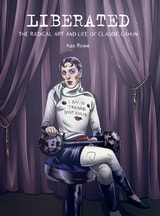
Liberated
The Radical Art and Life of Claude CahunKaz Rowe
J. Paul Getty Trust, The, 2023
At the turn of the twentieth century in Nantes, France, Lucy Schwob met Suzanne Malherbe, and lightning struck. The two became partners both artistically and romantically and transformed themselves into the creative personas Claude Cahun and Marcel Moore. Together, the couple embarked on a radical journey of Surrealist collaboration that would take them from conservative provincial France to the vibrancy of 1920s Paris to the oppression of Nazi-occupied Jersey during World War II, where they used art to undermine the Nazi regime.
Cahun and Moore challenged gender roles and championed freedom at a time when strict societal norms meant that the truth of their relationship had to remain secret. Featuring ten photographs by Cahun and Moore, this graphic biography by cartoonist Kaz Rowe brings Cahun’s inspiring story to life.
Ages thirteen to eighteen
Lies, Passions, and Illusions
The Democratic Imagination in the Twentieth CenturyFrançois Furet
University of Chicago Press, 2014
This conversation would be, sadly, Furet’s last—he died while Ricoeur was completing his edits. Ricoeur did not want to publish his half without Furet’s approval, so what remains is Furet’s alone, an astonishingly cohesive meditation on the political passions of the twentieth century. With strokes at once broad and incisive, he examines the many different trajectories that nations of the West have followed over the past hundred years. It is a dialogue with history as it happened but also as a form of thought. It is a dialogue with his critics, with himself, and with those major thinkers—from Tocqueville to Hannah Arendt—whose ideas have shaped our understanding of the tragic dramas and upheavals of the modern era. It is a testament to the crucial role of the historian, a reflection on how history is made and lived, and how the imagination is a catalyst for political change. Whether new to Furet or deeply familiar with his work, readers will find thought-provoking assessments on every page, a deeply moving look back at one of the most tumultuous periods of history and how we might learn and look forward from it.

Lions of the Atlas
France's Wars for Empire and Resistance in North Africa, 1827–1934Edward G. Lengel
Westholme Publishing, 2026
France’s century-long wars of conquest in Algeria, Morocco, and Tunisia remain both understudied and symbolic of European imperialism. Launched to provide political legitimacy for the House of Bourbon during unstable times, these wars of empire ironically ended by generating nationalist sentiments that undermined French imperial aspirations, although France was successful on the battlefield after tremendous effort. The controversy both at the time and today about France’s North African ambitions has overshadowed the significant history of this conflict. Fought across some of the world’s most unforgiving, yet spectacular, terrain, these wars featured innovative military campaigns, epic battles, inspiring resistance leaders, and countless episodes of remarkable courage. Profoundly relevant, the French North African wars had a major global impact, influencing the development of military organization, tactics, and technology in the American Civil War, both world wars, and even modern Middle Eastern conflicts. Yet it is the human element that is most compelling. Based on extensive primary source research, Lions of the Atlas: France’s Wars for Empire and Resistance in North Africa, 1827–1934 is the first-ever comprehensive study, in any language, of these pivotal wars and those who fought them.
Beginning with the French naval blockade and amphibious invasion of Algeria in 1827–1830, the book tells the story of the large-scale campaigns and huge set-piece battles that ensued over the following several decades, across the highest peaks of the Atlas Mountains, in hills and valleys, along and over rivers, through scorching deserts, and even in fierce urban combat in town and city streets. Engagements include two unforgettable campaigns to capture the mountain fortress at Constantine, bold and devastating forays by Algerian cavalrymen and mountain warriors, and the pivotal 1844 Battle of Isly. The story continues with the French invasion of Tunisia in 1881, and then the thirty-year French campaign for the subjugation of Morocco, concluding with the Rif War of the 1920s that shocked the world. The narrative features charismatic resistance leaders such as Algeria’s Emir Abd-el-Kader, legendary military units such as the colorful Zouaves and the Foreign Legion, and changes in military technology, including the use of aircraft and armored vehicles. A major contribution to our understanding of one of the world’s most storied regions, Lions of the Atlas provides gripping and insightful reading while presenting the complex history of war and resistance in North Africa.
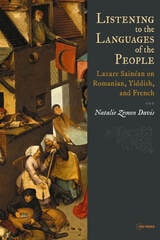
Listening to the Languages of the People
Lazare Sainéan on Romanian, Yiddish, and FrenchNatalie Zemon Davis
Central European University Press, 2022
This tale of great achievements and great disappointments offers a fresh perspective on the interplay between scholarship and political sentiment in the late nineteenth and early twentieth centuries.
Lazăr Șăineanu (1859-1934), linguist and folklorist, was a pioneer in his native Romania, seeking out the popular elements in culture along with high literary ones. He was among the first to publish a study of Yiddish as a genuine language, and he uncovered Turkish features in Romanian language and customs. He also made an index of hundreds of Romanian folktales. Yet when he sought Romanian citizenship and a professorship, he was blocked by powerful figures who thought Jews could not be Romanians and who fancied the origins of Romanian culture to be wholly Latin. Faced with anti-Semitism, some of his friends turned to Zionism. Instead he tried baptism, which brought him only mockery and shame.
Hoping to find a polity to which he could belong, Șăineanu moved with his family to Paris in 1900 and became Lazare Sainéan. There he made innovative studies of French popular speech and slang, culminating in his great work on the language of Rabelais. Once again, he was contributing to the development of a national tongue. Even then, while welcomed by literary scholars, Sainéan was unable to get a permanent university post. Though a naturalized citizen of France, he felt himself a foreigner, an “intruder,” into his old age.
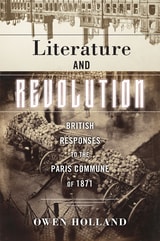
Literature and Revolution
British Responses to the Paris Commune of 1871Owen Holland
Rutgers University Press, 2022
This book examines how a heterogeneous group of authors in Britain responded to the Commune. In doing so, it provides the first full-length critical study of the reception and representation of the Commune in Britain during the closing decades of the nineteenth century, showing how discussions of the Commune functioned as a screen to project hope and fear, serving as a warning for some and an example to others. Writers considered in the book include John Ruskin, Edward Bulwer-Lytton, Eliza Lynn Linton, Mary Elizabeth Braddon, Anne Thackeray Ritchie, Margaret Oliphant, George Gissing, Henry James, William Morris, Alfred Austin and H.G. Wells. As the book shows, many, but not all, of these writers responded to the Commune with literary strategies that sought to stabilize bourgeois subjectivity in the wake of the traumatic shock of a revolutionary event. The book extends critical understanding of the Commune’s cultural afterlives and explores the relationship between literature and revolution.
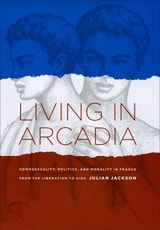
Living in Arcadia
Homosexuality, Politics, and Morality in France from the Liberation to AIDSJulian Jackson
University of Chicago Press, 2009
In Paris in 1954, a young man named André Baudry founded Arcadie, an organization for “homophiles” that would become the largest of its kind that has ever existed in France, lasting nearly thirty years. In addition to acting as the only public voice for French gays prior to the explosion of radicalism of 1968, Arcadie—with its club and review—was a social and intellectual hub, attracting support from individuals as diverse as Jean Cocteau and Michel Foucault and offering support and solidarity to thousands of isolated individuals. Yet despite its huge importance, Arcadie has largely disappeared from the historical record.
The main cause of this neglect, Julian Jackson explains in Living in Arcadia, is that during the post-Stonewall era of queer activism, Baudry’s organization fell into disfavor, dismissed as conservative, conformist, and closeted. Through extensive archival research and numerous interviews with the reclusive Baudry, Jackson challenges this reductive view, uncovering Arcadie’s pioneering efforts to educate the European public about homosexuality in an era of renewed repression. In the course of relating this absorbing history, Jackson offers a startlingly original account of the history of homosexuality in modern France.
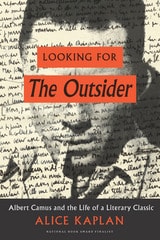
Looking for The Outsider
Albert Camus and the Life of a Literary ClassicAlice Kaplan
University of Chicago Press, 2016
How did a young man in his twenties who had never written a novel turn out a masterpiece that still grips readers more than seventy years later? With Looking for “The Outsider”, Alice Kaplan tells that story. In the process, she reveals Camus’s achievement to have been even more impressive—and more unlikely—than even his most devoted readers knew.
Born in poverty in colonial Algeria, Camus started out as a journalist covering the criminal courts. The murder trials he attended, Kaplan shows, would be a major influence on the development and themes of The Outsider. She follows Camus to France, and, making deft use of his diaries and letters, re-creates his lonely struggle with the novel in Montmartre, where he finally hit upon the unforgettable first-person voice that enabled him to break through and complete The Outsider.
Even then, the book’s publication was far from certain. France was straining under German occupation, Camus’s closest mentor was unsure of the book’s merit, and Camus himself was suffering from near-fatal tuberculosis. Yet the book did appear, thanks in part to a resourceful publisher, Gaston Gallimard, who was undeterred by paper shortages and Nazi censorship.
The initial critical reception of The Outsider was mixed, and it wasn’t until after liberation that The Outsider began its meteoric rise. As France and the rest of the world began to move out of the shadow of war, Kaplan shows, Camus’s book— with the help of an aggressive marketing campaign by Knopf for their 1946 publication of the first English translation—became a critical and commercial success, and Camus found himself one of the most famous writers in the world. Suddenly, his seemingly modest tale of alienation was being seen for what it really was: a powerful parable of the absurd, an existentialist masterpiece.
Few books inspire devotion and excitement the way The Outsider does. And it couldn’t have a better biographer than Alice Kaplan, whose books about twentieth-century French culture and history have won her legions of fans. No reader of Camus will want to miss this brilliant exploration.

Looking for The Stranger
Albert Camus and the Life of a Literary ClassicAlice Kaplan
University of Chicago Press, 2016
How did a young man in his twenties who had never written a novel turn out a masterpiece that still grips readers more than seventy years later? With Looking for “The Stranger”, Alice Kaplan tells that story. In the process, she reveals Camus’s achievement to have been even more impressive—and more unlikely—than even his most devoted readers knew.
Born in poverty in colonial Algeria, Camus started out as a journalist covering the criminal courts. The murder trials he attended, Kaplan shows, would be a major influence on the development and themes of The Stranger. She follows Camus to France, and, making deft use of his diaries and letters, re-creates his lonely struggle with the novel in Montmartre, where he finally hit upon the unforgettable first-person voice that enabled him to break through and complete The Stranger.
Even then, the book’s publication was far from certain. France was straining under German occupation, Camus’s closest mentor was unsure of the book’s merit, and Camus himself was suffering from near-fatal tuberculosis. Yet the book did appear, thanks in part to a resourceful publisher, Gaston Gallimard, who was undeterred by paper shortages and Nazi censorship.
The initial critical reception of The Stranger was mixed, and it wasn’t until after liberation that The Stranger began its meteoric rise. As France and the rest of the world began to move out of the shadow of war, Kaplan shows, Camus’s book— with the help of an aggressive marketing campaign by Knopf for their 1946 publication of the first English translation—became a critical and commercial success, and Camus found himself one of the most famous writers in the world. Suddenly, his seemingly modest tale of alienation was being seen for what it really was: a powerful parable of the absurd, an existentialist masterpiece.
Few books inspire devotion and excitement the way The Stranger does. And it couldn’t have a better biographer than Alice Kaplan, whose books about twentieth-century French culture and history have won her legions of fans. No reader of Camus will want to miss this brilliant exploration.
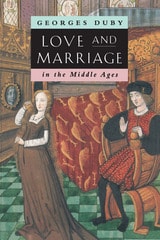
Love and Marriage in the Middle Ages
Georges Duby
University of Chicago Press, 1993
Beautifully written in Duby's characteristically nuanced and powerful style, this collection is an ideal entree into Duby's thinking about marriage and the diversities of love, spousal decorum, family structure, and their cultural context in bodily and spiritual values. Love and Marriage in the Middle Ages will be of great interest to students in social and cultural history, medieval and early modern history, and women's studies, as well as those interested in the nature of social life in the Middle Ages.
Georges Duby (1919-1996) was a member of the Académie française and for many years held the distinguished chair in medieval history at the Collège de France. His books include The Three Orders; The Age of Cathedrals; The Knight, the Lady, and the Priest; Love and Marriage in the Middle Ages; and History Continues, all published by the University of Chicago Press.
Low-Wage Work in France
Eve Caroli
Russell Sage Foundation, 2008
L’Honnête Femme
The Respectable Woman in Society and the New Collection of Letters and Responses by Contemporary WomenJacques Du Bosc
Iter Press, 2014
—Reverend John J. Conley, SJ
Knott Professor of Philosophy, Loyola University Maryland