Results by title
230 books match the query 'Government relations' and 5 start with l
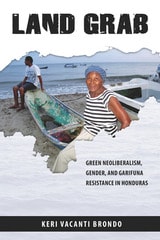
Land Grab
Green Neoliberalism, Gender, and Garifuna Resistance in HondurasKeri Vacanti Brondo
University of Arizona Press, 2013
Employing approaches from feminist political ecology, critical race studies, and ethnic studies,Keri Vacanti Brondo illuminates three contemporary development paradoxes in Honduras: the recognition of the rights of indigenous people at the same time as Garifuna are being displaced in the name of development; the privileging of foreign research tourists in projects that promote ecotourism but result in restricting Garifuna from traditional livelihoods; and the contradictions in Garifuna land-rights claims based on native status when mestizos are reserving rights to resources as natives themselves.
Like the Sound of a Drum
Aboriginal Cultural Politics in Denendeh and NunavutPeter Kulchyski
University of Manitoba Press, 2005
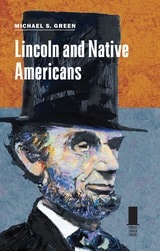
Lincoln and Native Americans
Michael S. Green
Southern Illinois University Press, 2021
First exploration of Lincoln’s relationship with the Native population in more than four decades
President Abraham Lincoln ordered the largest mass execution of Indigenous people in American history, following the 1862 uprising of hungry Dakota in Minnesota and suspiciously speedy trials. He also issued the largest commutation of executions in American history for the same act. But there is much more to the story of Lincoln’s interactions and involvement, personal and political, with Native Americans, as Michael S. Green shows. His evenhanded assessment explains how Lincoln thought about Native Americans, interacted with them, and was affected by them.
Although ignorant of Native customs, Lincoln revealed none of the hatred or single-minded opposition to Native culture that animated other leaders and some of his own political and military officials. Lincoln did far too little to ease the problems afflicting Indigenous people at the time, but he also expressed more sympathy for their situation than most other politicians of the day. Still, he was not what those who wanted legitimate improvements in the lives of Native Americans would have liked him to be.
At best, Lincoln’s record is mixed. He served in the Black Hawk War against tribes who were combating white encroachment. Later he supported policies that exacerbated the situation. Finally, he led the United States in a war that culminated in expanding white settlement. Although as president, Lincoln paid less attention to Native Americans than he did to African Americans and the Civil War, the Indigenous population received considerably more attention from him than previous historians have revealed.
In addition to focusing on Lincoln’s personal and familial experiences, such as the death of his paternal grandfather at the hands of Indians, Green enhances our understanding of federal policies toward Native Americans before and during the Civil War and how Lincoln’s decisions affected what came after the war. His patronage appointments shaped Indian affairs, and his plans for the West would also have vast consequences. Green weighs Lincoln’s impact on the lives of Native Americans and imagines what might have happened if Lincoln had lived past the war’s end. More than any many other historians, Green delves into Lincoln’s racial views about people of color who were not African American.
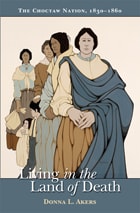
Living in the Land of Death
The Choctaw Nation, 1830-1860Donna L. Akers
Michigan State University Press, 2004
With the Indian Removal Act of 1830, the Choctaw people began their journey over the Trail of Tears from their homelands in Mississippi to the new lands of the Choctaw Nation. Suffering a death rate of nearly 20 percent due to exposure, disease, mismanagement, and fraud, they limped into Indian Territory, or, as they knew it, the Land of the Dead (the route taken by the souls of Choctaw people after death on their way to the Choctaw afterlife). Their first few years in the new nation affirmed their name for the land, as hundreds more died from whooping cough, floods, starvation, cholera, and smallpox.
Living in the Land of the Dead depicts the story of Choctaw survival, and the evolution of the Choctaw people in their new environment. Culturally, over time, their adaptation was one of homesteads and agriculture, eventually making them self-sufficient in the rich new lands of Indian Territory. Along the Red River and other major waterways several Choctaw families of mixed heritage built plantations, and imported large crews of slave labor to work cotton fields. They developed a sub-economy based on interaction with the world market. However, the vast majority of Choctaws continued with their traditional subsistence economy that was easily adapted to their new environment.
The immigrant Choctaws did not, however, move into land that was vacant. The U.S. government, through many questionable and some outright corrupt extralegal maneuvers, chose to believe it had gained title through negotiations with some of the peoples whose homelands and hunting grounds formed Indian Territory. Many of these indigenous peoples reacted furiously to the incursion of the Choctaws onto their rightful lands. They threatened and attacked the Choctaws and other immigrant Indian Nations for years. Intruding on others’ rightful homelands, the farming-based Choctaws, through occupation and economics, disrupted the traditional hunting economy practiced by the Southern Plains Indians, and contributed to the demise of the Plains ways of life.
Lost Shores, Forgotten Peoples
Spanish Explorations of the South East Maya LowlandsLawrence H. Feldman, ed. and translator
Duke University Press, 2000
In these narratives—primary documents written by missionaries and conquistadors—vivid details of these little known Mayan cultures are revealed, answering how and why lowlanders were able to evade Spanish conquest while similar civilizations could not. Fascinating tales of the journey from Europe are included, involving unknown islands, lost pilots, life aboard a galleon fleet, political intrigue, cannibals, and breathtaking natural beauty. In short, these forgotten manuscripts—translations of the papers of the past—provide an unforgettable look at an understudied chapter in the age of exploration.
Lost Shores, Forgotten Peoples will appeal to archaeologists, anthropologists, and historians interested in Central America, the Maya, and the Spanish Conquest.