Results by title
54 books match the query 'Grief' and 5 start with l
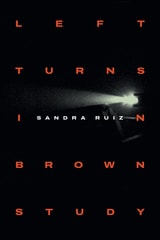
Left Turns in Brown Study
Sandra Ruiz
Duke University Press, 2024
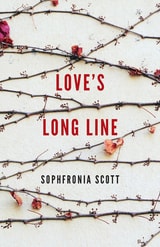
Love’s Long Line
Sophfronia Scott
The Ohio State University Press, 2018
Sophfronia Scott turns an unflinching eye on her life to deliver a poignant collection of essays ruminating on faith, motherhood, race, and the search for meaningful connection in an increasingly disconnected world.
In Love’s Long Line, Scott contemplates what her son taught her about grief after the shootings at his school, Sandy Hook Elementary; how a walk with Lena Horne became a remembrance of love for Scott’s illiterate and difficult steelworker father; the unexpected heartache of being a substitute school bus driver; and the satisfying fantasy of paying off a mortgage. Scott’s road is also a spiritual journey ignited by an exploration of her first name, the wonder of her physical being, and coming to understand why her soul must dance like Saturday Night Fever’s Tony Manero.
Inspired by Annie Dillard’s observation in Holy the Firm that we all “reel out love’s long line alone . . . like a live wire loosed in space to longing and grief everlasting,” Scott’s essays acknowledge the loneliness, longing, and grief exacted by a fearless engagement with the everyday world. But she shows that by holding the line, there is an abundance of joy and forgiveness and grace to be had as well.
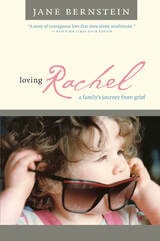
Loving Rachel
A Family's Journey from GriefJane Bernstein
University of Illinois Press, 2007
In 1983, Jane Bernstein had everything she ever wanted: a healthy four-year-old daughter, Charlotte; a happy marriage; a highly praised first novel; and a brand new baby, Rachel. But by the time Rachel was six weeks old,
a neuro-ophthalmologist told Jane and her husband that their baby was blind. Although there was some hope that Rachel might gain partial vision as she grew, her condition was one that often resulted in seizure disorders and intellectual impairment. So began a series of medical and emotional setbacks that were to plague Rachel and her parents and strain their marriage to the breaking point. Spanning the first four years of Rachel’s life, Loving Rachel is a heartbreaking chronicle of a marriage and a compelling story of parental love told with searing honesty and surprising humor.
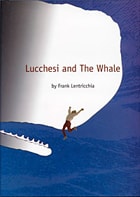
Lucchesi and The Whale
Frank Lentricchia
Duke University Press, 2001
Having become “a mad Ahab of reading,” who is driven to dissect the “artificial body of Melville’s behemothian book” to grasp its truth, Lucchesi allows his thoughts to wander and loop from theory to dream to reality to questionable memory. But his black humor-tinged musings are often as profoundly moving as they are intellectual, such as the section in which he ponders the life and philosophy of Ludwig Wittgenstein in relation to the significance of a name—and then attempts to share these thoughts with a sexy, middle-aged flight attendant—or another in which he describes a chance meeting with a similarly-named mafia don.
Despite apparent spiritual emptiness, Lucchesi in the end does find “a secret meaning” to Moby-Dick. And Lentricchia’s creations—both Lucchesi and The Whale and its main character—reveal this meaning through a series of ingeniously self-reflective metaphors, in much the way that Melville himself did in and through Moby-Dick. Vivid, humorous, and of unparalleled originality, this new work from Frank Lentricchia will inspire and console all who love and ponder both great literature and those who would write it.
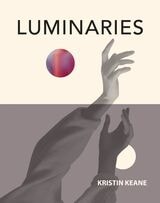
Luminaries
Kristin Keane
Omnidawn, 2021
Luminaries is the winner of the Omnidawn Fabulist Fiction Novelette/Chapbook Prize, selected by Kellie Wells.