Results by title
149 books match the query 'Group identity' and 6 start with l
Learning to Be Latino
How Colleges Shape Identity PoliticsReyes, Daisy Verduzco
Rutgers University Press, 2018
Drawing on extensive ethnographic observations, Reyes shows how college campuses shape much more than students’ academic and occupational trajectories; they mold students’ ideas about inequality and opportunity in America, their identities, and even how they intend to practice politics.
Life beyond the Boundaries
Constructing Identity in Edge Regions of the North American SouthwestKaren Harry
University Press of Colorado, 2018
Life beyond the Boundaries explores identity formation on the edges of the ancient Southwest. Focusing on some of the more poorly understood regions, including the Jornada Mogollon, the Gallina, and the Pimería Alta, the authors use methods drawn from material culture science, anthropology, and history to investigate themes related to the construction of social identity along the perimeters of the American Southwest.
Through an archaeological lens, the volume examines the social experiences of people who lived in edge regions. Through mobility and the development of extensive social networks, people living in these areas were introduced to the ideas and practices of other cultural groups. As their spatial distances from core areas increased, the degree to which they participated in the economic, social, political, and ritual practices of ancestral core areas increasingly varied. As a result, the social identities of people living in edge zones were often—though not always—fluid and situational.
Drawing on an increase of available information and bringing new attention to understudied areas, the book will be of interest to scholars of Southwestern archaeology and other researchers interested in the archaeology of low-populated and decentralized regions and identity formation. Life beyond the Boundaries considers the various roles that edge regions played in local and regional trajectories of the prehistoric and protohistoric Southwest and how place influenced the development of social identity.
Contributors: Lewis Borck, Dale S. Brenneman, Jeffery J. Clark, Severin Fowles, Patricia A. Gilman, Lauren E. Jelinek, Myles R. Miller, Barbara J. Mills, Matthew A. Peeples, Kellam Throgmorton, James T. Watson
Losing Culture
Nostalgia, Heritage, and Our Accelerated TimesDavid Berliner
Rutgers University Press, 2020
Such sentiments get echoed around the world, from aging Trump supporters in West Virginia to young villagers in West Africa. But what is triggering this sense of cultural loss, and to what ends does this rhetoric get deployed?
To answer these questions, anthropologist David Berliner travels around the world, from Guinea-Conakry, where globalization affects the traditional patriarchal structure of cultural transmission, to Laos, where foreign UNESCO experts have become self-appointed saviors of the nation’s cultural heritage. He also embarks on a voyage of critical self-exploration, reflecting on how anthropologists handle their own sense of cultural alienation while becoming deeply embedded in other cultures. This leads into a larger examination of how and why we experience exonostalgia, a longing for vanished cultural heydays we never directly experienced.
Losing Culture provides a nuanced analysis of these phenomena, addressing why intergenerational cultural transmission is vital to humans, yet also considering how efforts to preserve disappearing cultures are sometimes misguided or even reactionary. Blending anthropological theory with vivid case studies, this book teaches us how to appreciate the multitudes of different ways we might understand loss, memory, transmission, and heritage.
Lost Homelands
Ruin and Reconstruction in the 20th-Century SouthwestAudrey Goodman
University of Arizona Press, 2010
Through analyzing a variety of texts and images, Goodman illuminates the ways that modern forces such as militarization, environmental degradation, internal migration, and an increased border patrol presence have shattered the perception of a secure homeland in the Southwest. The deceptive natural beauty of the Southwest deserts shields a dark history of trauma and decimation that has remained as a shadow on the region’s psyche. The first to really synthesize such wide-ranging material about the effects of the atomic age in the Southwest, Goodman realizes the value of combined visual and verbal art and uses it to put forth her own original ideas about reconstructing a new sense of homeland.
Lost Homelands reminds us of the adversity and dislocation suffered by people of the Southwest by looking at the ways that artists, photographers, filmmakers, and writers have grappled with these problems for decades. In assessing the ruination of the region, however, Goodman argues that those same artists and writers have begun to reassemble a new sense of homeland from these fragments.
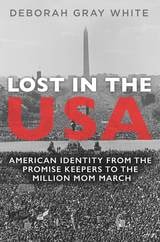
Lost in the USA
American Identity from the Promise Keepers to the Million Mom MarchDeborah Gray White
University of Illinois Press, 2017
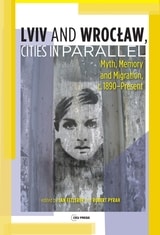
Lviv – Wroclaw, Cities in Parallel?
Myth, Memory and Migration, c. 1890-PresentJan Fellerer
Central European University Press, 2020
After World War II, Europe witnessed the massive redrawing of national borders and the efforts to make the population fit those new borders. As a consequence of these forced changes, both Lviv and Wrocław went through cataclysmic changes in population and culture. Assertively Polish prewar Lwów became Soviet Lvov, and then, after 1991, it became assertively Ukrainian Lviv. Breslau, the third largest city in Germany before 1945, was in turn "recovered" by communist Poland as Wrocław. Practically the entire population of Breslau was replaced, and Lwów's demography too was dramatically restructured: many Polish inhabitants migrated to Wrocław and most Jews perished or went into exile. The forced migration of these groups incorporated new myths and the construction of official memory projects.
The chapters in this edited book compare the two cities by focusing on lived experiences and "bottom-up" historical processes. Their sources and methods are those of micro-history and include oral testimonies, memoirs, direct observation and questionnaires, examples of popular culture, and media pieces. The essays explore many manifestations of the two sides of the same coin—loss on the one hand, gain on the other—in two cities that, as a result of the political reality of the time, are complementary.