Results by title
89 books match the query 'Historic sites' and 5 start with l
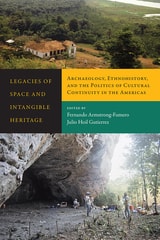
Legacies of Space and Intangible Heritage
Archaeology, Ethnohistory, and the Politics of Cultural Continuity in the AmericasFernando Armstrong-Fumero
University Press of Colorado, 2017
Legacies of Space and Intangible Heritage is an interdisciplinary exploration of the intersections between the study and management of physical sites and the reproduction of intangible cultural legacies. The volume provides nine case studies that explore different ways in which place is mediated by social, political, and ecological processes that have deep historical roots and that continue to affect the politics of heritage management.
Spaces of human habitation are both historical records of the past and key elements in reproducing the knowledge and values that define lives in the present. Practices, knowledge, and skills that communities recognize as part of their culture—and that a range of legal statutes define as protected intangible heritages—are threatened by increased migration, the displacement of indigenous peoples, and limits on access to culturally or historically significant sites. This volume addresses how different physical environments contribute to the reproduction of cultural forms even in the wake of these processes of displacement and change. Case studies from North and South America reveal a pattern of abandonment and reestablishment of settlements and show how collective memory drives people back to culturally meaningful sites.
This tendency for communities to return to the sites that shaped their collective histories, along with the growing importance granted to intangible heritage, challenges archaeologists and other heritage workers to find new ways of incorporating the cultural legacies that link societies to place into the work of research and stewardship. By examining the politics of cultural continuity through the lenses of archaeology and ethnohistory, Legacies of Space and Intangible Heritage demonstrates this complex relationship between a people’s heritage and the landscape that affects the making of "place."
Contributors: Rani Alexander, Hannah Becker, Minette Church, Bonnie Clark, Chip Colwell, Winifred Creamer, Emiliana Cruz, T. J. Ferguson, Julio Hoil Gutierrez, Jonathan Haas, Saul Hedquist, Maren Hopkins, Stuart B. Koyiyumptewa, Christine Kray, Henry Marcelo Castillo, Anna Roosevelt, Jason Yaeger, Keiko Yoneda
Lewis and Clark in Missouri
Ann Rogers
University of Missouri Press, 2002
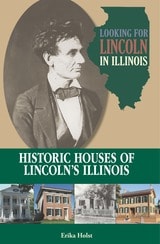
Looking for Lincoln in Illinois
Historic Houses of Lincoln’s IllinoisErika Holst
Southern Illinois University Press, 2018
This richly illustrated compendium of twenty-two historic buildings in the Abraham Lincoln National Heritage Area includes houses, a hotel, and an art center, all of which are open to the public. Each site links today’s visitors with a place Lincoln lived, a home of a Lincoln friend or colleague, or a spot that illuminates Lincoln’s era and legacy in central Illinois. Along with dozens of modern and historical photographs, entries contain explorations of historical connections to Lincoln and detailed information about exceptional features and artifacts. Complete with maps, this showcase of Illinois heritage is a handy guide for day trips, extended tours, or armchair adventures.
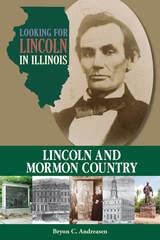
Looking for Lincoln in Illinois
Lincoln and Mormon CountryBryon C. Andreasen
Southern Illinois University Press, 2015
Although they inhabited different political, social, and cultural arenas, Abraham Lincoln and the pioneer generation of Latter-day Saints, or Mormons, shared the same nineteenth-century world. Bryon C. Andreasen’s Looking for Lincoln in Illinois: Lincoln and Mormon Country relates more than thirty fascinating and surprising stories that show how the lives of Lincoln and the Mormons intersected.
This richly illustrated and carefully researched book expands on some of the storyboards found on the Looking for Lincoln Story Trail, from the Mormon capital of Nauvoo to the state capital of Springfield. Created by the Looking for Lincoln Heritage Coalition, this trail consists of wayside exhibits posted in sites of significance to Lincoln’s life and career across fifty-two communities in Illinois. The book’s keyed maps, historic photos, and descriptions of battles, Mormon expeditions, and events at inns, federal buildings, and even Lincoln’s first Illinois log cabin connect the stories to their physical locations.
Exploring the intriguing question of whether Lincoln and Mormon founder Joseph Smith ever met, the book reveals that they traveled the same routes and likely stayed at the same inns. The book also includes colorful and engaging looks at key figures such as Brigham Young, various Mormon apostles, and more. Anyone inspired by Lincoln, as well as Mormon and Illinois history enthusiasts, will appreciate this look back at a long-past, but not forgotten, landscape.
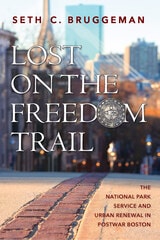
Lost on the Freedom Trail
The National Park Service and Urban Renewal in Postwar BostonSeth C. Bruggeman
University of Massachusetts Press, 2022
Boston National Historical Park is one of America's most popular heritage destinations, drawing in millions of visitors annually. Tourists flock there to see the site of the Boston Massacre, to relive Paul Revere's midnight ride, and to board Old Ironsides—all of these bound together by the iconic Freedom Trail, which traces the city's revolutionary saga.
Making sense of the Revolution, however, was never the primary aim for the planners who reimagined Boston's heritage landscape after the Second World War. Seth C. Bruggeman demonstrates that the Freedom Trail was always largely a tourist gimmick, devised to lure affluent white Americans into downtown revival schemes, its success hinging on a narrow vision of the city's history run through with old stories about heroic white men. When Congress pressured the National Park Service to create this historical park for the nation's bicentennial celebration in 1976, these ideas seeped into its organizational logic, precluding the possibility that history might prevail over gentrification and profit.