Results by title
85 books match the query 'Humanities' and 3 start with l
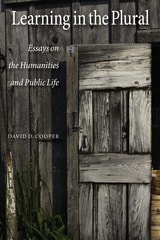
Learning in the Plural
Essays on the Humanities and Public LifeDavid D. Cooper
Michigan State University Press, 2014
Can civic engagement rescue the humanities from a prolonged identity crisis? How can the practices and methods, the conventions and innovations of humanities teaching and scholarship yield knowledge that contributes to the public good? These are just two of the vexing questions David D. Cooper tackles in his essays on the humanities, literacy, and public life. As insightful as they are provocative, these essays address important issues head-on and raise questions about the relevance and roles of humanities teaching and scholarship, the moral footings and public purposes of the humanities, engaged teaching practices, institutional and disciplinary reform, academic professionalism, and public scholarship in a democracy. Destined to stir discussion about the purposes of the humanities and the problems we face during an era of declining institutional support, public alienation and misunderstanding, student ambivalence, and diminishing resources, the questions Cooper raises in this book are uncomfortable and, in his view, necessary for reflection, renewal, and reform. With frank, deft assessments, Cooper reports on active learning initiatives that reenergized his own teaching life while reshaping the teaching mission of the humanities, including service learning, collaborative learning, the learning community movement, and student-centered and deliberative pedagogy.
[more]
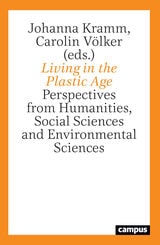
Living in the Plastic Age
Perspectives from Humanities, Social Sciences and Natural SciencesEdited by Johanna Kramm and Carolin Völker
Campus Verlag, 2022
A comprehensive discussion on the complex role of plastics in society-nature relationships.
The anthology Living in the Plastic Age focuses on the multidimensional facets of plastics and microplastics from different disciplinary angles. Small plastic fragments (microplastics) and larger plastic waste can be found even on the remotest island. Plastic waste all over the planet is the visual footprint of humanity’s consumerism and mass production. Plastics shape the relationship between society and nature in such a profound way that we can today speak of the “Plastic Age.” This anthology aims to question the role of plastics in our society and the implications plastics have for the environment and human health. The detection of this emergent contaminant opens up a new field of scientific engagement for natural sciences on the effects of (micro-) plastics for the environment and the social sciences on new governance regimes on marine litter as well as on solution strategies to combat plastic waste.
The anthology Living in the Plastic Age focuses on the multidimensional facets of plastics and microplastics from different disciplinary angles. Small plastic fragments (microplastics) and larger plastic waste can be found even on the remotest island. Plastic waste all over the planet is the visual footprint of humanity’s consumerism and mass production. Plastics shape the relationship between society and nature in such a profound way that we can today speak of the “Plastic Age.” This anthology aims to question the role of plastics in our society and the implications plastics have for the environment and human health. The detection of this emergent contaminant opens up a new field of scientific engagement for natural sciences on the effects of (micro-) plastics for the environment and the social sciences on new governance regimes on marine litter as well as on solution strategies to combat plastic waste.
[more]
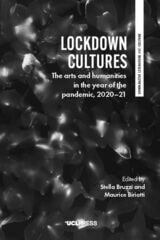
Lockdown Cultures
The Arts and Humanities in the Year of the Pandemic, 2020–21Edited by Stella Bruzzi and Maurice Biriotti Biriotti
University College London, 2022
How the pandemic has changed and reinvigorated the arts and humanities.
Lockdown Cultures is both a cultural response to our extraordinary times and a manifesto for the arts and humanities and their role in our post-pandemic society. This book offers a unique response to the question of how the humanities have responded to the dominant crisis of our times: the Covid-19 pandemic. While the roles of engineers, epidemiologists, and, of course, medics are assumed, this volume illustrates some of how the humanities understood and analyzed 2020–21, the year of lockdown and plague. Though the impulse behind the book was topical, underpinning the richly varied and individual essays is a lasting concern with the value of the humanities in the twenty-first century. Each contributor approaches this differently but there are two dominant strands: how art and culture can help us understand the Covid crisis; and how the value of the humanities can be demonstrated by engaging with cultural products from the past. The result is a book that serves as a testament to the humanities’ reinvigorated and reforged sense of identity. It bears witness to a globally impactful event while showcasing interdisciplinary thinking and examining how the pandemic has changed how we read, watch, write and educate. More than thirty individual contributions collectively reassert the importance of the arts and humanities for contemporary society.
Lockdown Cultures is both a cultural response to our extraordinary times and a manifesto for the arts and humanities and their role in our post-pandemic society. This book offers a unique response to the question of how the humanities have responded to the dominant crisis of our times: the Covid-19 pandemic. While the roles of engineers, epidemiologists, and, of course, medics are assumed, this volume illustrates some of how the humanities understood and analyzed 2020–21, the year of lockdown and plague. Though the impulse behind the book was topical, underpinning the richly varied and individual essays is a lasting concern with the value of the humanities in the twenty-first century. Each contributor approaches this differently but there are two dominant strands: how art and culture can help us understand the Covid crisis; and how the value of the humanities can be demonstrated by engaging with cultural products from the past. The result is a book that serves as a testament to the humanities’ reinvigorated and reforged sense of identity. It bears witness to a globally impactful event while showcasing interdisciplinary thinking and examining how the pandemic has changed how we read, watch, write and educate. More than thirty individual contributions collectively reassert the importance of the arts and humanities for contemporary society.
[more]