Results by title
192 books match the query 'Humor' and 11 start with l
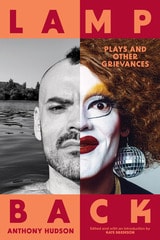
Lamp Back
Plays and Other GrievancesAnthony Hudson, Kate Bredeson
Northwestern University Press, 2027
A major collection of performance works by artist and agitator Anthony Hudson
Lamp Back: Plays and Other Grievances collects nearly a decade of work by Anthony Hudson, a queer Indigenous artist and agitator also known as Portland, Oregon’s premier drag clown, Carla Rossi. Whether fumbling with a lamp in a satirical takedown of land acknowledgments or confronting the history of redface in pop culture, Hudson alternates between Rossi’s cackling “ghost of white privilege” and more earnest, vulnerable confessionals as himself—all with a deep commitment to bitter humor and brutal honesty. In these performance works, a mixed-race Native boy plays a pilgrim in his kindergarten Thanksgiving pageant. A young artist recounts the racism in their favorite musical and the larger American theater system. A drag queen storytime goes disastrously wrong and calls for an exorcism with a plunger. Kate Bredeson’s unflinching introduction speaks to Hudson’s work through a cultural and historical lens and illuminates the importance of his project to filet the American Empire.
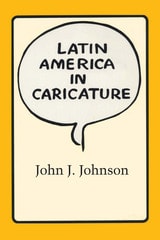
Latin America in Caricature
By John J. Johnson
University of Texas Press, 1993
“Not many readers will thank the author as he deserves, for he has told us more about ourselves than we perhaps wish to know,” predicted Latin America in Books of Latin America in Caricature—an exploration of more than one hundred years of hemispheric relations through political cartoons collected from leading U.S. periodicals from the 1860s through 1980.
The cartoons are grouped according to recurring themes in diplomacy and complementing visual imagery. Each one is accompanied by a lengthy explanation of the incident portrayed, relating the drawing to public opinion of the day. Johnson’s thoughtful introduction and the comments that precede the individual chapters provide essential background for understanding U.S. attitudes and policies toward Latin America.

Laughing Matters
Comic Tradition in IndiaLee Siegel
University of Chicago Press, 1987
This question, so solemnly posed by the young Buddha, first led Lee Siegel to examine the hitherto unexplored realm of Indian comedy. Laughing Matters is Siegel's account of two intersecting journeys: a search for comic traditions created and preserved in Sanskrit literature and a journey through modern India in quest of a laughter that persists across time and culture.
Hearing a boisterous and bawdy voice from India's past, Siegel has provided original and highly entertaining translations of Sanskrit literature that reveal a sparkling sensibility embedded in the texts. These translations are integrated with a detailed analysis of the types and structures of India's mirth. Siegel develops an original theory of comedy and laughter, applying it to reveal the humor in the ancient works. Defining sacred and profane comedy and the "taste" and "erotics" of laughter, he delineates two main Indian categories of comedy—laughter at others and laughter at oneself—which are roughly parallel to the Western traditions of satire and humor. He examines these categories in all of their forms and functions: satires of manners, social satire, and religious satire; and human and divine comedy. Siegel concludes by presenting his perceptions of humor in modern India as seen through cartoons, movies, books, and social gatherings.
Laughing Matters is both a serious and a hilarious study of the Indian comic sense of life—a vision formed in the convergence of the bitter insight of satire and the sweet outlook of humor. Past and present, the contextual and the universal, scholarship and the picaresque, are all interwoven in this original treatise on the aesthetics of comedy and the psychology of laughter.

Laughing at the End of the World
Unsettling Laughter in Black LiteratureDiego A. Millan
Duke University Press, 2027
Laughing to Keep from Dying
African American Satire in the Twenty-First CenturyDanielle Fuentes Morgan
University of Illinois Press, 2020
Adventurous and perceptive, Laughing to Keep from Dying reveals how African American satirists unmask the illusions and anxieties surrounding race in the twenty-first century.
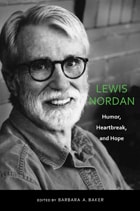
Lewis Nordan
Humor, Heartbreak, and HopeEdited by Barbara A. Baker
University of Alabama Press, 2012
A vibrant tribute to Lewis Nordan’s unforgettable blend of Southern surrealism, dark humor, and deep humanity.
Lewis Nordan: Humor, Heartbreak, and Hope is a rich collection of essays that examines the life and work of one of the South’s most distinctive literary voices. Edited by Barbara A. Baker, this volume brings together scholars and writers who explore Nordan’s use of magical realism, dark humor, and emotional vulnerability to portray the complexities of life in the Mississippi Delta. Through themes of race, poverty, family, and resilience, the contributors illuminate how Nordan’s fiction captures both the pain and beauty of the Southern experience. This book is essential reading for fans of Southern literature, cultural studies, and American fiction.
Written by scholars and fiction writers who represent a fascinating range of experience—from a Shakespearean scholar to English professors to a former student of Nordan’s—this is a rich array of essays, poems, and visual arts in tribute to this increasingly important writer. The collection deepens the base of scholarship on Nordan, and contextualizes his work in relation to other important southern writers such as William Faulkner and Eudora Welty.
Nordan was born and raised in Mississippi before moving to Alabama to pursue his Ph.D. at Auburn University. He taught for several years at the University of Arkansas in Fayetteville and retired from the University of Pittsburgh, where he was a professor of English. Nordan has written four novels, three collections of short stories, and a memoir entitled Boy with Loaded Gun. His second novel, Wolf Whistle, won the Southern Book Award, and his subsequent novel, The Sharpshooter Blues, won the Notable Book Award from the American Library Association and the Fiction Award from the Mississippi Institute of Arts and Letters. Nordan is renowned for his distinctive comic writing style, even while addressing more serious personal and cultural issues such as heartbreak, loss, violence, and racism. He transforms tragic characters and events into moments of artistic transcendence, illuminating what he calls the “history of all human beings.”

Life Is What Happens While You Make Other Plans
A Memoir by Jerry Kolins
Michigan Publishing Services, 2021
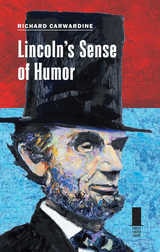
Lincoln's Sense of Humor
Richard Carwardine
Southern Illinois University Press, 2017
Winner, ISHS Annual Award for a Scholarly Publication, 2018
Abraham Lincoln was the first president to make storytelling, jokes, and laughter tools of the office, and his natural sense of humor has become legendary. Lincoln’s Sense of Humor registers the variety, complexity of purpose, and ethical dimension of Lincoln’s humor and pinpoints the political risks Lincoln ran in telling jokes while the nation was engaged in a bloody struggle for existence.
Complete with amusing anecdotes, this book shows how Lincoln’s uses of humor evolved as he matured and explores its versatility, range of expressions, and multiple sources: western tall tales, morality stories, bawdy jokes, linguistic tricks, absurdities, political satire, and sharp wit. While Lincoln excelled at self-mockery, nothing gave him greater pleasure than satirical work lampooning hypocrisy and ethical double standards. He particularly enjoyed David R. Locke’s satiric writings by Petroleum V. Nasby, a fictional bigoted secessionist preacher, and the book explores the nuances of Lincoln’s enthusiasm for what he called Locke’s genius, showing the moral springs of Lincoln’s humor.
Richard Carwardine methodically demonstrates that Lincoln’s funny stories were the means of securing political or personal advantage, sometimes by frontal assault on opponents but more often by depiction through parable, obfuscation through hilarity, refusal through wit, and diversion through cunning. Throughout his life Lincoln worked to develop the humorist’s craft and hone the art of storytelling. His jokes were valuable in advancing his careers as politician and lawyer and in navigating his course during a storm-tossed presidency. His merriness, however, coexisted with self-absorbed contemplation and melancholy. Humor was his lifeline; dark levity acted as a tonic, giving Lincoln strength to tackle the severe challenges he faced. At the same time, a reputation for unrestrained, uncontrollable humor gave welcome ammunition to his political foes. In fact, Lincoln’s jocularity elicited waves of criticism during his presidency. He was dismissed as a “smutty joker,” a “first rate second rate man,” and a “joke incarnated.”
Since his death, Lincoln’s anecdotes and jokes have become detached from the context that had given them their political and cultural bite, losing much of the ironic and satiric meaning that he had intended. With incisive analysis and laugh-inducing examples, Carwardine helps to recapture a strong component of Lincoln’s character and reanimates the good humor of our sixteenth president.
Lovers, Clowns, and Fairies
An Essay on ComediesStuart M. Tave
University of Chicago Press, 1993
A Midsummer Night's Dream, in its "perfection," is Tave's point of departure. Its characters fall neatly into the three groups of Tave's title and fulfill to perfection their functions of desire, foolishness, and power. From the magical concord of Shakespeare's resolution, Tave moves to works whose character face ever greater difficulties in reaching a happy conclusion. From Jonson and Austen to Chekhov and Beckett, he meets comedies on their own terms, illuminating the complex and individual genius of each. A masterpiece of practical criticism, Lovers, Clowns, and Fairies rediscovers the pleasure of reading comedies.
Lowering the Bar
Lawyer Jokes and Legal CultureMarc Galanter
University of Wisconsin Press, 2006
Lucian’s Laughing Gods
Religion, Philosophy, and Popular Culture in the Roman EastInger N.I. Kuin
University of Michigan Press, 2023
In Lucian's Laughing Gods, author Inger N. I. Kuin argues that in ancient Greek thought, comedic depictions of divinities were not necessarily desacralizing. In religion, laughter was accommodated to such an extent as to actually be constituent of some ritual practices, and the gods were imagined either to reciprocate or push back against human laughter—they were never deflated by it. Lucian uses the gods as comic characters, but in doing so, he does not automatically negate their power. Instead, with his depiction of the gods and of how they relate to humans—frivolous, insecure, callous—Lucian challenges the dominant theologies of his day as he refuses to interpret the gods as ethical models. This book contextualizes Lucian’s comedic performances in the intellectual life of the second century CE Roman East broadly, including philosophy, early Christian thought, and popular culture (dance, fables, standard jokes, etc.). His texts are analyzed as providing a window onto non-elite attitudes and experiences, and methodologies from religious studies and the sociology of religion are used to conceptualize Lucian’s engagement with the religiosity of his contemporaries.