Results by title
52 books match the query 'Idea' and 2 start with l
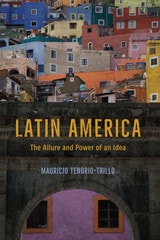
Latin America
The Allure and Power of an IdeaMauricio Tenorio-Trillo
University of Chicago Press, 2017
Tenorio-Trillo builds the book on three interlocking steps: first, an intellectual history of the concept of Latin America in its natural historical habitat—mid-nineteenth-century redefinitions of empire and the cultural, political, and economic intellectualism; second, a serious and uncompromising critique of the current “Latin Americanism”—which circulates in United States–based humanities and social sciences; and, third, accepting that we might actually be stuck with “Latin America,” Tenorio-Trillo charts a path forward for the writing and teaching of Latin American history. Accessible and forceful, rich in historical research and specificity, the book offers a distinctive, conceptual history of Latin America and its many connections and intersections of political and intellectual significance. Tenorio-Trillo’s book is a masterpiece of interdisciplinary scholarship.
Lying On The Postcolonial Couch
The Idea Of IndifferenceRukmini Bhaya Nair
University of Minnesota Press, 2002
Exposes the complicity of language and its uses in the colonial project
A revealing look into the long afterlife of colonial conquest, Lying on the Postcolonial Couch offers an original, overarching concept that informs—and helps to explain—the workings of postcoloniality. This concept, "indifference," is a play on the key critical term "difference." Indifference is a cognitive stance invented during the colonial period for the purpose of organizing the complex domain of the Indian subcontinent, one that created its own brand of poetics. Considering postcoloniality as a symptomatic condition, this book proposes a cure involving a return to buried memories of colonial trauma before the phenomenon itself succumbs to the absolute indifference of the slowly gathering amnesia of the new millennium.
Rukmini Bhaya Nair traces a paper trail beginning in 1757 with the Battle of Plassey, winding through the contentious Mutiny of 1857, and ending with Salman Rushdie’s Satanic Verses predicament. Along this trail, she uncovers hidden residues of feeling, from guilt and mistrust to wonder and pleasure, and analyzes the linguistic pillars that hold up the institution of bureaucratic indifference that she exposes.