Results by title
220 books match the query 'Individual Artists' and 7 start with l
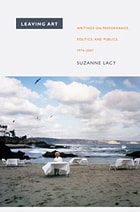
Leaving Art
Writings on Performance, Politics, and Publics, 1974-2007Suzanne Lacy
Duke University Press, 2010

Leigh Bowery
Performative Costuming and Live ArtSofia Vranou
Intellect Books, 2025
Leigh Bowery: Performative Costuming and Live Art is a critical exploration of the creative practice, social-historical context, and cultural impact of the late London-based artist Leigh Bowery. The diversity of Bowery’s work and his marginality as an artist who emerged during the 1980s from a subcultural milieu complicated and thwarted his cultural value, hindering his incorporation into art institutions and performance art narratives for some time. Drawing on a variety of disciplines and challenging research contexts, Sofia Vranou seeks to historicize Bowery’s multifaceted body of work and critically situate it within the expanded fields of visual culture and performance studies.
Through close analysis of Bowery’s key looks and non-theatrical performances, the book investigates the implications of his work in dominant histories of performance art and urgent discourses surrounding normativity, representations of illness, and identity politics. Thought-provoking and engaging, it focuses on Bowery’s costuming as a performative strategy that effectively blurs the boundaries between art and life; delves into his aesthetics of freakishness and narcissistic desire, reflects on his involvement with BDSM practices and the performance of extremity, and unpacks the posttranssexual ethos behind his hybrid embodiments and trans-queer visual language.
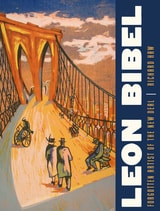
Leon Bibel
Forgotten Artist of the New DealRichard Haw
Rutgers University Press, 2025
Honorable Mention for the 2025 New Deal Book Award
Leon Bibel (1913–1995) was a prolific modern American artist who painted, printed, stamped, etched, sketched, and carved. He produced pieces that ranged from social realism to dreamy expressionism and was an aesthetic experimentalist, never working for too long in any medium or style. And despite Bibel's obvious talent, his work would have languished in obscurity were it not for the New Deal programs like the Federal Art Project and Public Works of Art Project.
Leon Bibel, the first biography of this eclectic artist, recounts his life from his birth in Szczebrzeszyn, Poland, in 1913, to his death in New Jersey in 1995. After immigrating to the United States in the 1920s, Bibel came of age during the Great Depression, when New Deal agencies recognized his abilities and supported his artistic endeavors. Working-class artists faced challenges after these programs folded, and Bibel would later spend twenty years as a New Jersey chicken farmer before resurrecting his art career in the 1960s.
Historian Richard Haw shows how Bibel's life was defined by the New Deal, his visionary artwork shaped by the era's commitment to social and economic justice. With reproductions of more than 240 of Bibel's works, most in vivid color, this book reveals how he depicted everything from the trauma of unemployment to the dignity of work, from the horrors of lynching to the pleasures of everyday life.
Like Andy Warhol
Jonathan Flatley
University of Chicago Press, 2017
Jonathan Flatley’s Like Andy Warhol is a revelatory look at the artist’s likeness-producing practices, not only reflected in his famous Campbell’s soup cans and Marilyn Monroe silkscreens but across Warhol’s whole range of interests including movies, drag queens, boredom, and his sprawling collections. Flatley shows us that Warhol’s art is an illustration of the artist’s own talent for “liking.” He argues that there is in Warhol’s productions a utopian impulse, an attempt to imagine new, queer forms of emotional attachment and affiliation, and to transform the world into a place where these forms find a new home. Like Andy Warhol is not just the best full-length critical study of Warhol in print, it is also an instant classic of queer theory.
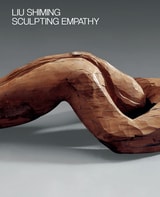
Liu Shiming
Sculpting EmpathyRichard Vine
Rutgers University Press, 2026
Liu Shiming (1926–2010) is a revered Chinese artist whose works have had a distinct impact on the course of modern Chinese sculpture. Born in Tianjin in 1926, Shiming attended the prestigious Central Academy of Fine Arts (CAFA) in Beijing, where he was part of the first generation of sculptors trained by the People’s Republic of China to study both traditional Chinese art and French modernist principles. Shiming received early recognition for his work, and his student project Measuring Land (1950) was one of the first works exhibited abroad following the establishment of the People’s Republic of China.
Though well respected in China, the sculptor, who died in 2010 at the age of eighty-four, is only now beginning to win the wider recognition he deserves. Meanwhile, contemporary competitors are numberless, most of them Instagram-friendly, while art history tends to focus on towering names and indisputably major movements and events: Braque and Picasso inventing Cubism, Duchamp’s readymades redefining art itself, Warhol’s mind-bending Brillo Boxes, and so on. So why examine an artist in the middle ground? Perhaps, first, because that is where the vast majority of us live, trying to make sense of our lives and grateful for the occasional insight, release, or enrichment that visual art can bring us. Second, because the story of Liu Shiming reveals a great deal about the forces that have shaped postwar art worldwide. He was a man who sought to lead a simple life, dedicated entirely to art, in the midst of China’s epochal, dangerously complex twentieth-century social and political changes.
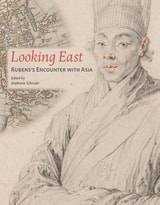
Looking East
Rubens’s Encounter with AsiaStephanie Schrader
J. Paul Getty Trust, The, 2013
Peter Paul Rubens’s fascinating depiction of a man wearing Korean costume of around 1617, in the collection of the J. Paul Getty Museum, has been considered noteworthy since it was made. Published to accompany an exhibition of Rubens’s Man in Korean Costume at the J. Paul Getty Museum from March 5 to June 9, 2013, Looking East: Rubens’s Encounter with Asia explores the various facets of Rubens’s compelling drawing of this Asian man that appears in later Rubens works. This large drawing was copied in Rubens’s studio during his own time and circulated as a reproductive print in the eighteenth century. Despite the drawing’s renown, however, the reasons why it was made and whether it actually depicts a specific Asian person remain a mystery. The intriguing story that develops involves a shipwreck, an unusual hat, the earliest trade between Europe and Asia, the trafficking of Asian slaves, and the role of Jesuit missionaries in Asia.
The book’s editor, Stephanie Schrader, traces the interpretations and meanings ascribed to this drawing over the centuries. Could Rubens have actually encountered a particular Korean man who sailed to Europe, or did he instead draw a model wearing Asian clothing or simply hear about such a person? What did Europeans really know about Korea during that period, and what might the Jesuits have had to do with the production of this drawing? All of these questions are asked and explored by the book’s contributors, who look at the drawing from various points of view.
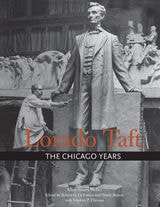
Lorado Taft
The Chicago YearsAllen Stuart Weller; Edited by Robert G. La France and Henry Adams with Stephen P. Thomas
University of Illinois Press, 2014
Returning to Chicago from France, Taft established a bustling studio and began a twenty-one-year career as an instructor at the Art Institute, succeeded by three decades as head of the Midway Studios at the University of Chicago. This triumphant era included ephemeral sculpture for the 1893 World's Columbian Exposition; a prolific turn-of-the-century period marked by the gold-medal-winning The Solitude of the Soul; the 1913 Fountain of the Great Lakes; the 1929 Alma Mater at the University of Illinois; and large-scale projects such as his ambitious program for Chicago's Midway with the monumental Fountain of Time. In addition, the book charts Taft's mentoring of women artists, including the so-called White Rabbits at the World's Fair, many of whom went on to achieve artistic success.
Lavishly illustrated with color images of Taft's most celebrated works, Lorado Taft: The Chicago Years completes the first major study of a great American artist.