Results by title
110 books match the query 'Individual Photographers' and 8 start with l
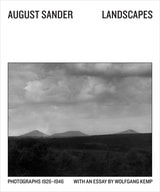
Landscapes
Photographs 1926-1946August Sander
University of Chicago Press, 2016
These photographs showcase a variety of scenes, from a sunrise over Cologne to the slopes of the Rhine valley. The Rhine River flows through many of these pictures, its dynamic curves and lively current leading the eye through an intriguing mix of natural and urban landscapes. A new essay by art historian Wolfgang Kemp provides context for Sander’s work while introducing his contemporaries, including the writer Hans Ludwig Mathar and the painter Franz M. Jansen. Also explored are the ties between Sander’s landscapes and his portrait photography, which is celebrated worldwide. Crucially, Kemp highlights the need to consider the Rhineland’s unique political situation in the 1920s and 1930s for any discussion of Sander’s artistic approach.
Shining welcome light on the full range of Sander’s practice, this book offers a glorious journey through the landscapes that most affected him.
Lateness and Longing
On the Afterlife of PhotographyGeorge Baker
University of Chicago Press, 2023
Beginning in the 1990s, a series of major artists imagined the expansion of photography, intensifying its ideas and effects while abandoning many of its former medium constraints. Simultaneous with this development in contemporary art, however, photography was moving toward total digitalization.
Lateness and Longing presents the first account of a generation of artists—focused on the work of Zoe Leonard, Tacita Dean, Sharon Lockhart, and Moyra Davey—who have collectively transformed the practice of photography, using analogue technologies in a dissident way and radicalizing signifiers of older models of feminist art. All these artists have resisted the transition to the digital in their work. Instead—in what amounts to a series of feminist polemics—they return to earlier, incomplete, or unrealized moments in photography’s history, gravitating toward the analogue basis of photographic mediums. Their work announces that photography has become—not obsolete—but “late,” opened up by the potentially critical forces of anachronism.
Through a strategy of return—of refusing to let go—the work of these artists proposes an afterlife and survival of the photographic in contemporary art, a formal lateness wherein photography finds its way forward through resistance to the contemporary itself.
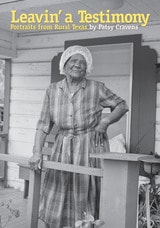
Leavin' a Testimony
Portraits from Rural TexasBy Patsy Cravens
University of Texas Press, 2006
First settled by Stephen F. Austin's colonists in the early nineteenth century, Colorado County has deep roots in Texas history. Mainly rural and agrarian until late in the twentieth century, Colorado County was a cotton-growing region whose population was about evenly divided between blacks and whites. These life-long neighbors led separate and unequal lives, memories of which still linger today. To preserve those memories, Patsy Cravens began interviewing and photographing the older residents of Colorado County in the 1980s. In this book, she presents photographs and recollections of the last generation, black and white, who grew up in the era of Jim Crow segregation.
The folks in Colorado County have engrossing stories to tell. They recall grinding poverty and rollicking fun in the Great Depression, losing crops and livestock to floods, working for the WPA, romances gone wrong and love gone right, dirty dancing, church and faith, sharecropping, quilting, raising children, racism and bigotry, and even the horrific lynching of two African American teenagers in 1935. The Colorado County residents' stories reveal an amazing resiliency and generosity of spirit, despite the hardships that have filled most of their lives. They also capture a rural way of life that was once common across the South, but is now gone forever.
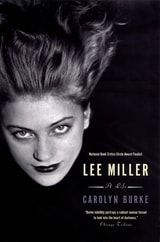
Lee Miller
A LifeCarolyn Burke
University of Chicago Press, 2007
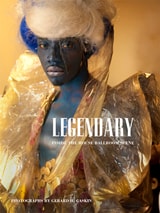
Legendary
Inside the House Ballroom SceneGerard H. Gaskin
Duke University Press, 0
From the quiet backstage, to the shimmering energies of the runway. to the electricity of the crowd, Gaskin's photographs take us to the ball. Legendary, comprised of photos taken at events in the New York city area, Philadelphia, Richmond, and Washington, D.C., is a collaboration between Gaskin, a camera-laden outsider who has been attending balls for twenty years, and the house members who let him enter the intimate world of ball culture. In addition to an introduction by Deborah Willis, Legendary includes an essay, "The Queer Undercommons," by Frank Roberts.

Look at me
Photographs from Mexico City by Jed FieldingJed Fielding
University of Chicago Press, 2009
Sight is central to the medium of photography. But what happens when the subjects of photographic portraits cannot look back at the photographer or even see their own image? An in-depth pictorial study of blind schoolchildren in Mexico, Look at me draws attention to (and distinctions between) the activity of sight and the consciousness of form.
Combining aspects of his earlier, acclaimed street work with an innovative approach to portraiture, Chicago-based photographer Jed Fielding has concentrated closely on these children’s features and gestures, probing the enigmatic boundaries between surface and interior, innocence and knowing, beauty and grotesque. Design, composition, and the play of light and shadow are central elements in these photographs, but the images are much more than formal experiments; they confront disability in a way that affirms life. Fielding’s sightless subjects project a vitality that seems to extend beyond the limits of self-consciousness. In collaborative, joyful participation with the children, he has made pictures that reveal essential gestures of absorption and the basic expressions of our creatureliness.
Fielding’s work achieves what only great art, and particularly great portraiture can: it launches and then complicates a process of identification across the barriers that separate us from each other. Look at me contains more than sixty arresting images from which we often want to look away, but into which we are nevertheless drawn by their deep humanity and palpable tenderness. This is a monograph of uncommon significance by an important American photographer.
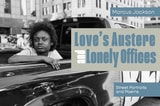
Love’s Austere and Lonely Offices
Street Portraits and PoemsMarcus Jackson
Northwestern University Press, 2026
An astounding collection of photographs from a renowned poet
Created during the tumultuous years of 2020 and 2021, Love’s Austere and Lonely Offices: Street Portraits and Poems intersects the lens of accomplished poet and photographer Marcus Jackson with his words. The focus: the Black experience and existence. Amid isolation, protest, and survival, Jackson is the aperture and scribe giving visual consciousness and breath to these human portraits. His camera strips the view of endless cycles of social and moral injustices, presenting a resonant collection of photographs that make space for the moments and the people whose beings represent the ongoing interplay between history, society, and the individual soul.
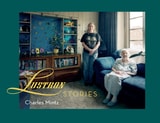
Lustron Stories
Charles Mintz
The Ohio State University Press, 2016
A remarkable cross section of individuals and families live in these modest (~1100 sq. ft.) homes. While certainly diverse in age and place in life, the homeowners are still firmly working class. Everyone who lives in a Lustron home has an opinion about it. The material is miserable to cut or drill into. Repairs are more about metalworking and enamel finishing than carpentry or house painting. And magnets tend to be a popular solution for hanging objects inside and outside the steel walls.
Four years ago, Charles Mintz set out to photograph the people living in these homes. The residents, owners, or both were photographed outside and occasionally inside. Mintz used a large format wooden camera and available light. This book features 65 of the resulting photographs and essays from Shannon Thomas Perich, Curator of the Photographic History Collection at Smithsonian’s National Museum of American History, and Jeffrey Head, author and architecture critic.