Results by title
448 books match the query 'Interviews' and 16 start with l
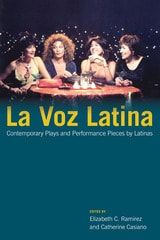
La Voz Latina
Contemporary Plays and Performance Pieces by LatinasEdited by Elizabeth C. Ramirez and Catherine Casiano
University of Illinois Press, 2011
Contributors: Yareli Arizmendi, Josefina Báez, The Colorado Sisters, Migdalia Cruz, Evelina Fernández, Cherríe Moraga, Carmen Peláez, Carmen Rivera, Celia H. Rodríguez, Diane Rodriguez, and Milcha Sanchez-Scott. The volume also includes commentary by Kathy Perkins and Caridad Svich.
Landing Zones
Southern Veterans Remember VietnamJames R. Wilson
Duke University Press, 1990
These stories focus on a uniquely southern view of Vietnam. In terms of numbers the South shouldered more than its share of human cost—31 percent of Americans who served came from one of the eleven states of the old Confederacy, and 28 percent of the dead were southerners. Southerners also brought to Vietnam certain shared cultural tastes and a particularly southern heritage of honor in military service stemming from the Civil War. For many, as their testimony reveals, a sense of patriotism was tested and questioned by the horrors of war, and for others that patriotism was a continued source of strength.
Individually and collectively, however, these oral histories make up a picture of war that prevents us from forgetting the truth as one veteran put it: “Vietnam was not one war, but a thousand little nasty wars.”
Latina Lives in Milwaukee
Theresa Delgadillo
University of Illinois Press, 2015
Learning to Be Everyone and No One
Interviews with Twelve Contemporary PoetsChard deNiord
University of Alabama Press, 2026
Intimate, unfiltered conversations with major contemporary poets that reveal how craft, conscience, and lived experience shape poetry
Learning to Be Everyone and No One is a compelling collection of intimate interviews that captures poets speaking with uncommon candor about the making of their art. Through lively, unguarded conversations, Chard deNiord draws out moments of insight, humor, struggle, and revelation, revealing how poetry grows from lived experience and sustained attention. The result is an experience that feels immediate and alive, offering readers a sense of presence inside the creative act as it unfolds in real time.
Gathering voices that have helped shape contemporary poetry, the book features conversations with Robert Hass, T. R. Hummer, Major Jackson, Ali Kinsella, Halyna Kruk, Li-Young Lee, Ada Limón, Dennis Nurske, Dzvinia Orlowsky, Robert Pinsky, Charles Simic, Bruce Smith, Gerald Stern, Ruth Stone, and Chase Twichell. Together, these poets reflect on identity, politics, race, gender, memory, and the natural world with wit, urgency, and precision. More than a record of distinguished careers, this volume forms a chorus of perspectives that affirms poetry’s enduring power to challenge, console, and remain “the news that stays the news.”
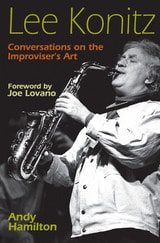
Lee Konitz
Conversations on the Improviser's ArtAndy Hamilton
University of Michigan Press, 2007
“Meticulously researched, detailed and documented, this long awaited overview justly establishes Konitz as one of the most consistently brilliant, adventurous and original improvisers in the jazz tradition—a genius as rare as Bird himself.”
—John Zorn
“Hamilton’s work may well mark the inception of a format new to writing on Western music, one which avoids both the self-aggrandizing of autobiography and the stylized subjectification of biography.”
—The Wire
“An extraordinary approach to a biography, with the man himself speaking for extended sessions. The main vibration I felt from Lee’s words was total honesty, almost to a fault. Konitz shows himself to be an acute observer of the scene, full of wisdom and deep musical insights, relevant to any historical period regardless of style. The asides by noted musicians are beautifully woven throughout the pages. I couldn’t put the book down—it is the definition of a living history.”
—David Liebman
The preeminent altoist associated with the “cool” school of jazz, Lee Konitz was one of the few saxophonists of his generation to forge a unique sound independent of the influence of Charlie Parker. In the late 1940s, Konitz began his career with the Claude Thornhill band, during which time he came into contact with Miles Davis, with whom he would later work on the legendary Birth of the Cool sessions. Konitz is perhaps best known through his association with Lennie Tristano, under whose influence much of his sound evolved, and for his work with Stan Kenton and Warne Marsh. His recordings have ranged from cool bop to experimental improvisation and have appeared on such labels as Prestige, Atlantic, Verve, and Polydor.
Crafted out of numerous interviews between the author and his subject, the book offers a unique look at the story of Lee Konitz’s life and music, detailing Konitz’s own insights into his musical education and his experiences with such figures as Miles Davis, Stan Kenton, Warne Marsh, Lennie Tristano, Charles Mingus, Bud Powell, and Bill Evans.
Andy Hamilton is a jazz pianist and contributor to major jazz and contemporary music magazines. He teaches philosophy, and the history and aesthetics of jazz, at Durham University in the United Kingdom. He is also the author of the book Aesthetics and Music (Continuum 2007).
Joe Lovano is a Grammy Award–winning tenor saxophonist. His most recent album is Streams of Expression.
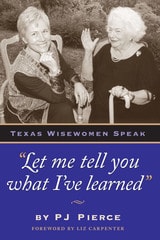
Let me tell you what I've learned
Texas Wisewomen SpeakBy PJ Pierce
University of Texas Press, 2002
Barbara Jordan spoke for many Texas women when she told a reporter, "I get from the soil and spirit of Texas the feeling that I, as an individual, can accomplish whatever I want to, and that there are no limits, that you can just keep going, just keep soaring. I like that spirit." Indeed, the sense of limitless possibilities has inspired countless Texas women—sometimes in the face of daunting obstacles—to build lives rich in work, family, friends, faith, and community involvement.
In this collection of interviews conducted by PJ Pierce, twenty-five Texas women ranging in age from 53 to 93 share the wisdom they've acquired through living unconventional lives. Responding to the question "What have you found that really matters about life?" they offer keen insights into motherhood, career challenges, being a minority, marriage and widowhood, anger, assertiveness, managing change, persevering, power, speaking out, fashioning success from failure, writing your own job description, loving a younger man, and recognizing opportunities disguised as disaster—to name only a few of their topics. In her introduction, Pierce describes how she came to write the book and how she chose her subjects to represent a cross-section of career paths and ethnic groups and all geographic areas of Texas. A topical index makes it easy to compare several women's views on a given subject.
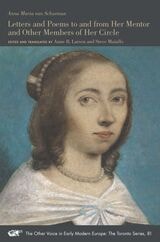
Letters and Poems to and from Her Mentor and Other Members of Her Circle
Anna Maria van Schurman
Iter Press, 2021
This volume presents in translation a remarkable collection of her letters and poems—many of which were previously unpublished—that span almost four decades of her life, from 1631 to 1669.
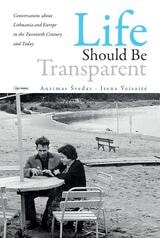
Life should be Transparent
Conversations about Lithuania and Europe in the Twentieth Century and TodayAurimas Svedas
Central European University Press, 2020
This book of thirteen conversations introduces us to the life of an exceptional person—theatre critic, Germanist, and long-time chair of the Open Lithuania Fund board—Irena Veisaitė. The dialogue between Lithuanian historian Aurimas Švedas and a woman who reflects deeply on her experiences reveals both one individual’s historically dramatic life and the fate of Europe and Lithuania in the twentieth century.
Through the complementary lenses of history and memory, we confront with Veisaitė the horrific events of the Holocaust, which brought about the end of the Lithuanian Jewish world. We also meet an array of world-class cultural figures, see fragments of legendary theatre performances, and hear meaningful words that were spoken or heard decades ago.
This book’s interlocutors do not so much seek to answer the question “What was it like?” but instead repeatedly ask each other: “What, how, and why do we remember? What is the meaning of our experiences? How can history help us to live in the present and create the future? How do we learn to understand and forgive?”
A series of Veisaitė’s texts, statements, and letters, presented at the end of the book suggest further ways of answering these questions.
Life-Altering
Abortion Stories from the MidwestAngie Leventis Lourgos
University of Missouri Press, 2023
Based on her coverage of reproductive rights for the Chicago Tribune, veteran journalist Angie Leventis Lourgos explores these personal accounts to delve into the most nuanced aspects of abortion, from life-threatening cases to terminations later in gestation to restrictions for minors. The reporting spans the time before Roe and continues through the first year after the landmark Supreme Court case’s stunning reversal, which spurred some of the most stringent abortion laws of the past half-century—as well as new and innovative means of access.
From interviews Lourgos conducted with women across the Midwest, Life-Altering examines different facets of abortion from the perspectives of those who ended their pregnancies, illustrating how court cases, state legislation, and religious beliefs can affect the lives and reproductive choices of ordinary people. By looking at myriad factors that influence the decision whether or not to abort a pregnancy— be they socio-economic, religious, legal, or medical—the accounts collected in this volume challenge the conventional labels of “pro-life” and “pro-choice .”

Listening
Interviews, 1970–1989Jonathan Cott
University of Minnesota Press, 2020
Listening For a Life
A Dialogic Ethnography of Bessie Eldreth through Her Songs and StoriesPatricia Sawin
Utah State University Press, 2004
Drawing on Bahktinian and feminist theory, Sawin pushes forward our understanding of the interactive roles of ethnographer and subject and in the process gives us a deeper understanding of folk singer and storyteller Bessie Eldreth and her greatest art, herself.
Listening to Survivors
Four Decades of Holocaust Memorial Week at Oregon State UniversityKatherine E. Hubler
Oregon State University Press, 2024
Historian Katherine Hubler has arranged these recollections thematically in chapters centered on discrimination, refuge, resistance, rescue, and transitional justice. These themes align with Oregon’s Holocaust and Genocide Education learning concepts, discussion questions accompany each chapter to facilitate use in classrooms, and the introduction situates the speakers’ diverse experiences within the broader context of World War Two and the Nazis’ genocidal project.
Intended to bring the history of the Holocaust to all Oregonians, Listening to Survivors honors the legacy of outreach work of local survivors and serves as a reminder of the state’s connection to the Holocaust and commitment to genocide education and prevention.

Literary Intellectuals and the Dissolution of the State
Professionalism and Conformity in the GDREdited by Robert von Hallberg
University of Chicago Press, 1996
What drove leading thinkers, including those of the avant-garde who publicly embraced intellectual freedom, to serve as government informants? Why were they content to work within a repressive system rather than challenging it outright? This collection of interviews with more than two dozen writers and literary scholars, including several Stasi informants, provides a gripping, often dismaying picture of the motivations, compromises, and illusions of East German intellectual life.
In conversations with Robert von Hallberg, writers such as best-selling novelist Hermann Kant, playwright Christoph Hein, and avant-garde poet-publisher Sascha Anderson talk about their lives and work before the fall of the wall in 1989—about the constraints and privileges of Communist Party membership, experiences of government censorship and self-censorship, and relations with their readers. They reflect on why the possibilities of opposition to the state seemed so limited, and on how they might have found ways to resist more aggressively. Turning to the controversies that have emerged since reunification, including the Stasi scandals involving Anderson and Christa Wolf, they discuss their feelings of complicity and the need for further self-examination. Two interviews with Anderson—one conducted before he was exposed as a Stasi collaborator and one conducted afterward—offer unique insight into the double life led by many writers and scholars in the German Democratic Republic.
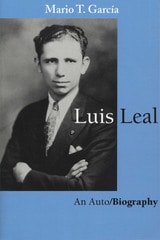
Luis Leal
An Auto/BiographyBy Mario T. García
University of Texas Press, 2000
Professor Luis Leal is one of the most outstanding scholars of Mexican, Latin American, and Chicano literatures and the dean of Mexican American intellectuals in the United States. He was one of the first senior scholars to recognize the viability and importance of Chicano literature, and, through his perceptive literary criticism, helped to legitimize it as a worthy field of study. His contributions to humanistic learning have brought him many honors, including Mexico's Aquila Azteca and the United States' National Humanities Medal.
In this testimonio or oral history, Luis Leal reflects upon his early life in Mexico, his intellectual formation at Northwestern University and the University of Chicago, and his work and publications as a scholar at the Universities of Illinois and California, Santa Barbara. Through insightful questions, Mario García draws out the connections between literature and history that have been a primary focus of Leal's work. He also elicits Leal's assessment of many of the prominent writers he has known and studied, including Mariano Azuela, William Faulkner, Octavio Paz, Carlos Fuentes, Juan Rulfo, Gabriel García Márquez, Jorge Luis Borges, Tomás Rivera, Rolando Hinojosa, Rudolfo Anaya, Elena Poniatowska, Sandra Cisneros, Richard Rodríguez, and Ana Castillo.
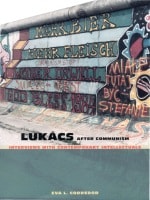
Lukács After Communism
Interviews with Contemporary IntellectualsEva L. Corredor
Duke University Press, 1997
The scholars featured in this collection—Etienne Balibar, Peter Bürger, Terry Eagleton, Fredric Jameson, Jacques Leenhardt, Michael Löwy, Roberto Schwarz, George Steiner, Susan Suleiman, and Cornel West—discuss a broad array of literary and political topics and present provocative views on gender, race, and economic relations. Corredor’s introduction provides a biographical synopsis of Lukács and discusses a number of his most important theoretical concepts. Maintaining the ongoing vitality of Lukács’s work, these interviews yield insights into Lukács as a philosopher and theorist, while offering anecdotes that capture him in his role as a teacher-mentor.
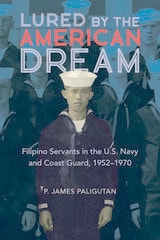
Lured by the American Dream
Filipino Servants in the U.S. Navy and Coast Guard, 1952-1970P. James Paligutan
University of Illinois Press, 2022
Insightful and dramatic, Lured by the American Dream is the untold story of how Filipino servicepersons overcame tradition and hierarchy in their quest for dignity.