Results by title
98 books match the query 'Labor movement' and 8 start with l
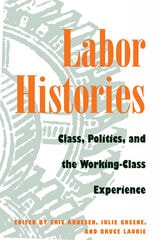
Labor Histories
Class, Politics, and the Working-Class ExperienceEdited by Eric Arnesen, Julie Greene, and Bruce Laurie
University of Illinois Press, 1998
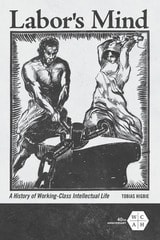
Labor's Mind
A History of Working-Class Intellectual LifeTobias Higbie
University of Illinois Press, 2019
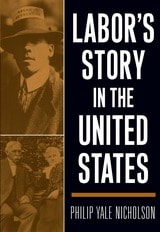
Labor's Story In The United States
Philip Nicholson
Temple University Press, 2004
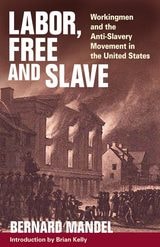
Labor, Free and Slave
Workingmen and the Anti-Slavery Movement in the United StatesBernard Mandel.Introduction by Brian Kelly
University of Illinois Press, 2006
Bernard Mandel's classic study provides a concise overview of the relationship between organized abolitionism and the fledgling labor movement in the period before the Civil War. Mandel argues that slavery reinforced the powerlessness of white workers North and South, and the racial divisions that it upheld rendered effective labor solidarity impossible. Deep distrust between abolitionists and the working classes, however, compelled Northern workers to find their own way into the antislavery ranks.
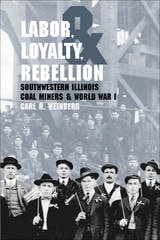
Labor, Loyalty, and Rebellion
Southwestern Illinois Coal Miners & World War ICarl R. Weinberg
Southern Illinois University Press, 2005
On April 5, 1918, as American troops fought German forces on the Western Front, German American coal miner Robert Prager was hanged from a tree outside Collinsville, Illinois, having been accused of disloyal utterances about the United States and chased out of town by a mob. In Labor, Loyalty, and Rebellion: Southwestern Illinois Coal Miners and World War I, Carl R. Weinberg offers a new perspective on the Prager lynching and confronts the widely accepted belief among labor historians that workers benefited from demonstrating loyalty to the nation.
The first published study of wartime strikes in southwestern Illinois is a powerful look at a group of people whose labor was essential to the war economy but whose instincts for class solidarity spawned a rebellion against mine owners both during and after the war. At the same time, their patriotism wreaked violent working-class disunity that crested in the brutal murder of an immigrant worker. Weinberg argues that the heightened patriotism of the Prager lynching masked deep class tensions within the mining communities of southwestern Illinois that exploded after the Great War ended.
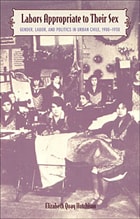
Labors Appropriate to Their Sex
Gender, Labor, and Politics in Urban Chile, 1900–1930Elizabeth Quay Hutchison
Duke University Press, 2001
In addition to population and industrial censuses, Hutchison culls published and archival sources to illuminate such misconceptions and to reveal how women’s paid labor became a locus of anxiety for a society confronting social problems—both real and imagined—that were linked to industrialization and modernization. The limited options of working women were viewed by politicians, elite women, industrialists, and labor organizers as indicative of a society in crisis, she claims, yet their struggles were also viewed as the potential springboard for reform. Labors Appropriate to Their Sex thus demonstrates how changing norms concerning gender and work were central factors in conditioning the behavior of both male and female workers, relations between capital and labor, and political change and reform in Chile.

Labour and the Challenges of Globalization
What Prospects for Transnational Solidarity?Andreas Bieler, Ingemar Lindberg and Devan Pillay
Pluto Press, 2008
The working classes across the world are feeling the effects of globalization and the race to the bottom that it encourages. Core jobs for workers in the developed world are being outsourced to countries where pay and conditions are terrible and union membership is often forbidden. Much of the work of the world economy is now taking place in a burgeoning informal sector, making worldwide organization of labor very difficult.
Case studies from 11 different countries, including China, Germany, Canada and South Africa, illustrate what is happening and show how workers and trade unions can successfully adapt to the neoliberal world.
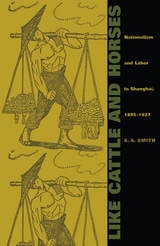
Like Cattle and Horses
Nationalism and Labor in Shanghai, 1895-1927S. A. Smith
Duke University Press, 2002
While the massive wave of labor protest in the 1920s was principally an expression of militant nationalism rather than of class consciousness, Smith argues, elements of a precarious class identity were in turn forged by the very discourse of nationalism. By linking work-related demands to the defense of the nation, anti-imperialist nationalism legitimized participation in strikes and sensitized workers to the fact that they were worthy of better treatment as Chinese citizens. Smith shows how the workers’ refusal to be treated “like cattle and horses” (a phrase frequently used by workers to describe their condition) came from a new but powerfully felt sense of dignity. In short, nationalism enabled workers to interpret the anger they felt at their unjust treatment in the workplace in political terms and to create a link between their position as workers and their position as members of an oppressed nation. By focusing on the role of the working class, Like Cattle and Horses is one of very few studies that examines nationalism “from below,” acknowledging the powerful agency of nonelite forces in promoting national identity.
Like Cattle and Horses will interest historians of labor, modern China, and nationalism, as well as those engaged in the study of revolutions and revolt.