Results by title
124 books match the query 'Learning' and 56 start with l
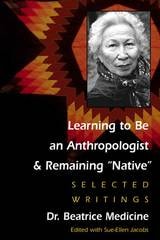
LEARNING TO BE AN ANTHROPOLOGIST
SELECTED WRITINGSDr. Beatrice Medicine
University of Illinois Press, 2001
For half a century, Dr. Medicine has defied stereotypes, racism, and sexism in her life and work while combating the reductive, patronizing views of Native Americans perpetuated by mainstream anthropologists. This retrospective collection reflects her unswerving commitment to furthering Native Americans' ability to speak for themselves and deal with the problems of contemporary life.
Learning to Be an Anthropologist and Remaining "Native" includes Medicine's clear-eyed views of assimilation, bilingual education, and the adaptive strategies by which Native Americans have conserved and preserved their ancestral languages. Her discussions of sex roles in contemporary Native American societies encompass homosexual orientation among males and females and the "warrior woman" role among Plains Indians as one of several culturally accepted positions according power and prestige to women. The volume also includes Medicine's thoughtful assessments of kinship and family structures, alcoholism and sobriety, the activism implicit in the religious ritual of the Lakota Sioux Sun Dance, and the ceremonial uses of Lakota star quilts.
"The Native American is possibly the least understood ethnic minority in contemporary American society," Medicine observes. Her decades of deliberate, generous, dedicated work have done much to reveal the workings of Native culture while illuminating the effects of racism and oppression on Indian families, kinship units, and social and cultural practices.

Learning From Robben Island
Govan Mbeki’s Prison WritingsGovan Mbeki
Ohio University Press, 1991
In the late fifties and early sixties, Govan Mbeki was a central figure in the African National Congress and director of the ANC campaigns from underground. Born of a chief and the daughter of a Methodist minister in the Transkei of South Africa in 1910, he worked as a teacher, journalist, and tireless labor organizer in a lifetime of protest against the government policy of apartheid. Over two decades of imprisonment on Robben Island did not consign him to obscurity. Along with Nelson Mandela and Walter Sisulu, his name has become a symbol of resistance, not only to the oppressed people of South Africa, but also to the international community who have conferred on him many honors and awards.
Learning To Divide The World
Education at Empire’s EndJohn Willinsky
University of Minnesota Press, 2000
Learning To See
American Sign Language as a Second LanguageSherman Wilcox
Gallaudet University Press, 1997
Learning to See lays solid groundwork for teaching and studying ASL by outlining the structure of this unique visual language. Myths and misconceptions about ASL are laid to rest at the same time that the fascinating, multifaceted elements of Deaf culture are described. Students will be able to study ASL and gain a thorough understanding of the cultural background, which will help them to grasp the language more easily. An explanation of the linguistic basis of ASL follows, leading into the specific, and above all, useful information on teaching techniques.
This practical manual systematically presents the steps necessary to design a curriculum for teaching ASL, including the special features necessary for training interpreters. The new Learning to See again takes its place at the forefront of texts on teaching ASL as a second language, and it will prove to be indispensable to educators and administrators in this special discipline.
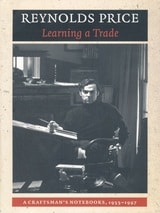
Learning a Trade
A Craftsman's Notebooks: 1955-1997Reynolds Price
Duke University Press, 1998
Whether Price is reflecting on the rhythm of his day-to-day writing process or ruminating about the central character in what would become, for instance, Kate Vaiden—should she be a woman, what would be her name, why would the story be told in the first person?—he envelops the reader in the task at hand, in the trade being practiced. Instead of personal memoir or a collection of literary fragments, Learning a Trade presents what Price has called the “ongoing minutes” of his effort to learn his craft. Equally enlightening as an overview of a career of developing prominence or as a perspective on the building of individual literary works, this volume not only allows the reader to hear the author’s internal dialogue on the hundreds of questions that must be turned and mulled during the planning and writing of a novel but, in an unplanned way, creates its own compelling narrative.
These notebooks begin in “that distant summer in dazed Eisenhower America,” a month after Price’s graduation from Duke University, and conclude in “the raucous millennial present” with plans for his most recent novel, Roxanna Slade. Revealing the genesis and resolution of such works as The Surface of Earth, The Source of Light, Kate Vaiden, Clear Pictures, and Blue Calhoun, Learning a Trade offers a rich reward to those seeking to enter the guild of writers, as well as those intrigued by the process of the literary life or captured by the work of Reynolds Price.
Learning and Community
Jewish Supplementary Schools in the Twenty-First CenturyJack Wertheimer
Brandeis University Press, 2009
Learning and Physiological Regulation
Barry R. Dworkin
University of Chicago Press, 1993

Learning and Teaching the Ways of Knowing
Edited by Elliot Eisner
University of Chicago Press, 1985
Learning from Birmingham
A Journey into History and HomeJulie Buckner Armstrong
University of Alabama Press, 2023
A steel town daughter’s search for truth and beauty in Birmingham, Alabama
“As Birmingham goes, so goes the nation,” Fred Shuttlesworth observed when he invited Martin Luther King Jr. to the city for the transformative protests of 1963. From the height of the Civil Rights Movement through its long aftermath, images of police dogs, fire hoses and four girls murdered when Ku Klux Klan members bombed the Sixteenth Street Baptist Church have served as an uncomfortable racial mirror for the nation. Like many white people who came of age in the Civil Rights Movement’s wake, Julie Buckner Armstrong knew little about this history. Only after moving away and discovering writers like Toni Morrison and Alice Walker did she realize how her hometown and family were part of a larger, ongoing story of struggle and injustice.
When Armstrong returned to Birmingham decades later to care for her aging mother, Shuttlesworth’s admonition rang in her mind. By then an accomplished scholar and civil rights educator, Armstrong found herself pondering the lessons Birmingham holds for a twenty-first century America. Those lessons extended far beyond what a 2014 Teaching Tolerance report describes as the common distillation of the Civil Rights Movement into “two names and four words: Martin Luther King Jr, Rosa Parks, and ‘I have a dream.’” Seeking to better understand a more complex local history, its connection to broader stories of oppression and resistance, and her own place in relation to it, Armstrong embarked on a journey to unravel the standard Birmingham narrative to see what she would find.
Beginning at the center, with her family’s 1947 arrival to a housing project near the color line, within earshot of what would become known as Dynamite Hill, Armstrong works her way over time and across the map. Weaving in stories of her white working-class family, classmates, and others not traditionally associated with Birmingham’s civil rights history, including members of the city’s LGBTQ community, she forges connections between the familiar and lesser-known. The result is a nuanced portrait of Birmingham--as seen in public housing, at old plantations, in segregated neighborhoods, across contested boundary lines, over mountains, along increasingly polluted waterways, beneath airport runways, on highways cutting through town, and under the gaze of the iconic statue of Vulcan.
In her search for truth and beauty in Birmingham, Armstrong draws on the powers of place and storytelling to dig into the cracks, complicating easy narratives of civil rights progress. Among the discoveries she finds in America’s racial mirror is a nation that has failed to recognize itself in the horrific images from Birmingham’s past and to acknowledge the continuing inequalities that make up the Civil Right’s Movement’s unfinished business. Learning from Birmingham reminds us that stories of civil rights, structural oppression, privilege, abuse, race and gender bias, and inequity are difficult and complicated, but their telling, especially from multiple stakeholder perspectives, is absolutely necessary.
Learning from Bogotá
Pedagogical Urbanism and the Reshaping of Public SpaceBy Rachel Berney
University of Texas Press, 2017
Once known as a “drug capital” and associated with kidnappings, violence, and excess, Bogotá, Colombia, has undergone a transformation that some have termed “the miracle of Bogotá.” Beginning in the late 1980s, the city emerged from a long period of political and social instability to become an unexpected model of urban development through the redesign and revitalization of the public realm—parks, transportation, and derelict spaces—under the leadership of two “public space mayors,” Antanas Mockus and Enrique Peñalosa (the latter reelected in 2015). In Learning from Bogotá, Rachel Berney analyzes how these mayors worked to reconfigure the troubled city into a pedagogical one whose public spaces and urban policy have helped shape a more tolerant and aware citizenry.
Berney examines the contributions of Mockus and Peñalosa through the lenses of both spatial/urban design and the city’s history. She shows how, through the careful intertwining of new public space and transportation projects, the reclamation of privatized public space, and the refurbishment of dilapidated open spaces, the mayors enacted an ambitious urban vision for Bogotá without resorting to the failed method of the top-down city master plan. Illuminating the complex interplay between formal politics, urban planning, and improvised social strategies, as well as the negative consequences that accompanied Bogotá’s metamorphosis, Learning from Bogotá offers significant lessons about the possibility for positive and lasting change in cities around the world.
Learning from Bryant Park
Revitalizing Cities, Towns, and Public SpacesAndrew M. Manshel
Rutgers University Press, 2020
In this new book, Andrew M. Manshel draws from both urbanist theory and his first-hand experiences as a urban public space developer and manager who worked on Bryant Park and later applied its strategies to an equally successful redevelopment project in a very different New York neighborhood: Jamaica, Queens. He candidly describes what does (and doesn’t) work when coordinating urban redevelopment projects, giving special attention to each of the many details that must be carefully observed and balanced, from encouraging economic development to fostering creative communities to delivering appropriate services to the homeless. Learning from Bryant Park is thus essential reading for anyone who cares about giving new energy to downtowns and public spaces.
Learning from Case Studies in Chaplaincy
Towards Practice Based Evidence and ProfessionalismEdited by Renske Kruizinga, Jacques Körver, Martin Walton, and Martjin Stoutjesdijk
Eburon Academic Publishers, 2020
The recent body of case-study work on chaplaincy care synthesizes the inherent narrative nature of chaplaincy with the structured rigors of contemporary care research. This volume is composed of contributions from both practitioners and academic researchers, joining reflections on the challenges of case studies in chaplaincy care with specific results. Drawing on reflections on methodology and professionalization in chaplaincy, the volume hopes to contribute to answering the question of how and why chaplaincy works.

Learning from Libraries that Use WordPress
Content-Management System Best Practices and Case StudiesKyle M. Jones
American Library Association, 2012
Learning from Madness
Brazilian Modernism and Global Contemporary ArtKaira M. Cabañas
University of Chicago Press, 2018
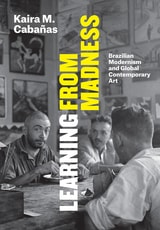
Kaira M. Cabañas shows that at the center of this advocacy stood such significant proponents as psychiatrists Osório César and Nise da Silveira, who championed treatments that included painting and drawing studios; and the art critic Mário Pedrosa, who penned Gestaltist theses on aesthetic response. Cabañas examines the lasting influence of this unique era of Brazilian modernism, and how the afterlife of this “outsider art” continues to raise important questions. How do we respect the experiences of the mad as their work is viewed through the lens of global art? Why is this art reappearing now that definitions of global contemporary art are being contested?
Learning from Madness offers an invigorating series of case studies that track the parallels between psychiatric patients’ work in Western Europe and its reception by influential artists there, to an analogous but altogether distinct situation in Brazil.
Learning from Other Worlds
Estrangement, Cognition, and the Politics of Science Fiction and UtopiaPatrick Parrinder, ed.
Duke University Press, 2001
In exploring the relationship between imaginative invention and that of allegory or fable, the essays in Learning from Other Worlds comment on the field’s most abiding concerns and employ a variety of critical approaches—from intellectual history and genre studies to biographical criticism, feminist cultural studies, and political textual analysis. Among the topics discussed are the works of John Wyndham, Kim Stanley Robinson, Stanislau Lem, H.G. Wells, and Ursula Le Guin, as well as the media’s reactions to the 1997 cloning of Dolly the Sheep. Darko Suvin’s characteristically outspoken and penetrating afterword responds to the essays in the volume and offers intimations of a further stage in his long and distinguished career.
This useful compendium and companion offers a coherent view of science fiction studies as it has evolved while paying tribute to the debt it owes Suvin, one of its first champions. As such, it will appeal to critics and students of science fiction, utopia, and fantasy writing.
Contributors. Marc Angenot, Marleen S. Barr, Peter Fitting, Carl Freedman, Edward James, Fredric Jameson, David Ketterer, Gerard Klein, Tom Moylan, Rafail Nudelman, Darko Suvin
Learning from Shenzhen
China’s Post-Mao Experiment from Special Zone to Model CityEdited by Mary Ann O'Donnell, Winnie Wong, and Jonathan Bach
University of Chicago Press, 2017
Bringing China studies into dialogue with urban studies, the contributors explore how the post-Mao Chinese appropriation of capitalist logic led to a dramatic remodeling of the Chinese city and collective life in China today. These essays show how urban villages and informal institutions enabled social transformation through cases of public health, labor, architecture, gender, politics, education, and more. Offering scholars and general readers alike an unprecedented look at one of the world’s most dynamic metropolises, this collective history uses the urban case study to explore critical problems and possibilities relevant for modern-day China and beyond.
Learning from the High Priestess
Affect, Femme Care, and Somatic PracticeAnn Cvetkovich
Duke University Press, 2026
Learning from the Land, Teachers Guide and Student Materials, 2nd Edition
Bobbie Malone
Wisconsin Historical Society Press, 2021
Learning from the Land
Wisconsin Land UseBobbie Malone
Wisconsin Historical Society Press, 1998
Learning from the Land
Wisconsin Land Use, TGBobbie Malone
Wisconsin Historical Society Press, 1999

Learning from the Land
Wisconsin Land Use; 2nd EditionBobbie Malone
Wisconsin Historical Society Press, 2011
How has the landscape of Wisconsin affected its history? How have people living here changed that landscape over time? What are the implications for the future? The second edition of Learning from the Land addresses these and other questions, asking elementary and middle school readers to think about land use issues throughout Wisconsin's history. This revised edition includes expanded chapters on logging and the lumber industry, land use and planning, and agriculture in the 20th century from farmers' markets to organic farming. New profiles of Gaylord Nelson, pioneer of Earth Day, and Will Allen, founder of Growing Power in Milwaukee, round out this history of land use in Wisconsin.
Learning from the Lived Experiences of Graduate Student Writers
Shannon Madden
Utah State University Press, 2020
Learning from the Lived Experiences of Graduate Student Writers is a timely resource for understanding and resolving some of the issues graduate students face, particularly as higher education begins to pay more critical attention to graduate student success. Offering diverse approaches for assisting this demographic, the book bridges the gap between theory and practice through structured examination of graduate students’ narratives about their development as writers, as well as researched approaches for enabling these students to cultivate their craft.
The first half of the book showcases the voices of graduate student writers themselves, who describe their experiences with graduate school literacy through various social issues like mentorship, access, writing in communities, and belonging in academic programs. Their narratives illuminate how systemic issues significantly affect graduate students from historically oppressed groups. The second half accompanies these stories with proposed solutions informed by empirical findings that provide evidence for new practices and programming for graduate student writers.
Learning from the Lived Experiences of Graduate Student Writers values student experience as an integral part of designing approaches that promote epistemic justice. This text provides a fresh, comprehensive, and essential perspective on graduate writing and communication support that will be useful to administrators and faculty across a range of disciplines and institutional contexts.
Contributors: Noro Andriamanalina, LaKela Atkinson, Daniel V. Bommarito, Elizabeth Brown, Rachael Cayley, Amanda E. Cuellar, Kirsten T. Edwards, Wonderful Faison, Amy Fenstermaker, Jennifer Friend, Beth Godbee, Hope Jackson, Karen Keaton Jackson, Haadi Jafarian, Alexandria Lockett, Shannon Madden, Kendra L. Mitchell, Michelle M. Paquette, Shelley Rodrigo, Julia Romberger, Lisa Russell-Pinson, Jennifer Salvo-Eaton, Richard Sévère, Cecilia D. Shelton, Pamela Strong Simmons, Jasmine Kar Tang, Anna K. Willow Treviño, Maurice Wilson, Anne Zanzucchi
Learning from the Mess
Method/ological Praxis in Rhetoric and Writing StudiesAshley J. Holmes
University Press of Colorado, 2024
Learning in Action
Designing Successful Graduate Student Work Experiences in Academic LibrariesArianne Hartsell-Gundy
Assoc of College & Research Libraries, 2022
How do you supervise a graduate student working in a library—and not just adequately, but well? What is a valuable and meaningful work experience? How can libraries design more equitable and ethical positions for students?
Learning in Action: Designing Successful Graduate Student Work Experiences in Academic Libraries provides practical, how-to guidance on creating and managing impactful programs as well as meaningful personal experiences for students and library staff in academic libraries. Fourteen chapters are divided into four thorough sections:
- Creating Access Pathways
- Developing, Running, and Evolving Programs for LIS Students
- Working with Graduate Students without an LIS Background: Mutual Opportunities for Growth
- Centering the Person
Learning in Action brings together a range of topics and perspectives from authors of diverse backgrounds and institutions to offer practical inspiration and a framework for creating meaningful graduate student work experiences at your institutions.
Learning in Depth
A Simple Innovation That Can Transform SchoolingKieran Egan
University of Chicago Press, 2011
For generations, schools have aimed to introduce students to a broad range of topics through curriculum that ensure that they will at least have some acquaintance with most areas of human knowledge by the time they graduate. Yet such broad knowledge can’t help but be somewhat superficial—and, as Kieran Egan argues, it omits a crucial aspect of true education: deep knowledge.
Real education, Egan explains, consists of both general knowledge and detailed understanding, and in Learning in Depth he outlines an ambitious yet practical plan to incorporate deep knowledge into basic education. Under Egan’s program, students will follow the usual curriculum, but with one crucial addition: beginning with their first days of school and continuing until graduation, they will eachalso study one topic—such as apples, birds, sacred buildings, mollusks,circuses, or stars—in depth. Over the years, with the help and guidance of their supervising teacher, students will expand their understanding of their one topic and build portfolios of knowledge that grow and change along with them. By the time they graduate each student will know as much about his or her topic as almost anyone on earth—and in the process will have learned important, even life-changing lessons about the meaning of expertise, the value of dedication, and the delight of knowing something in depth.
Though Egan’s program may be radical in its effects, it is strikingly simple to implement—as a number of schools have already discovered—and with Learning in Depth as a blueprint, parents, educators, and administrators can instantly begin taking the first steps toward transforming our schools and fundamentally deepening their students’ minds.
Learning in the Plural
Essays on the Humanities and Public LifeDavid D. Cooper
Michigan State University Press, 2014
Learning on the Left
Political Profiles of Brandeis UniversityStephen J. Whitfield
Brandeis University Press, 2020
Stephen J. Whitfield makes the case for the pertinence of Brandeis University in understanding the vicissitudes of American liberalism since the mid-twentieth century. Founded to serve as a refuge for qualified professors and students haunted by academic antisemitism, Brandeis University attracted those who generally envisioned the republic as worthy of betterment. Whether as liberals or as radicals, figures associated with the university typically adopted a critical stance toward American society and sometimes acted upon their reformist or militant beliefs. This volume is not an institutional history, but instead shows how one university, over the course of seven decades, employed and taught remarkable men and women who belong in our accounts of the evolution of American politics, especially on the left. In vivid prose, Whitfield invites readers to appreciate a singular case of the linkage of political influence with the fate of a particular university in modern America.
Learning the Hard Way
Masculinity, Place, and the Gender Gap in EducationMorris, Edward
Rutgers University Press, 2012
An avalanche of recent newspapers, weekly newsmagazines, scholarly journals, and academic books has helped to spark a heated debate by publishing warnings of a “boy crisis” in which male students at all academic levels have begun falling behind their female peers. In Learning the Hard Way, Edward W. Morris explores and analyzes detailed ethnographic data on this purported gender gap between boys and girls in educational achievement at two low-income high schools—one rural and predominantly white, the other urban and mostly African American. Crucial questions arose from his study of gender at these two schools. Why did boys tend to show less interest in and more defiance toward school? Why did girls significantly outperform boys at both schools? Why did people at the schools still describe boys as especially “smart”?
Morris examines these questions and, in the process, illuminates connections of gender to race, class, and place. This book is not simply about the educational troubles of boys, but the troubled and complex experience of gender in school. It reveals how particular race, class, and geographical experiences shape masculinity and femininity in ways that affect academic performance. His findings add a new perspective to the “gender gap” in achievement.
Learning the Possible
Mexican American Students Moving from the Margins of Life to New Ways of BeingReynaldo Reyes III; Foreword by Christian J. Faltis
University of Arizona Press, 2013
Laura, Christina, Luz, Maria, and Ruben, as the author calls them, had daunting challenges: difficulties with English, extremely low self-confidence, teenage motherhood, conflict between gender roles and personal desires, and a history of gang membership. Focusing on the importance of constructing a new identity as a successful student, Reynaldo Reyes III shares with readers the experiences of these marginalized students. Their stories, coupled with perspectives from instructors, CAMP staff and counselors, and the author’s own observations, illustrate the influence of past schooling, the persistence of culture, and the tensions and challenges inherent in developing a new identity.
This is a study of students who came from the margins and, in a very short time, moved toward the mainstream. In the micro view, it provides extraordinarily useful case studies of a successful intervention program in process. In the larger scope, it is a look at the socially constructed nature of possibility, hope, and success.
Learning to Be Everyone and No One
Interviews with Twelve Contemporary PoetsChard deNiord
University of Alabama Press, 2026
Intimate, unfiltered conversations with major contemporary poets that reveal how craft, conscience, and lived experience shape poetry
Learning to Be Everyone and No One is a compelling collection of intimate interviews that captures poets speaking with uncommon candor about the making of their art. Through lively, unguarded conversations, Chard deNiord draws out moments of insight, humor, struggle, and revelation, revealing how poetry grows from lived experience and sustained attention. The result is an experience that feels immediate and alive, offering readers a sense of presence inside the creative act as it unfolds in real time.
Gathering voices that have helped shape contemporary poetry, the book features conversations with Robert Hass, T. R. Hummer, Major Jackson, Ali Kinsella, Halyna Kruk, Li-Young Lee, Ada Limón, Dennis Nurske, Dzvinia Orlowsky, Robert Pinsky, Charles Simic, Bruce Smith, Gerald Stern, Ruth Stone, and Chase Twichell. Together, these poets reflect on identity, politics, race, gender, memory, and the natural world with wit, urgency, and precision. More than a record of distinguished careers, this volume forms a chorus of perspectives that affirms poetry’s enduring power to challenge, console, and remain “the news that stays the news.”
Learning to Be Latino
How Colleges Shape Identity PoliticsReyes, Daisy Verduzco
Rutgers University Press, 2018
Drawing on extensive ethnographic observations, Reyes shows how college campuses shape much more than students’ academic and occupational trajectories; they mold students’ ideas about inequality and opportunity in America, their identities, and even how they intend to practice politics.
Learning to Change
The Experience of Transforming Education in South East EuropeTerrice Bassler
Central European University Press, 2005
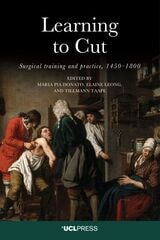
Learning to Cut
Surgical Training and Practice, 1450–1800Edited by Maria Pia Donato, Elaine Leong, and Tillmann Taape
University College London, 2026
The first-ever volume to offer a broader European narrative on surgical training and education in the early modern era.
This volume brings together case studies from the French, Italian, German, and English contexts to reveal diverse modes of surgical teaching and learning that were shaped by local contexts in early modern towns and cities. The chapters reveal the many spaces where practitioners learned and experienced surgery, shedding new light on the practice of early modern surgery.
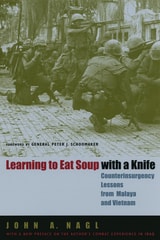
Learning to Eat Soup with a Knife
Counterinsurgency Lessons from Malaya and VietnamJohn A. Nagl
University of Chicago Press, 2005
In examining these two events, Nagl argues that organizational culture is key to the ability to learn from unanticipated conditions, a variable which explains why the British army successfully conducted counterinsurgency in Malaya but why the American army failed to do so in Vietnam, treating the war instead as a conventional conflict. Nagl concludes that the British army, because of its role as a colonial police force and the organizational characteristics created by its history and national culture, was better able to quickly learn and apply the lessons of counterinsurgency during the course of the Malayan Emergency.
With a new preface reflecting on the author's combat experience in Iraq, Learning to Eat Soup with a Knife is a timely examination of the lessons of previous counterinsurgency campaigns that will be hailed by both military leaders and interested civilians.
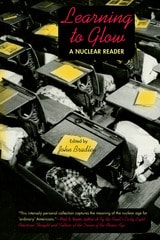
Learning to Glow
A Nuclear ReaderJohn Bradley
University of Arizona Press, 2000
In Learning to Glow, twenty-four essays testify to many of the unsuspected human and environmental costs of atomic science. They show that Americans have paid a terrible price for supposedly "winning" the Cold War--for although the nuclear nightmare may be over, we are still living with nuclear threats every day. Writers such as Scott Russell Sanders, Terry Tempest Williams, and Barbara Kingsolver reveal the psychic and emotional fallout of the Cold War and of subsequent developments in nuclear science. The essays include personal testimonies of what it was like to grow up with family members in nuclear-related jobs; hard-hitting journalism on the health and environmental costs of our nuclear policies and practices; and poignant stories of coming to terms with nuclear power, including contributions by writers who revisit Hiroshima in an attempt to heal the wounds left by the Bomb.
These essays offer an alternative to the official version of nuclear history as told to us by school textbooks, government authorities, and nuclear industry officials. They are stories of and by ordinary people who have suffered the consequences of the decisions made by those in power-stories that have been largely ignored, dismissed, or suppressed. They will challenge readers to re-examine their preconceptions about the way we deal with issues of nuclear arms and radioactive waste because they show that nuclear history does not belong to experts but to us all.
Contributors:
Marilou Awiakta
John Bradley
Jim Carrier
Alison Hawthorne Deming
Mary Dickson
Edward Dougherty
Ray Gonzalez
Karl Grossman
Sonya Huber
Barbara Kingsolver
Valerie Kuletz
Mary Laufer
Kay Mack
Craig McGrath
Bill Mesler
Richard H. Minear
Randy Morris
Mayumi Oda
Catherine Quigg
Richard Rawles
Kenneth Robbins
Scott Russell Sanders
David Seaborg
Terry Tempest Williams
Bill Witherup
Phil Woods
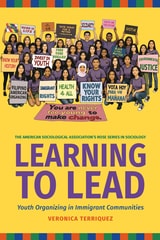
Learning to Lead
Grassroots Organizing in Immigrant CommunitiesVeronica Terriquez
Russell Sage Foundation, 2026
Children of immigrants make up more than one in four people in the United States under the age of thirty. Amid today’s multipronged attacks on immigrant communities and growing threats to democratic participation, these young people often encounter significant barriers to political participation. Despite these challenges, some children of immigrants and refugees engage in nonpartisan grassroots campaigns, addressing issues such as education, health, environmental justice, immigrant rights, housing, and voting rights. In Learning to Lead, sociologist Veronica Terriquez examines how youth organizing groups facilitate the civic and political engagement of low-income, second-generation immigrant adolescents, enabling them to collectively exercise power alongside their non-immigrant peers and adult allies.
Drawing on extensive survey, semi-structured interview, and other data, Terriquez shows that nonprofit youth organizing groups strengthen adolescents’ capacity to address the systemic challenges facing their communities through political engagement. Although these groups vary in the quality of their programming, they generally share a commitment to supporting young people’s healthy development, offer a critical form of civics education, and provide extensive guidance on how to participate in civic life. These groups adapt their programming in response to local demographic and political dynamics.
Many adolescents who join grassroots organizing groups face overlapping stresses related to poverty, immigration status, neighborhood violence, and other hardships. In response, youth organizing groups create spaces that support emotional well-being while also encouraging academic success and job-readiness. At the same time, they help young people develop a critical understanding of social inequality, power, and public policy. Through ethnic studies workshops and other activities, youth explore their own identities and learn about the histories and struggles of diverse communities.
This education often motivates second-generation immigrant and refugee youth to work in solidarity with their non-immigrant Black and Indigenous peers and deepens their understanding of the historical, economic, and political roots of community problems, as well as potential policy solutions. Unlike many youth-focused interventions, organizing groups also provide sustained, hands-on training in how to collectively exercise their voice in policy debates and government elections, effectively functioning as civic apprenticeships. Staff and experienced members mentor newer participants in basic civic skills such as public speaking, event planning, and community outreach, while also coaching them on strategies for mobilize peers and adult allies to contribute to nonpartisan campaigns.
Because of these intensive and formative experiences, adolescents who participate in youth organizing during high school tend to remain highly active in civic life into early adulthood. Terriquez concludes that these groups offer important lessons for schools and other youth-serving institutions seeking to strengthen engagement in a multiracial democracy.
Learning to Lead offers a thorough examination of the role of how young people acquire the capacities to become a meaningful political force.
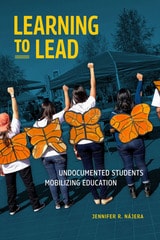
Learning to Lead
Undocumented Students Mobilizing EducationJennifer R. Nájera
Duke University Press, 2024
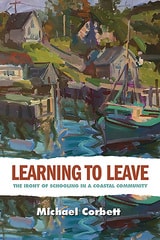
Learning to Leave
The Irony of Schooling in a Coastal CommunityMichael Corbett
West Virginia University Press, 2020
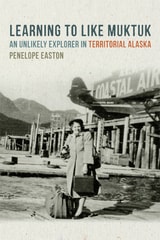
Learning to Like Muktuk
An Unlikely Explorer in Territorial AlaskaPenelope S. Easton
Oregon State University Press, 2014
Learning to Listen
A Handbook for MusicGrosvenor Cooper
University of Chicago Press, 1962
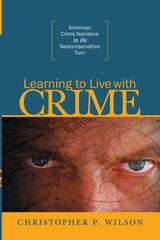
Learning to Live with Crime
American Crime Narrative in the Neoconservative TurnChristopher P. Wilson
The Ohio State University Press, 2010
Since the mid-1960s, the war on crime has reshaped public attitudes about state authority, criminal behavior, and the responsibilities of citizenship. But how have American writers grappled with these changes? What happens when a journalist approaches the workings of organized crime not through its legendary Godfathers but through a workaday, low-level figure who informs on his mob? Why is it that interrogation scenes have become so central to prime-time police dramas of late? What is behind writers’ recent fascination with “cold case” homicides, with private security, or with prisons?
In Learning to Live with Crime, Christopher P. Wilson examines this war on crime and how it has made its way into cultural representation and public consciousness. Under the sway of neoconservative approaches to criminal justice and public safety, Americans have been urged to see crime as an inevitable risk of modern living and to accept ever more aggressive approaches to policing, private security, and punishment. The idea has been not simply to fight crime but to manage its risks; to inculcate personal vigilance in citizens; and to incorporate criminals’ knowledge through informants and intelligence gathering. At its most scandalous, this study suggests, contemporary law enforcement has even come to mimic crime’s own operations.
Learning to Live with the Past
Krishna Kumar
Seagull Books, 2023
How does education shape political rivalry and hostility? The Partition of the Indian subcontinent in 1947—the violence that followed it, and its living legacy of rival nationalisms—has made a deep and pervasive impact on education in both India and Pakistan. In Learning to Live with the Past, educationist Krishna Kumar dwells on the complex terrain every history teacher has to navigate: how to make the past come alive without running the risk of creating a desire to lose this “pastness.”
Substantiating this question with a wealth of experiences gained from his extensive research on history textbooks, as well as his interactions with students and teachers in both countries, Kumar explores the integral function the discipline of history plays in the project of nation-building. To help children learn to live with the past, Kumar amplifies the need for spaces that create possibilities for inquiries into a “longer” common heritage shared by South Asia without necessarily denying a national narrative or encouraging an urge to undo the past.
Learning to Look
A Handbook for the Visual ArtsJoshua C. Taylor
University of Chicago Press, 1981
This handy guide to the visual arts is designed to provide a comprehensive view of art, moving from the analytic study of specific works to a consideration of broad principles and technical matters. Forty-four carefully selected illustrations afford an excellent sampling of the wide range of experience awaiting the explorer.
The second edition of Learning to Look includes a new chapter on twentieth-century art. Taylor's thoughtful discussion of pure forms and our responses to them gives the reader a few useful starting points for looking at art that does not reproduce nature and for understanding the distance between contemporary figurative art and reality.
Learning to Love Form 1040
Two Cheers for the Return-Based Mass Income TaxLawrence Zelenak
University of Chicago Press, 2013
Learning to Love
Arranged Marriages and the British Indian DiasporaRaksha Pande
Rutgers University Press, 2021
Learning to Love
Intimacy and the Discourse of Development in ChinaSonya E. Pritzker
University of Michigan Press, 2024
Learning to Love offers a range of perspectives on the embodied, relational, affective, and sociopolitical project of “learning to love” at the New Life Center for Holistic Growth, a popular “mind-body-spirit” bookstore and practice space in northeast China, in the early part of the 21st century. This intimate form of self-care exists alongside the fast-moving, growing capitalist society of contemporary China and has emerged as an understandable response to the pressures of Chinese industrialized life in the early 21st century. Opening with an investigation of the complex ways newcomers to the center suffered a sense of being “off,” both in and with the world at multiple scales, Learning to Love then examines how new horizons of possibility are opened as people interact with one another as well as with a range of aesthetic objects at New Life.
Author Sonya Pritzker draws upon the core concepts of scalar intimacy—a participatory, discursive process in which people position themselves in relation to others as well as dominant ideologies, concepts, and ideals—and scalar inquiry—the process through which speakers interrogate these forms, their relationship with them, and their participation in reproducing them. In demonstrating the collaborative interrogation of culture, history, and memory, she examines how these exercises in physical, mental, and spiritual self-care allow participants to grapple with past social harms and forms of injustice, how historical systems of power—including both patriarchal and governance structures—continue in the present, and how they might be transformed in the future. By examining the interactions and relational experiences from New Life, Learning to Love offers a range of novel theoretical interventions into political subjectivity, temporality, and intergenerational trauma/healing.
Learning to Perform
An IntroductionCarol Simpson Stern
Northwestern University Press, 2010
In Learning to Perform Carol Simpson Stern and Bruce Henderson enliven the dialogue between theory and practice for actors and teachers alike. Beginning with an overview of the study of literary and cultural texts through performance, Stern and Henderson then translate literary and performance theory into concrete classroom experience. Learning to Perform presents a dynamic performance methodology that offers the tools students need to develop and refine performance skills, analyze texts, and think and reflect critically on performed texts. By addressing an expanded sense of text that includes cultural as well as literary artifacts, the authors bridge the gap between oral interpretation and the more inclusive field of performance studies that overarches it.
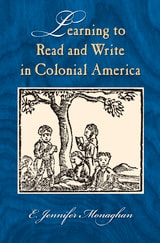
Learning to Read and Write in Colonial America
E. Jennifer Monaghan
University of Massachusetts Press, 2005
An experienced teacher of reading and writing and an award-winning historian, E. Jennifer Monaghan brings to vibrant life the process of learning to read and write in colonial America. Ranging throughout the colonies from New Hampshire to Georgia, she examines the instruction of girls and boys, Native Americans and enslaved Africans, the privileged and the poor, revealing the sometimes wrenching impact of literacy acquisition on the lives of learners.
For the most part, religious motives underlay reading instruction in colonial America, while secular motives led to writing instruction. Monaghan illuminates the history of these activities through a series of deeply researched and readable case studies. An Anglican missionary battles mosquitoes and loneliness to teach the New York Mohawks to write in their own tongue. Puritan fathers model scriptural reading for their children as they struggle with bereavement. Boys in writing schools, preparing for careers in counting houses, wield their quill pens in the difficult task of mastering a “good hand.” Benjamin Franklin learns how to compose essays with no teacher but himself. Young orphans in Georgia write precocious letters to their benefactor, George Whitefield, while schools in South Carolina teach enslaved black children to read but never to write.
As she tells these stories, Monaghan clears new pathways in the analysis of colonial literacy. She pioneers in exploring the implications of the separation of reading and writing instruction, a topic that still resonates in today's classrooms.
Monaghan argues that major improvements occurred in literacy instruction and acquisition after about 1750, visible in rising rates of signature literacy. Spelling books were widely adopted as they key text for teaching young children to read; prosperity, commercialism, and a parental urge for gentility aided writing instruction, benefiting girls in particular. And a gentler vision of childhood arose, portraying children as more malleable than sinful. It promoted and even commercialized a new kind of children's book designed to amuse instead of convert, laying the groundwork for the “reading revolution” of the new republic.
Learning to See Invisible Children
Inclusion of Children with Disabilities in Central AsiaKate Lapham
Central European University Press, 2013
Learning to Smoke
Tobacco Use in the WestJason Hughes
University of Chicago Press, 2002
Hughes traces the transformations of tobacco and its use over time, from its role as a hallucinogen in Native American shamanistic ritual to its use as a prophylactic against the plague and a cure for cancer by early Europeans, and finally to the current view of smoking as a global pandemic. He then analyzes tobacco from the perspective of the individual user, exploring how its consumption relates to issues of identity and life changes. Comparing sociocultural and personal experiences, Hughes ultimately asks what the patterns of tobacco use mean for the clinical treatment of smokers and for public policy on smoking. Pointing the way, then, to a more learned and sophisticated understanding of tobacco use, this study will prove to be essential reading for anyone interested in the history of smoking and the sociology of addiction.