Results by title
78 books match the query 'Light' and 12 start with l

Laughing in the Light
Jimmy Santiago Baca
Museum of New Mexico Press, 2020
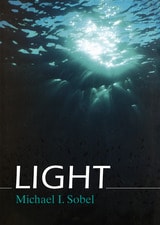
Light
Michael I. Sobel
University of Chicago Press, 1989
"Like the denizens of some brilliant ocean, humans are awash in light. Surrounded by illuminations both natural and artificial, we remain blissfully unaware of how light determines most of life's rhythms and rituals or how it dominates every field of modern science. Michael I. Sobel, a professor of physics at Brooklyn College, has attempted no less a task than to enlighten us (see how it pervades our language) about the many facets of this ubiquitous phenomenon, from its earliest stirrings of emotion and wonder in ancient savants to its modern applications in lasers and silicon chips. His broader objective, however, is to show the unity of the natural sciences by using light as a central theme. . . . As a guide along the path of light Mr. Sobel is excellent."—James Cornell, New York Times Book Review
“The title says it all. It is simply a magnificent dissertation on every aspect of light. Its lucid and attractive prose may be read for pleasure and wonder, yet the book is also a reference book of authority. I doubt whether any question about light cannot be answered by consulting it, whether the question is about glow-worms or the aurora borealis, black bodies of the structure of the eye, mirages or fluorescence. This is a marvelous book, one of the best paperbacks I have ever encountered.”—New Scientist
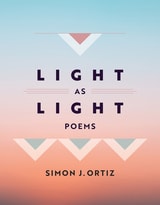
Light As Light
PoemsSimon J. Ortiz
University of Arizona Press, 2023
The poems in Light As Light travel far across both space and memory, landing everywhere from the New Mexico of the speaker’s childhood, to California, Tucson, and present-day Beijing, and many airports, highways, and way stations in between. The central concern uniting this collection is language itself: the weight and significance of English and Keres, as well as the nature and power of poetry as a way of life. No collection of Indigenous literature is complete without the work of Simon Ortiz, and this book is a powerful journey through the poet’s life—both a love letter to the future, and a sentimental, authentic celebration of the past.
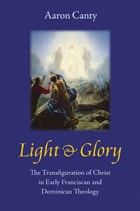
Light and Glory
The Transfiguration of Christ in Early Franciscan and Dominican TheologyAaron Canty
Catholic University of America Press, 2011
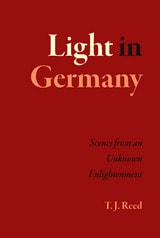
Light in Germany
Scenes from an Unknown EnlightenmentT. J. Reed
University of Chicago Press, 2015
Reed looks closely at the arguments, achievements, conflicts, and controversies of these major thinkers and how their development of a lucid and active liberal thinking matured in the late eighteenth century into an imaginative branching that ran through philosophy, theology, literature, historiography, science, and politics. He traces the various pathways of their thought and how one engendered another, from the principle of thinking for oneself to the development of a critical epistemology; from literature’s assessment of the past to the formulation of a poetic ideal of human development. Ultimately, Reed shows how the ideas of the German Enlightenment have proven their value in modern secular democracies and are still of great relevance—despite their frequent dismissal—to us in the twenty-first century.
Light in the Dark/Luz en lo Oscuro
Rewriting Identity, Spirituality, RealityGloria E. Anzaldua
Duke University Press, 2015
Light of Reason, Light of Faith
Joseph Ratzinger and the German EnlightenmentMaurice Ashley Agbaw-Ebai
St. Augustine's Press, 2021
Ratzinger’s extraordinary and sympathetic understanding of the sources of contemporary secularism equipped him to appreciate the gains of the Enlightenment, while still being a fierce critic of the losses humanity has suffered when reason falsely excludes faith. Fr. Agbaw-Ebai’s account reveals Ratzinger, in relation to his various interlocutors, to be the truly “enlightened” one because he demonstrates a truly balanced understanding of the human mind. To be truly rational one must be able to hold to faith and reason both, reason informed by faith in Jesus Christ.
A particular merit of this book is Agbaw-Ebai’s presentation of Ratzinger’s treatment of the German Enlightenment’s greatest contributors: Kant, Nietzche, Hegel and Habermas, among others. In the postscript George Weigel characterizes what this study accomplishes in the larger framework of scholarship. “[Ratzinger’s] position remains too often misunderstood, and sometimes deliberately misinterpreted, throughout the whole Church. And to misunderstand, or misinterpret, Ratzinger is to misunderstand or misinterpret both the modern history of theology and the Second Vatican Council.” Agbaw-Ebai masterfully positions Ratzinger correctly in the history of ideas, and exhibits why Ratzinger will be remembered as one of its main players. Pure rationalists and true believers are equally indebted to him.
Light of the Everlasting Life
Disability and Crip Eschatology in Old English LiteratureLeah Pope Parker
University of Michigan Press, 2025
From disability metaphors to narratives structured around bodies presented as aberrant, early medieval English thoughtworlds conveyed the promise of resurrection and the hope of salvation through crip and disabled bodies. Light of the Everlasting Life argues that early medieval Christian eschatology, as manifested in Old English literary texts, was a crip eschatology: a theology of the afterlife that relied upon disabled bodies and concepts related to disability in order to convey promises of resurrection and salvation. In addition to demonstrating how literature manifested theological approaches to the afterlife, Leah Pope Parker articulates the ways of thinking about bodies and disability that were available to ordinary early medieval people, many of whom experienced their bodies in ways that resonate with what we call disability today, but who rarely appear in the historical record.
By analyzing Old English texts, including Alfredian translations, Ælfric’s saints’ lives, and poetry from the Exeter and Vercelli Books, Parker introduces novel ways of characterizing disability’s effects in literature. “Spiritual prosthesis” reveals rhetorical, narrative, and theological reliance upon disability to convey the promise of a Christian afterlife. “Systems of aberrance” emerge as a result, in which bodies marked as deviant—including disabled, monstrous, heroic, saintly, and dead bodies—form a network of embodiments that reinforce the narratives they inhabit and that of Christian salvation history. Locating crip eschatology in early medieval literature, Light of the Everlasting Life rewrites standard histories of disability, of the body, and of medieval Christian eschatology.
Light on the Devils
Coming of Age on the KlamathLouise Wagenknecht
Oregon State University Press, 2011
When Louise Wagenknecht’s family arrived in the remote logging town of Happy Camp in 1962, a boundless optimism reigned. Whites and Indians worked together in the woods and the lumber mills of northern California’s Klamath country. Logging and lumber mills, it seemed, would hold communities together forever.
But that booming prosperity would come to an end. Looking back on her teenage years spent along the Klamath River, Louise Wagenknecht recounts a vanishing way of life. She explores the dynamics of family relationships and the contradictions of being female in a western logging town in the 1960s. And she paints an evocative portrait of the landscape and her relationship with it.
Light on the Devils is a captivating memoir of place. It will appeal to general readers interested in the rural West, personal memoir, history, and natural history.
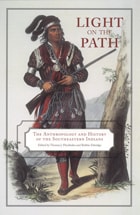
Light on the Path
The Anthropology and History of the Southeastern IndiansThomas J. Pluckhahn
University of Alabama Press, 2006
The scholarship underlying this shift comes from many directions, but much of the groundwork can be attributed to Charles Hudson. The papers in this volume were contributed by Hudson’s colleagues and former students (many now leading scholars themselves) in his honor. The assumption links these papers is that of a historical transformation between Mississippian societies and the Indian societies of the historic era that requires explanation and critical analysis.
In all of the chapters, the legacy of Hudson’s work is evident. Anthropologists, archaeologists, and historians are storming the bridge that connects prehistory and history in a manner unimaginable 20 years ago. While there remains much work to do on the path toward understanding this transformation and constructing a complete social history of the Southeastern Indians, the work of Charles Hudson and his colleagues have shown the way.
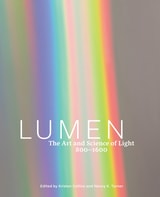
Lumen
The Art and Science of Light, 800–1600Kristen Collins
J. Paul Getty Trust, The, 2024
Through the manipulation of materials, such as gold, crystal, and glass, medieval artists created dazzling light-filled environments, evoking, in the everyday world, the layered realms of the divine. While contemporary society separates science and spirituality, the medieval world harnessed the science of light to better perceive and understand the sacred. From 800 to 1600, the study of astronomy, geometry, and optics emerged as a framework that was utilized by theologians and artists to comprehend both the sacred realm and the natural world.
Through essays written by contributors from the fields of art history, the history of science, and neuroscience, and with more than two hundred illustrations, including glimmering golden reliquaries, illuminated manuscripts, rock crystal vessels, astronomical instruments, and more, Lumen cuts across religious, political, and geographic boundaries to reveal the ways medieval Christian, Jewish, and Islamic artists, theologians, and thinkers studied light. To convey the sense of wonder created by moving light on precious materials, a number of contemporary artworks are placed in dialogue with historic objects.
This volume is published to accompany an exhibition on view at the J. Paul Getty Museum at the Getty Center from September 10 to December 8, 2024.

Lunacy of Light
Emily Dickinson and the Experience of MetaphorWendy Barker
Southern Illinois University Press, 0
"Are you afraid of the sun?" Emily Dickinson asked a friend in 1859.
Wendy Barker states here that that apparently casual query reveals a major theme of Dickinson’s poetry, a theme she shares with women writers ranging from Anne Finch to Anne Sexton. It is a tradition based upon the inversion of the traditional male-centered metaphors of light and dark. Through time the light-giving sun has represented vitality, order, God; the light-swallowing night death, chaos, Satan. These metaphors are reinforced in the writing of Emerson, Thoreau, Hawthorne, and Keats,but Eliot, Brontë, Browning, and Dickinson use the sun and images of light quite differently.
Barker argues that since light was a masculine tradition, ithad come to represent male power, energy, sexuality—not only to Dickinson but to other women writing during the era. To these writers the inversion of the light/darkness metaphor became a countertradition used as a means to express their energies in a society that was hostile to their intelligence. Dickinson, who read avidly, could not have been insensitive to this usage of light as a masculine symbol—of her Calvinist God, of her father, of all that was male—and of darkness as a feminine symbol.
Emily Dickinson thought in a richly symbolic manner. Her most frequently used metaphor is one of light in contrast to darkness, employing single-word references to light more than one thousand times in her 1,775 poems. Barker offers close readings and new interpretations of some previously overlooked or misunderstood poems and demonstrates that "Many of her most ecstatic images are oflittle lights created from darkness." Inanswer to those critics who have characterized her poems as being piecemeal, Barker argues that Dickinson’s consistent use of light as a metaphor unifies her poetry.
In her final chapter, Barker explores the ways in which twentieth-century female writers have carried on the countertradition of the light/darkness metaphor. "That Dickinson was able so brilliantly to transform and transcend the normative metaphoric patterning of her culture, creating, in effect, a metaphor of her own, has much to do with the genius of her art."