Results by title
121 books match the query 'Literacy' and 17 start with l
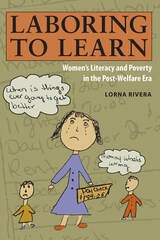
Laboring to Learn
Women's Literacy and Poverty in the Post-Welfare EraLorna Rivera
University of Illinois Press, 2007
The American adult education system has become an alternative for school dropouts, with some state welfare policies requiring teen mothers and women without high school diplomas to participate in adult education programs to receive aid. Currently, low-income women of color are more likely to be enrolled in the lowest levels of adult basic education. Very little has been published about women's experiences in these mandatory programs and whether the programs reproduce the conditions that forced women to drop out in the first place.
Lorna Rivera bridges the gap with this important study, the product of ten years' active ethnographic research with formerly homeless women who participated in adult literacy education classes before and after welfare reform. She draws on rich interviews with organizers and participants in the Adult Learners Program at Project Hope, a women's shelter and community development organization in Boston's Dudley neighborhood, one of the poorest in the city.
Analyzing the web of ideological contradictions regarding "work first" welfare reform policies, Rivera argues that poverty is produced and reproduced when women with low literacy skills are pushed into welfare-to-work programs and denied education. She examines how various discourses about individual choice and self-sufficiency shape the purposes of literacy, how low-income women express a sense of personal responsibility for being poor, and how neoliberal ideologies and practices compromise the goals of critical literacy programs. Throughout this study, the voices and experiences of formerly homeless women challenge cultural stereotypes about poor women, showing in personal and structural terms how social and economic forces shape and restrict opportunities for low-income women of color.
Language Diversity in the Classroom
From Intention to PracticeEdited by Geneva Smitherman and Victor Villanueva. Foreword by Suresh Canagarajah
Southern Illinois University Press, 2003
It’s no secret that, in most American classrooms, students are expected to master standardized American English and the conventions of Edited American English if they wish to succeed. Language Diversity in the Classroom: From Intention to Practice works to realign these conceptions through a series of provocative yet evenhanded essays that explore the ways we have enacted and continue to enact our beliefs in the integrity of the many languages and Englishes that arise both in the classroom and in professional communities.
Edited by Geneva Smitherman and Victor Villanueva, the collection was motivated by a survey project on language awareness commissioned by the National Council of Teachers of English and the Conference on College Composition and Communication.
All actively involved in supporting diversity in education, the contributors address the major issues inherent in linguistically diverse classrooms: language and racism, language and nationalism, and the challenges in teaching writing while respecting and celebrating students’ own languages. Offering historical and pedagogical perspectives on language awareness and language diversity, the essays reveal the nationalism implicit in the concept of a “standard English,” advocate alternative training and teaching practices for instructors at all levels, and promote the respect and importance of the country’s diverse dialects, languages, and literatures.
Contributors include Geneva Smitherman, Victor Villanueva, Elaine Richardson, Victoria Cliett, Arnetha F. Ball, Rashidah Jammi` Muhammad, Kim Brian Lovejoy, Gail Y. Okawa, Jan Swearingen, and Dave Pruett.
The volume also includes a foreword by Suresh Canagarajah and a substantial bibliography of resources about bilingualism and language diversity.

Language, Power, and Ideology in Brunei Darussalam
Mis Sea#99Geoffrey C. Gunn
Ohio University Press, 1996
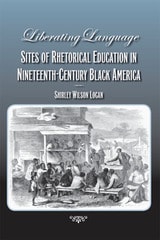
Liberating Language
Sites of Rhetorical Education in Nineteenth-Century Black AmericaShirley Wilson Logan
Southern Illinois University Press, 2008
Liberating Language identifies experiences of nineteenth-century African Americans—categorized as sites of rhetorical education—that provided opportunities to develop effective communication and critical text-interpretation skills. Author Shirley Wilson Logan considers how nontraditional sites, which seldom involved formal training in rhetorical instruction, proved to be effective resources for African American advancement.
Logan traces the ways that African Americans learned lessons in rhetoric through language-based activities associated with black survival in nineteenth-century America, such as working in political organizations, reading and publishing newspapers, maintaining diaries, and participating in literary societies. According to Logan, rhetorical training was manifested through places of worship and military camps, self-education in oratory and elocution, literary societies, and the black press. She draws on the experiences of various black rhetors of the era, such as
Frederick Douglass, Frances Harper, Fanny Coppin, Charles Chesnutt, Ida B. Wells, and the lesser-known Oberlin-educated Mary Virginia Montgomery, Virginia slave preacher "Uncle Jack," and former slave "Mrs. Lee."
Liberating Language addresses free-floating literacy, a term coined by scholar and writer Ralph Ellison, which captures the many settings where literacy and rhetorical skills were acquired and developed, including slave missions, religious gatherings, war camps, and even cigar factories. In Civil War camp- sites, for instance, black soldiers learned to read and write, corresponded with the editors of black newspapers, edited their own camp-based papers, and formed literary associations.
Liberating Language outlines nontraditional means of acquiring rhetorical skills and demonstrates how African Americans, faced with the lingering consequences of enslavement and continuing oppression, acquired rhetorical competence during the late eighteenth century and throughout the nineteenth century.
Linking Literacies
Perspectives on L2 Reading-Writing ConnectionsDiane Belcher and Alan Hirvela, Editors
University of Michigan Press, 2001
Linking Literacies provides the most up to date theoretical overview of the connection between reading and writing in second language acquisition. Belcher and Hirvela have brought together the definitive collection of developments in reading-writing relations research and pedagogy. Papers are organized into these parts:
Ground Practice: Theory, Research, and History
In the Classroom: Teaching Reading as Writing and Writing as Reading
(E)Merging Literacies and the Challenge of Textual Ownership
Technology-Assisted Reading and Writing.
In addition to examining the ways in which L1 influences have affected the development of L2 reading-writing theory and pedagogy, Linking Literacies looks at how L2 reading-writing scholarship has created an identity separate of an L1 framework. Linking Literacies examines a broad range of questions and concerns within the structure of L2 reading-writing connections and L2 academic literacy through discussions of theory, research, and

Listening to Learn
Sharon Grover
American Library Association, 2012
Literacy & Libraries
Learning from Case StudiesAmerican Library Association, 2001
Literacy and Deaf Education
Toward a Global UnderstandingQiuying Wang
Gallaudet University Press, 2020
Literacy and Deaf Education: Toward a Global Understanding is organized by region and country, with the first part discussing writing systems that use alphabetic scripts, and the second part focusing on countries that use non-alphabetic scripts. Some examples of the wide spectrum of topics covered include communication methodologies, curriculum, bilingual education, reading interventions, script diversity, and sociocultural development, including Deaf cultural developments. The contributors provide the results from literacy projects in fifteen countries and regions.
This volume aims to widen the knowledge base, familiarize others in the field with these initiatives, and improve global understandings and outcomes of literacy teaching and learning in deaf education from birth to high school.
Signed chapter summaries are available on the Gallaudet University Press YouTube channel.
Literacy and Deaf People
Cultural and Contextual PerspectivesBrenda Jo Brueggemann
Gallaudet University Press, 2004
This compelling collection advocates for an alternative view of deaf people’s literacy, one that emphasizes recent shifts in Deaf cultural identity rather than a student’s past educational context as determined by the dominant hearing society. Divided into two parts, the book opens with four chapters by leading scholars Tom Humphries, Claire Ramsey, Susan Burch, and volume editor Brenda Jo Brueggemann. These scholars use diverse disciplines to reveal how schools where deaf children are taught are the product of ideologies about teaching, about how deaf children learn, and about the relationship of ASL and English.
Part Two features works by Elizabeth Engen and Trygg Engen; Tane Akamatsu and Ester Cole; Lillian Buffalo Tompkins; Sherman Wilcox and BoMee Corwin; and Kathleen M. Wood. The five chapters contributed by these noteworthy researchers offer various views on multicultural and bilingual literacy instruction for deaf students. Subjects range from a study of literacy in Norway, where Norwegian Sign Language recently became the first language of instruction for deaf pupils, to the difficulties faced by deaf immigrant and refugee children who confront institutional and cultural clashes. Other topics include the experiences of deaf adults who became bilingual in ASL and English, and the interaction of the pathological versus the cultural view of deafness. The final study examines literacy among Deaf college undergraduates as a way of determining how the current social institution of literacy translates for Deaf adults and how literacy can be extended to deaf people beyond the age of 20.
Literacy and Historical Development
A ReaderEdited by Harvey J. Graff
Southern Illinois University Press, 2007
Representing three decades of research, Literacy and Historical Development: A Reader presents some of the most important historical scholarship on literacy in Europe and the United States. The approaches, research, and conclusions reflected in this collection of fifteen essays has changed how historians and many others conceptualize literacy and represents a body of scholarship that is transforming both contemporary and historical literacy theories.
In this revised and expanded edition of the groundbreaking volume Literacy and Social Development in the West, editor Harvey J. Graff provides a new introduction and nine new essays by nationally and internationally renowned contributors from a range of disciplines. Replacing an unquestioned certainty that literacy’s powers are universal, independent, and determinative, Graff brings together studies that support new concepts, contending that the importance and influences of literacy depend on specific social and historical contexts, the impacts of literacy are mediated and restricted, the effects of literacy are social and particular, and the role of literacy must be understood within the burgeoning array of communication technologies.
Literacy and Racial Justice
The Politics of Learning after Brown v. Board of EducationCatherine Prendergast. Foreword by Gloria Ladson-Billings
Southern Illinois University Press, 2003
In anticipation of the fiftieth anniversary of the landmark Brown v. Board of Education decision, Catherine Prendergast draws on a combination of insights from legal studies and literacy studies to interrogate contemporary multicultural literacy initiatives, thus providing a sound historical basis that informs current debates over affirmative action, school vouchers, reparations, and high-stakes standardized testing.
As a result of Brown and subsequent crucial civil rights court cases, literacy and racial justice are firmly enmeshed in the American imagination—so much so that it is difficult to discuss one without referencing the other. Breaking with the accepted wisdom that the Brown decision was an unambiguous victory for the betterment of race relations, Literacy and Racial Justice: The Politics of Learning after Brown v. Board of Education finds that the ruling reinforced traditional conceptions of literacy as primarily white property to be controlled and disseminated by an empowered majority. Prendergast examines civil rights era Supreme Court rulings and immigration cases spanning a century of racial injustice to challenge the myth of assimilation through literacy. Advancing from Ways with Words, Shirley Brice Heath’s landmark study of desegregated communities, Prendergast argues that it is a shared understanding of literacy as white property which continues to impact problematic classroom dynamics and education practices.
To offer a positive model for reimagining literacy instruction that is truly in the service of racial justice, Prendergast presents a naturalistic study of an alternative public secondary school. Outlining new directions and priorities for inclusive literacy scholarship in America, Literacy and Racial Justice concludes that a literate citizen is one who can engage rather than overlook longstanding legacies of racial strife.

Literacy and Written Culture in Early Modern Central Europe
István György Tóth
Central European University Press, 2001
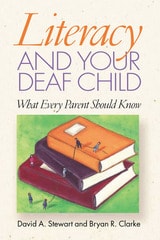
Literacy and Your Deaf Child
What Every Parent Should KnowDavid A. Stewart
Gallaudet University Press, 2003
In the modern world, success depends upon literacy, a fact especially true for deaf children who, if they read and write well, can take full advantage of e-mail, the Internet, and other communication innovations. Literacy and Your Deaf Child: What Every Parent Should Know provides parents with the means to ensure that their deaf or hard of hearing child becomes a proficient reader and writer. In nine chapters, parents will learn about the relationship of language to reading and writing, including the associated terminology, the challenges that deaf children face, and the role of schools. They’ll also learn activities that they can engage in at home that will strengthen their children’s reading and writing capabilities.
Literacy and Your Deaf Child begins by introducing some common concepts, among them the importance of parental involvement in a deaf child’s education. It outlines how children acquire language and describes the auditory and visual links to literacy. With this information, parents can make informed decisions regarding hearing aids, cochlear implants, speechreading, and sign communication, all of which can have a marked influence on their child’s language development. Parents will discover how to create environments at home and in their community for fostering their child’s literacy, especially in school by learning how to work closely with their child’s teachers. The book also refers throughout to the developmental link between American Sign Language and English literacy for children who use sign communication, making it the best guide available for all deaf children and their parents.
Literacy as Involvement
The Acts of Writers, Readers, and TextsDeborah Brandt
Southern Illinois University Press, 1990
In Literacy as Involvement, Deborah Brandt examines the cultural and social roots of the acts of reading and writing. The book asks, for example, whether literacy is a natural growth of or a radical shift from orality. It questions the contrary views that literacy is either the learning of the conventions of language or is better understood as heightened social ability. Finally, it raises the possibility that knowing how to read and write is actually understanding how we respond during the acts of reading and writing.
This examination of literacy as process is also offered as a critique of prevailing theories of literacy advanced by such scholars as Walter J. Ong, S.J., David Olson, and E. D. Hirsch. They depict literacy as a textual experience that is socially and linguistically detached. Brandt critically examines the underlying assumptions from research on writing processes and argues that they call for a major reformation of prevailing conceptions of literacy. Specifically, she analyzes several expository texts from a process perspective to establish the interaction of reader and writer in even the most seemingly formal and detached writing. In her conclusion, Brandt brings together the major findings of her study to address pressing literacy issues, including the problem of illiteracy in our schools.

Literacy in American Schools
Learning to Read and WriteEdited by Nancy L. Stein
University of Chicago Press, 1986
Literacy, Economy, and Power
Writing and Research after "Literacy in American Lives"Edited by John Duffy, Julie Nelson Christoph, Eli Goldblatt, Nelson Graff, Rebecca S. Nowacek, Bryan Trabold
Southern Illinois University Press, 2014
Following on the groundbreaking contributions of Deborah Brandt’s Literacy in American Lives—a literacy ethnography exploring how ordinary Americans have been affected by changes in literacy, public education, and structures of power—Literacy, Economy, and Power expands Brandt’s vision, exploring the relevance of her theoretical framework as it relates to literacy practices in a variety of current and historical contexts, as well as in literacy’s expanding and global future. Bringing together scholars from rhetoric, composition, and literacy studies, the book offers thirteen engrossing essays that extend and challenge Brandt’s commentary on the dynamics between literacy and power.
The essays cover many topics, including the editor of the first Native American newspaper, the role of a native Hawaiian in bringing literacy to his home islands, the influence of convents and academies on nineteenth-century literacy, and the future of globalized digital literacies. Contributors include Julie Nelson Christoph, Ellen Cushman, Kim Donehower, Anne Ruggles Gere, Eli Goldblatt, Harvey J. Graff, Gail E. Hawisher, Bruce Horner, David A. Jolliffe, Rhea Estelle Lathan, Min-Zhan Lu, Robyn Lyons-Robinson, Carol Mattingly, Beverly J. Moss, Paul Prior, Cynthia L. Selfe, Michael W. Smith, and Morris Young. Literacy, Economy, and Power also features an introduction exploring the scholarly impact of Brandt’s work, written by editors John Duffy, Julie Nelson Christoph, Eli Goldblatt, Nelson Graff, Rebecca Nowacek, and Bryan Trabold. An invaluable tool for literacy studies at the graduate or professional level, Literacy, Economy, and Power provides readers with a wide-ranging view of the work being done in literacy studies today and points to ways researchers might approach the study of literacy in the future.
Literacy, Sexuality, Pedagogy
Theory and Practice for Composition StudiesJonathan Alexander
Utah State University Press, 2008
In Literacy, Sexuality, Pedagogy, Jonathan Alexander argues for the development of students' "sexual literacy." Such a literacy is not just concerned with developing fluency with sexuality as a "hot" topic, but with understanding the intimate interconnectedness of sexuality and literacy in Western culture. Using the work of scholars in queer theory, sexuality studies, and the New Literacy Studies, Alexander unpacks what he sees as a crucial--if often overlooked--dimension of literacy: the fundamental ways in which sexuality has become a key component of contemporary literate practice, of the stories we tell about ourselves, our communities, and our political investments.
Alexander then demonstrates through a series of composition exercises and writing assignments how we might develop students' understanding of sexual literacy. Examining discourses of gender, heterosexuality, and marriage allows students (and instructors) a critical opportunity to see how the languages we use to describe ourselves and our communities are saturated with ideologies of sexuality. Understanding how sexuality is constructed and deployed as a way to "make meaning" in our culture gives us a critical tool both to understand some of the fundamental ways in which we know ourselves and to challenge some of the norms that govern our lives. In the process, we become more fluent with the stories that we tell about ourselves and discover how normative notions of sexuality enable (and constrain) narrations of identity, culture, and politics. Such develops not only our understanding of sexuality, but of literacy, as we explore how sexuality is a vital, if vexing, part of the story of who we are.