Results by title
328 books match the query 'Literature and society' and 15 start with l
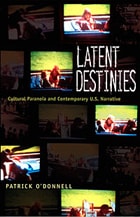
Latent Destinies
Cultural Paranoia and Contemporary U.S. NarrativePatrick O Donnell
Duke University Press, 2000
O’Donnell argues that paranoia on the broadly cultural level is essentially a narrative process in which history and postmodern identity are negotiated simultaneously. The result is an erasure of historical temporality—the past and future become the all-consuming, self-aware present. To explain and exemplify this, O’Donnell looks at such books and films as Libra, JFK, The Crying of Lot 49, The Truman Show, Reservoir Dogs, Empire of the Senseless, Oswald’s Tale, The Executioner’s Song, Underworld, The Killer Inside Me, and Groundhog Day. Organized around the topics of nationalism, gender, criminality, and construction of history, Latent Destinies establishes cultural paranoia as consonant with our contradictory need for multiplicity and certainty, for openness and secrecy, and for mobility and historical stability.
Demonstrating how imaginative works of novels and films can be used to understand the postmodern historical condition, this book will interest students and scholars of American literature and cultural studies, postmodern theory, and film studies.
Latin American Identity and Constructions of Difference
Amaryll Chanady
University of Minnesota Press, 1993
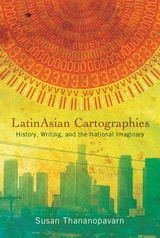
LatinAsian Cartographies
History, Writing, and the National ImaginaryThananopavarn, Susan
Rutgers University Press, 2018
Thananopavarn creates a new “LatinAsian” view of the United States that emphasizes previously suppressed aspects of national history, including imperialism, domestic racism during World War II, Cold War operations in Latin America and Asia, and the politics of borders in an age of globalization. LatinAsian Cartographies ultimately reimagines national narratives in a way that transforms dominant ideas of what it means to be American.
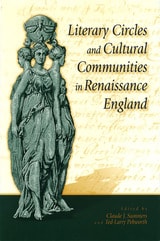
Literary Circles and Cultural Communities in Renaissance England
Edited by Claude J. Summers & Ted-Larry Pebworth
University of Missouri Press, 2001
Although the literary circle is widely recognized as a significant feature of Renaissance literary culture, it has received remarkably little examination. In this collection of essays, the authors attempt to explain literary circles and cultural communities in Renaissance England by exploring both actual and imaginary ways in which they were conceived and the various needs they fulfilled. The book also pays considerable attention to larger theoretical issues relating to literary circles.
The essayists raise important questions about the extent to which literary circles were actual constructs or fictional creations. Whether illuminating or limiting, the circle metaphor itself can be extended or reformulated. Some of the authors discuss how particular circles actually operated, and some question the very concept of the literary circle. Literary Circles and Cultural Communities in Renaissance England will be an important addition to seventeenth-century studies.

Literary Intellectuals and the Dissolution of the State
Professionalism and Conformity in the GDREdited by Robert von Hallberg
University of Chicago Press, 1996
What drove leading thinkers, including those of the avant-garde who publicly embraced intellectual freedom, to serve as government informants? Why were they content to work within a repressive system rather than challenging it outright? This collection of interviews with more than two dozen writers and literary scholars, including several Stasi informants, provides a gripping, often dismaying picture of the motivations, compromises, and illusions of East German intellectual life.
In conversations with Robert von Hallberg, writers such as best-selling novelist Hermann Kant, playwright Christoph Hein, and avant-garde poet-publisher Sascha Anderson talk about their lives and work before the fall of the wall in 1989—about the constraints and privileges of Communist Party membership, experiences of government censorship and self-censorship, and relations with their readers. They reflect on why the possibilities of opposition to the state seemed so limited, and on how they might have found ways to resist more aggressively. Turning to the controversies that have emerged since reunification, including the Stasi scandals involving Anderson and Christa Wolf, they discuss their feelings of complicity and the need for further self-examination. Two interviews with Anderson—one conducted before he was exposed as a Stasi collaborator and one conducted afterward—offer unique insight into the double life led by many writers and scholars in the German Democratic Republic.
Literature and Resistance in Guatemala
Textual Modes and Cultural Politics from El Señor Presidente to Rigoberta MenchúMarc Zimmerman
Ohio University Press, 1994
Literature and Revolution
British Responses to the Paris Commune of 1871Owen Holland
Rutgers University Press, 2022
This book examines how a heterogeneous group of authors in Britain responded to the Commune. In doing so, it provides the first full-length critical study of the reception and representation of the Commune in Britain during the closing decades of the nineteenth century, showing how discussions of the Commune functioned as a screen to project hope and fear, serving as a warning for some and an example to others. Writers considered in the book include John Ruskin, Edward Bulwer-Lytton, Eliza Lynn Linton, Mary Elizabeth Braddon, Anne Thackeray Ritchie, Margaret Oliphant, George Gissing, Henry James, William Morris, Alfred Austin and H.G. Wells. As the book shows, many, but not all, of these writers responded to the Commune with literary strategies that sought to stabilize bourgeois subjectivity in the wake of the traumatic shock of a revolutionary event. The book extends critical understanding of the Commune’s cultural afterlives and explores the relationship between literature and revolution.
Literature and Social Practice
Edited by Philippe Desan, Priscilla Parkhurst Ferguson, and Wendy Griswold
University of Chicago Press, 1989
Convinced that literature and society are essentially related to each other, the contributors to this collection attempt to define the various sociological practices of literature and to give expression to this enterprise and the commitments of its partisans. In various ways, the essays assembled here seek to integrate text, institution, and individual (both author and critic) as necessary parts of the analysis of literature. Diverse, sometimes contradictory approaches to literature (Marxism, publishing history, new historicism, and others) are utilized as the contributors explore such topics as text, author-function, and appropriation; the reality of representation; the sociology of exchange; the uses of "serious" fiction; poetry and politics; publishing history; and the literary field.
Literature at the Barricades
The American Writer in the 1930sEdited by Ralph F. Bogardus and Fred Hobson
University of Alabama Press, 1982
This collection captures the sense—at times the ordeal—of the 1930s literary experience in America. Fourteen essayists deal with the experience of being a writer in a time of overwhelming economic depression and political ferment, and thereby illuminate the social, political, intellectual, and aesthetic problems and pressures that characterized the experience of American writers and influenced their works.
The essays, as a group, constitute a reevaluation of the American literature of the 1930s. At the same time they support and reinforce certain assumptions about the decade of the Great Depression—that it was grim, desperate, a time when dreams died and poverty became something other than genteel—they challenge other assumptions, chief among them in the notion that 1930s literature was uniform in content, drab in style, anti-formalist, and always political or sociological in nature. They leave us with an impression that there was variety in American writing of the 1930s and a convincing argument that the decade was not a retreat from the modernism of the 1920s. Rather it was a transitional period in which literary modernism was very much an issue and a force that bore imaginative fruit.
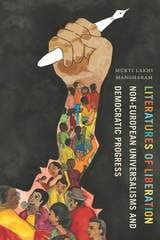
Literatures of Liberation
Non-European Universalisms and Democratic ProgressMukti Lakhi Mangharam
The Ohio State University Press, 2017
In this way, she posits that these universalisms reconceptualize democratic ideals not as Western imports into precolonial societies but as regional phenomena tied to local relations of power and resistance. In charting these alternative democratic trajectories, Mangharam examines oft-overlooked regional and vernacular literary forms and provides a fresh approach to current theorizations of postcolonial and world literatures.
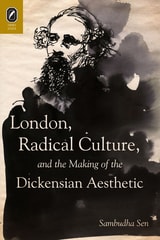
London, Radical Culture, and the Making of the Dickensian Aesthetic
Sambudha Sen
The Ohio State University Press, 2012

Loose Ends
Closure and Crisis in the American Social TextRussell Reising
Duke University Press, 1996
Reising suggests that these "non-endings" entirely refocus the narrative structures they appear to conclude, accentuate the narrative stresses and ideological fissures that the texts seem to suppress, and reveal "shadow narratives" that trail alongside the dominant story line. He argues that unless the reader notices the ruptures in the closing moments of these works, the social and historical moments in which the narrative and the reader are embedded will be missed. This reading not only offers new interpretive possibilities, but also uncovers startling affinities between the poetry of Phillis Wheatley and the fiction of Henry James, between Charles Brockden Brown’s Wieland and Melville’s least-studied novel, and between Emily Dickinson’s poem "I Started Early—Took My Dog" and Disney’s animated classic.
Pursuing the implications of these failed moments of closure, Reising elaborates on topics ranging from the roots of domestic violence and mass murder in early American religious texts to the pornographic imperative of mid-century nature writing, and from James’s "descent" into naturalist and feminist fiction to Dumbo’s explosive projection of commercial, racial, and political agendas for postwar U. S. culture.
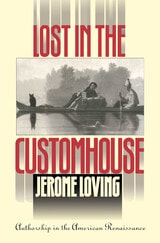
Lost in the Customhouse
Authorship in the American RenaissanceJerome Loving
University of Iowa Press, 1993

Love's Sweet Return
The Harlequin StoryMargaret Ann Jensen
University of Wisconsin Press, 1984
Love’s $weet Return examines the phenomenon of romance fiction, focusing specifically on one of the most successful book publishers in the world, the Canadian-based Harlequin Enterprises. Margaret Jensen details the rise of the company, examines the Harlequin formula, and evaluates the growth and impact of both Harlequin and its competition. She also assesses recent shifts in the content of Harlequins, particularly as they pertain to women's changing roles in society.
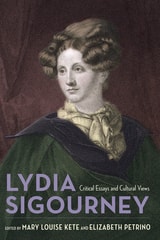
Lydia Sigourney
Critical Essays and Cultural ViewsMary Louise Kete
University of Massachusetts Press, 2018
During her lifetime, Lydia Sigourney was acclaimed as nineteenth-century America's most popular woman poet and published widely as a historian, travel writer, essayist, and educator. While serious critical attention to her work languished following her death and into the twentieth century, a growing number of critics and writers have reexamined Sigourney and her large body of writing and have given her a central place in the “new canon.”
This first collection of original essays devoted to the poet's work puts many of the best scholars on Sigourney together in one place and in conversation with one another. The volume includes critical essays examining her literary texts as well as essays that unpack Sigourney's participation in the cultural movements of her day. Holding powerful opinions about the role of women in society, Sigourney was not afraid to advocate against government policies that, in her view, undermined the promise of America, even as she was held up as a paragon of American womanhood and middle-class rectitude. The resulting portrait promises to engage readers who wish to know more about Sigourney's writing, her career, and the causes that inspired her.
Along with the volume editors, contributors include Ann Beebe, Paula Bernat Bennett, Janet Dean, Sean Epstein-Corbin, Annie Finch, Gary Kelly, Paul Lauter, Amy J. Lueck, Ricardo Miguel-Alfonso, Jennifer Putzi, Angela Sorby, Joan Wry, and Sandra Zagarell.