Results by title
161 books match the query 'Material culture' and 4 start with l
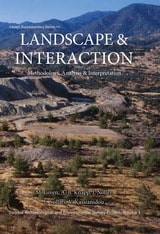
Landscape and Interaction. The Troodos Archaeological and Environmental Survey Project, Cyprus. Volume 1. Methodology, Analysis and Interpretation
Michael Given
Council for British Research in the Levant, 2013
The Troodos Mountain range in central Cyprus is a region of great physical and cultural diversity. The landscapes range from fertile, cultivated plains to narrow, dry valleys and forested mountain regions and this physical topography is overlain by a rich human cultural landscape of farming, mining, industry, settlement, burial and ritual behaviour. Over six field seasons, a team of specialists and fieldwalkers from the Troodos Archaeological and Environmental Survey Project (TAESP) investigated the northern edge of this region and explored the complex and dynamic relationship between landscape and people over 12,000 years. The results of their integrated and interpretative approach are presented here, in the first of two volumes. Beginning with a considered overview of the context, research aims and methodology of the project, Volume 1 provides detailed accounts of the archaeology, material culture, geography and environmental record of the entire survey area. This wealth of information is then bought together to produce a series of chronological and thematic analyses of the interaction between people and landscape in this region of Cyprus from the Prehistoric through to the Modern period.
[more]
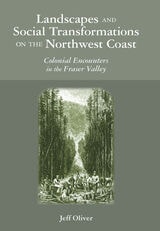
Landscapes and Social Transformations on the Northwest Coast
Colonial Encounters in the Fraser ValleyJeff Oliver
University of Arizona Press, 2010
The Fraser Valley in British Columbia has been viewed historically as a typical setting of Indigenous-white interaction. Jeff Oliver now reexamines the social history of this region from pre-contact to the violent upheavals of nineteenth and early twentieth century colonialism to argue that the dominant discourses of progress and colonialism often mask the real social and physical process of change that occurred here—change that can be more meaningfully tied to transformations in the land.
The Fraser Valley has long been a scene of natural resource appropriation—furs and fish, timber and agriculture—with settlement patterns and land claims centering on the use of these materials. Oliver demonstrates how social change and cultural understanding are tied to the way that people use and remake the landscape. Drawing on ethnographic texts, archaeological evidence, cartography, and historical writing, he has created a deep history of the valley that enables us to view how human entanglements with landscape were creative of a variety of contentious issues. By capturing the multiple dynamics that were operating in the past, Oliver shows us not only how landscape transformations were implicated in constructing different perceptions of place but also how such changes influenced peoples’ understanding of history and identity.
This groundbreaking work examines engagement between people and the environment across a variety of themes, from aboriginal appropriation of nature to colonists’ reworking of physical and conceptual geographies, demonstrating the consequences of these interactions as they permeated various social and cultural spheres. It offers a new lens for viewing a region as it provides fresh insight into such topics as landscape change, perceptions of place, and Indigenous-white relations.
[more]
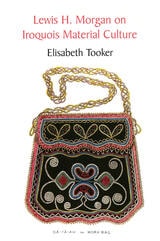
Lewis H. Morgan on Iroquois Material Culture
Elisabeth Tooker
University of Arizona Press, 1994
Lewis Henry Morgan's mid-nineteenth-century assemblage of Iroquois-made artifacts featured more than 500 objects and at the time was the largest such collection for a single Indian group. In this richly illustrated volume, Elisabeth Tooker has brought together much previously unpublished material not only to show how Morgan managed such an impressive feat of scholarship but also to reveal something of his too often neglected research methods.
[more]
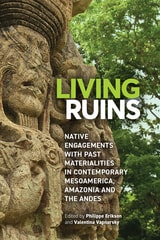
Living Ruins
Native Engagements with Past Materialities in Contemporary Mesoamerica, Amazonia, and the AndesPhilippe Erikson
University Press of Colorado, 2022
Ruins and remnants of the past are endowed with life, rather than mere relics handed down from previous generations. Living Ruins explores some of the ways Indigenous people relate to the material remains of human activity and provides an informed and critical stance that nuances and contests institutionalized patrimonialization discourse on vestiges of the past in present landscapes.
Ten case studies from the Maya region, Amazonia, and the Andes detail and contextualize narratives, rituals, and a range of practices and attitudes toward different kinds of vestiges. The chapters engage with recently debated issues such as regimes of historicity and knowledge, cultural landscapes, conceptions of personhood and ancestrality, artifacts, and materiality. They focus on Indigenous perspectives rather than mainstream narratives such as those mediated by UNESCO, Hollywood, travel agents, and sometimes even academics. The contributions provide critical analyses alongside a multifaceted account of how people relate to the place/time nexus, expanding our understanding of different ontological conceptualizations of the past and their significance in the present.
Living Ruins adds to the lively body of work on the invention of tradition, Indigenous claims on their lands and history, “retrospective ethnogenesis,” and neo-Indianism in a world where tourism, NGOs, and Western essentialism are changing Indigenous attitudes and representations. This book is significant to anyone interested in cultural heritage studies, Amerindian spirituality, and Indigenous engagement with archaeological sites in Latin America.
Contributors: Cedric Becquey, Laurence Charlier Zeineddine, Marie Chosson, Pablo Cruz, Philippe Erikson, Antoinette Molinié, Fernando Santos-Granero, Emilie Stoll, Valentina Vapnarsky, Pirjo Kristiina Virtanen
[more]