237 books match the query 'Medicine' and 11 start with l
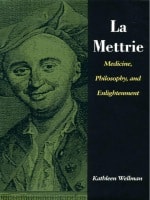
cover of La Mettrie: Medicine, Philosophy, and Enlightenment

La Mettrie

Medicine, Philosophy, and Enlightenment

Kathleen Wellman

Duke University Press, 1992

Julien Offray de la Mettrie, best known as the author of L’Homme machine, appears as a minor character in most accounts of the Enlightenment. But in this intellectual biography by Kathleen Wellman, La Mettrie—physician-philosophe—emerges as a central figure whose medical approach to philosophical and moral issues had a profound influence on the period and its legacy.
Wellman’s study presents La Mettrie as an advocate of progressive medical theory and practice who consistently applied his medical concerns to the reform of philosophy, morals, and society. By examining his training with the Dutch physician Hermann Boerhaave, his satires lampooning the ignorance and venality of the medical profession, and his medical treatises on subjects ranging from vertigo to veneral disease, Wellman illuminates the medical roots of La Mettrie’s philosophy. She shows how medicine encouraged La Mettrie to undertake an impiricist critique of the philosophical tradition and provided the foundation for a medical materialism that both shaped his understanding of the possibilities of moral and social reform and led him to espouse the cause of the philosophers.
Elucidating the medical view of nature, human beings, and society that the Enlightenment and La Mettrie in particular bequethed to the modern world, La Mettrie makes an important contribution to our understanding of both that period and our own.
[more]
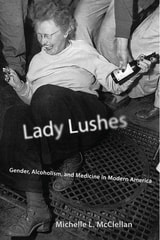
cover of Lady Lushes: Gender, Alcoholism, and Medicine in Modern America

Lady Lushes

Gender, Alcoholism, and Medicine in Modern America

McClellan, Michelle L

Rutgers University Press, 2017

According to the popular press in the mid twentieth century, American women, in a misguided attempt to act like men in work and leisure, were drinking more. “Lady Lushes” were becoming a widespread social phenomenon. From the glamorous hard-drinking flapper of the 1920s to the disgraced and alcoholic wife and mother played by Lee Remick in the 1962 film “Days of Wine and Roses,” alcohol consumption by American women has been seen as both a prerogative and as a threat to health, happiness, and the social order.
 
In Lady Lushes, medical historian Michelle L. McClellan traces the story of the female alcoholic from the late-nineteenth through the twentieth century. She draws on a range of sources to demonstrate the persistence of the belief that alcohol use is antithetical to an idealized feminine role, particularly one that glorifies motherhood. Lady Lushes offers a fresh perspective on the importance of gender role ideology in the formation of medical knowledge and authority.
 
[more]
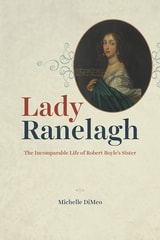
cover of Lady Ranelagh: The Incomparable Life of Robert Boyle's Sister

Lady Ranelagh

The Incomparable Life of Robert Boyle's Sister

Michelle DiMeo

University of Chicago Press, 2021

For centuries, historians have speculated about the life of Katherine Jones, Lady Ranelagh. Dominant depictions show her either as a maternal figure to her younger brother Robert Boyle, one of the most significant scientists of his day, or as a patroness of the European correspondence network now known as the Hartlib circle—but neither portrait captures the depth of her intellect or the range of her knowledge and influence.
 
Philosophers, mathematicians, politicians, and religious authorities sought her opinion on everything from decimalizing the currency to producing Hebrew grammars. She practiced medicine alongside distinguished male physicians, treating some of the most elite patients in London. Her medical recipes, political commentaries, and testimony concerning the philosophers’ stone gained international circulation. She was an important influence on Boyle and a formidable thinker in her own right.
 
Drawing from a wealth of new archival sources, Michelle DiMeo fills out Lady Ranelagh’s legacy in the context of a historically sensitive and nuanced interpretation of gender, science, and religion. The book re-creates the intellectual life of one of the most respected and influential women in seventeenth-century Europe, revealing how she managed to gain the admiration of diverse contemporaries, effect social change, and shape contemporary science.
[more]
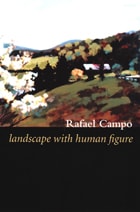
cover of Landscape with Human Figure

Landscape with Human Figure

Rafael Campo

Duke University Press, 2002
In Landscape with Human Figure, his fourth and most compelling collection of poetry, Rafael Campo confirms his status as one of America’s most important poets. Like his predecessor William Carlos Williams, who was also a physician, Campo plumbs the depths of our capacity for empathy. Campo writes stunning, candid poems from outside the academy, poems that arise with equal beauty from a bleak Boston tenement or a moonlit Spanish plaza, poems that remain unafraid to explore and to celebrate his identity as a doctor and Cuban American gay man. Yet no matter what their unexpected and inspired sources, Campo’s poems insistently remind us of the necessity of poetry itself in our increasingly fractured society; his writing brings us together—just as did the incantations of humankind’s earliest healers—into the warm circle of community and connectedness. In this heart-wrenching, haunting, and ultimately humane work, Rafael Campo has painted as if in blood and breath a gorgeously complex world, in which every one of us can be found.
[more]
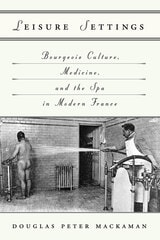
cover of Leisure Settings: Bourgeois Culture, Medicine, and the Spa in Modern France

Leisure Settings

Bourgeois Culture, Medicine, and the Spa in Modern France

Douglas P. Mackaman

University of Chicago Press, 1998

The artful use of one's free time was a discipline perfected by the French in the nineteenth century. Casinos, alpine hiking, hotel dinners, romantic gardens, and lavish parks were all part of France's growing desire for the ideal vacation. Perhaps the most intriguing vacation, however, was the ever popular health resort, and this is the main topic of Douglas Mackaman's fascinating study.

Taking us into the vibrant social world of France's great spas, Mackaman explores the links between class identity and vacationing. Mackaman shows how, after 1800, physicians and entrepreneurs zealously tried to break their milieu's strong association with aristocratic excess and indecency by promoting spas as a rational, ordered equivalent to the busy lives of the bourgeoisie. Rather than seeing leisure time as slothful, Mackaman argues, the bourgeoisie willingly became patients at spas and viewed this therapeutic vacation as a sensible, even productive, way of spending time. Mackaman analyzes this transformation, and ultimately shows how the premier vacation of an era made and was made by the bourgeoisie.


[more]
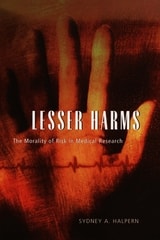
cover of Lesser Harms: The Morality of Risk in Medical Research

Lesser Harms

The Morality of Risk in Medical Research

Sydney A. Halpern

University of Chicago Press, 2004

Research physicians face intractable dilemmas when they consider introducing new medical procedures. Innovations carry the promise of preventing or curing life-threatening diseases, but they can also lead to injury or even death. How have clinical scientists made high-stakes decisions about undertaking human tests of new medical treatments? In Lesser Harms, Sydney Halpern explores this issue as she examines vaccine trials in America during the early and mid-twentieth century.

Today's scientists follow federal guidelines for research on human subjects developed during the 1960s and 1970s. But long before these government regulations, medical investigators observed informal rules when conducting human research. They insisted that the dangers of natural disease should outweigh the risks of a medical intervention, and they struggled to accurately assess the relative hazards. Halpern explores this logic of risk in immunization controversies extending as far back as the eighteenth century. Then, focusing on the period between 1930 and 1960, she shows how research physicians and their sponsors debated the moral quandaries involved in moving vaccine use from the laboratory to the clinic.

This probing work vividly describes the efforts of clinical investigators to balance the benefits and dangers of untested vaccines, to respond to popular sentiment about medical hazards, and to strategically present risk laden research to sponsors and the public.

“Concise and extremely well-written. . . . A fascinating synthesis of sociology, history, and institutional theory.”—Samuel C. Blackman, Journal of the American Medical Association

[more]
cover of Libraries and the Affordable Care Act: Helping the Community Understand Health-Care Options

Libraries and the Affordable Care Act

Helping the Community Understand Health-Care Options

Francisca American Library Association

American Library Association, 2015

[more]
cover of Life Atomic: A History of Radioisotopes in Science and Medicine

Life Atomic

A History of Radioisotopes in Science and Medicine

Angela N. H. Creager

University of Chicago Press, 2013
After World War II, the US Atomic Energy Commission (AEC) began mass-producing radioisotopes, sending out nearly 64,000 shipments of radioactive materials to scientists and physicians by 1955. Even as the atomic bomb became the focus of Cold War anxiety, radioisotopes represented the government’s efforts to harness the power of the atom for peace—advancing medicine, domestic energy, and foreign relations.
           
In Life Atomic, Angela N. H. Creager tells the story of how these radioisotopes, which were simultaneously scientific tools and political icons, transformed biomedicine and ecology. Government-produced radioisotopes provided physicians with new tools for diagnosis and therapy, specifically cancer therapy, and enabled biologists to trace molecular transformations. Yet the government’s attempt to present radioisotopes as marvelous dividends of the atomic age was undercut in the 1950s by the fallout debates, as scientists and citizens recognized the hazards of low-level radiation. Creager reveals that growing consciousness of the danger of radioactivity did not reduce the demand for radioisotopes at hospitals and laboratories, but it did change their popular representation from a therapeutic agent to an environmental poison. She then demonstrates how, by the late twentieth century, public fear of radioactivity overshadowed any appreciation of the positive consequences of the AEC’s provision of radioisotopes for research and medicine.
[more]
cover of Life beyond Medicine: The Joys and Challenges of Physician Retirement

Life beyond Medicine

The Joys and Challenges of Physician Retirement

Sharon Romm

Dartmouth College Press, 2018
Physicians retire at all ages—older doctors forsake medical practice when tired of it or when forced to do so by age or illness; younger practitioners leave because of burnout, disillusionment with the medical system, or a desire to engage in new activities. But research and literature about physician retirement is scanty. Given the limited resources available, many physicians who want to retire from medicine remain mired in indecision, wondering how their life might be different if they left medicine. Sharon Romm has written the definitive guide to help health care professionals of all ages prepare for the joys and challenges ahead.
[more]
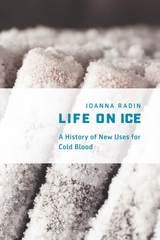
cover of Life on Ice: A History of New Uses for Cold Blood

Life on Ice

A History of New Uses for Cold Blood

Joanna Radin

University of Chicago Press, 2017

After the atomic bombing at the end of World War II, anxieties about survival in the nuclear age led scientists to begin stockpiling and freezing hundreds of thousands of blood samples from indigenous communities around the world. These samples were believed to embody potentially invaluable biological information about genetic ancestry, evolution, microbes, and much more. Today, they persist in freezers as part of a global tissue-based infrastructure. In Life on Ice, Joanna Radin examines how and why these frozen blood samples shaped the practice known as biobanking.
 
The Cold War projects Radin tracks were meant to form an enduring total archive of indigenous blood before it was altered by the polluting forces of modernity. Freezing allowed that blood to act as a time-traveling resource. Radin explores the unique cultural and technical circumstances that created and gave momentum to the phenomenon of life on ice and shows how these preserved blood samples served as the building blocks for biomedicine at the dawn of the genomic age. In an era of vigorous ethical, legal, and cultural debates about genetic privacy and identity, Life on Ice reveals the larger picture—how we got here and the promises and problems involved with finding new uses for cold human blood samples.
[more]
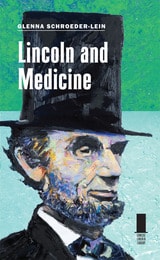
cover of Lincoln and Medicine

Lincoln and Medicine

Glenna R. Schroeder-Lein

Southern Illinois University Press, 2012

The life of America’s sixteenth president has continued to fascinate the public since his tragic death. Now, Glenna R. Schroeder-Lein unveils an engaging volume on the medical history of the Lincoln family. Lincoln and Medicine,the first work on the subject in nearly eighty years, investigates the most enduring controversies about Lincoln’s mental health, physical history, and assassination; the conditions that afflicted his wife and children, both before and after his death; and Lincoln’s relationship with the medical field during the Civil War, both as commander-in-chief and on a personal level.

Since his assassination in 1865, Lincoln has been diagnosed with no less than seventeen conditions by doctors, historians, and researchers, including congestive heart failure, epilepsy, Marfan syndrome, and mercury poisoning. Schroeder-Lein offers objective scrutiny of the numerous speculations and medical mysteries that continue to be associated with the president’s physical and mental health, from the recent interest in testing Lincoln’s DNA and theories that he was homosexual, to analysis of the deep depressions, accidents, and illnesses that plagued his early years. Set within the broader context of the prevailing medical knowledge and remedies of the era, Lincoln and Medicine takes into account new perspectives on the medical history of Abraham Lincoln and his family, offering an absorbing and informative view into a much-mythologized, yet underinvestigated, dimension of one of the nation’s most famous leaders.

Best of the Best by the Univeristy Press Books for Public and Secondary School Libraries, 2013

[more]