Results by title
188 books match the query 'Middle Eastern' and 4 start with l
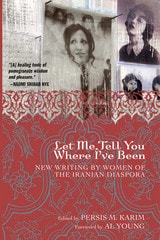
Let Me Tell You Where I've Been
New Writing by Women of the Iranian DiasporaPersis M. Karim
University of Arkansas Press, 2006
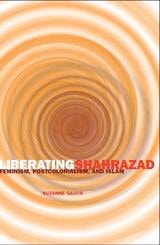
Liberating Shahrazad
Feminism, Postcolonialism, and IslamSuzanne Gauch
University of Minnesota Press, 2006
In Liberating Shahrazad, Suzanne Gauch analyzes how postcolonial writers and filmmakers from Algeria, Morocco, and Tunisia have reclaimed the storyteller in order to portray Muslim women in ways that highlight their power to shape their own destinies. Gauch looks at Maghrebian works that incorporate Shahrazad’s storytelling techniques into unexpected and unforeseen narratives. Highlighting the fluid nature of storytelling, Gauch demonstrates how these new depictions of Shahrazad—from artists such as Moufida Tlatli, Fatima Mernissi, Tahar Ben Jelloun, Assia Djebar, Leïla Sebbar—navigate the demands of a global marketplace, even as they reshape the stories told about the Islamic world.
In the face of both rising fundamentalism and proliferating Western media representations of Arab and Muslim women as silent, exploited, and uneducated victims, Gauch establishes how contemporary works of literature and film revive the voice of a long-silenced Shahrazad—and, ultimately, overthrow oppressive images of Muslim women. Suzanne Gauch is assistant professor of English and women’s studies at Temple University.
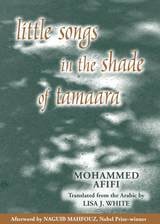
Little Songs in the Shade of Tamaara
Muhammed Afifi
University of Arkansas Press, 2000
Paradise, for the skeptic Mohammed Afifi, was just four steps down from his porch into a sunny garden. There he would sit, morning and evening, in the shadow of Tamaara, his beloved tamarhinna tree, soaking up the sights, sounds, and smells of his precious corner of the natural world. From an old yellow straw chair, Afifi would train his perceptive gaze on that garden in all its detail. Flora and fauna blessed him with honorary membership in their enchanted realm. Only the rare downpours of winter and the dust storms of spring could banish him indoors. Yet, whether inspired at the side of the heater, purring black cat on his lap, or next to the pansy bed, with ecstatic flocks of bee-eaters overhead, Afifi’s intimate, whimsical musings radiate a profound and unique sense of place.
Lisa J. White’s nuanced translation of Taramiim fii Dhill Taraara captures Afifi’s impish, ironic sense of humor and his unsparing honesty. She handles Afifi’s parting gift to the world with great care and honor. Mohammed Afifi died in 1981, in winter, just after completing this fictionalized memoir. Majestic and melancholy, mysterious and magical—the essence of his world, Afifi’s extraordinary garden, is here revealed to the English-speaking world.

Love Is My Savior
The Arabic Poems of RumiNesreen Rumi
Michigan State University Press, 2016
This dual-language volume opens a treasury of Rumi’s mystic thought and startling poetry. His verses pulsate with desire and longing, with sensuality, and with ecstatic celebration. Rumi found in his mystic poetry a vehicle for the expression of the endless spiritual bounties of love. He placed love at the center of his faith and doctrine, and he pronounced it to be the goal of his life and the only form of true worship. This collection is stunningly rendered in English by an award-winning poet and a distinguished translator of Arabic poetry.