Results by title
59 books match the query 'National characteristics, American, in literature' and 2 start with l
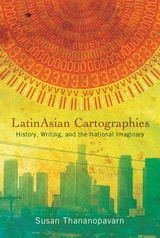
LatinAsian Cartographies
History, Writing, and the National ImaginaryThananopavarn, Susan
Rutgers University Press, 2018
LatinAsian Cartographies examines how Latina/o and Asian American writers provide important counter-narratives to the stories of racial encroachment that have come to characterize twenty-first century dominant discourses on race. Susan Thananopavarn contends that the Asian American and Latina/o presence in the United States, although often considered marginal in discourses of American history and nationhood, is in fact crucial to understanding how national identity has been constructed historically and continues to be constructed in the present day.
Thananopavarn creates a new “LatinAsian” view of the United States that emphasizes previously suppressed aspects of national history, including imperialism, domestic racism during World War II, Cold War operations in Latin America and Asia, and the politics of borders in an age of globalization. LatinAsian Cartographies ultimately reimagines national narratives in a way that transforms dominant ideas of what it means to be American.
Thananopavarn creates a new “LatinAsian” view of the United States that emphasizes previously suppressed aspects of national history, including imperialism, domestic racism during World War II, Cold War operations in Latin America and Asia, and the politics of borders in an age of globalization. LatinAsian Cartographies ultimately reimagines national narratives in a way that transforms dominant ideas of what it means to be American.
[more]
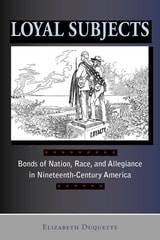
Loyal Subjects
Bonds of Nation, Race, and Allegiance in Nineteenth-Century AmericaDuquette, Elizabeth
Rutgers University Press, 2010
When one nation becomes two, or when two nations become one, what does national affiliation mean or require? Elizabeth Duquette answers this question by demonstrating how loyalty was used during the U.S. Civil War to define proper allegiance to the Union. For Northerners during the war, and individuals throughout the nation after Appomattox, loyalty affected the construction of national identity, moral authority, and racial characteristics.
Loyal Subjects considers how the Civil War complicated the cultural value of emotion, especially the ideal of sympathy. Through an analysis of literary works written during and after the conflict-from Nathaniel Hawthorne's "Chiefly About War Matters" through Henry James's The Bostonians and Charles Chestnutt's "The Wife of His Youth," to the Pledge of Allegiance and W.E.B. Du Bois's John Brown, among many others-Duquette reveals that although American literary criticism has tended to dismiss the Civil War's impact, postwar literature was profoundly shaped by loyalty.
Loyal Subjects considers how the Civil War complicated the cultural value of emotion, especially the ideal of sympathy. Through an analysis of literary works written during and after the conflict-from Nathaniel Hawthorne's "Chiefly About War Matters" through Henry James's The Bostonians and Charles Chestnutt's "The Wife of His Youth," to the Pledge of Allegiance and W.E.B. Du Bois's John Brown, among many others-Duquette reveals that although American literary criticism has tended to dismiss the Civil War's impact, postwar literature was profoundly shaped by loyalty.
[more]