163 books match the query 'Nationalism & Patriotism' and 5 start with l
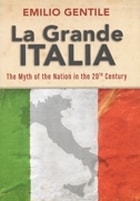
cover of La Grande Italia: The Rise and Fall of the Myth of the Nation in the Twentieth Century

La Grande Italia

The Rise and Fall of the Myth of the Nation in the Twentieth Century

Emilio Gentile

University of Wisconsin Press, 2008

La Grande Italia traces the history of the myth of the nation in Italy along the curve of its rise and fall throughout the twentieth century. Starting with the festivities for the fiftieth anniversary of the unification of Italy in 1911 and ending with the centennial celebrations of 1961, Emilio Gentile describes a dense sequence of events: from victorious Italian participation in World War I through the rise and triumph of Fascism to Italy’s transition to a republic.
    Gentile’s definition of “Italians” encompasses the whole range of political, cultural, and social actors: Liberals and Catholics, Monarchists and Republicans, Fascists and Socialists. La Grande Italia presents a sweeping study of the development of Italian national identity in all its incarnations throughout the twentieth century. This important contribution to the study of modern Italian nationalism and the ambition to achieve a “great Italy” between the unification of Italy and the advent of the Italian Republic will appeal to anyone interested in modern European history, Fascism, and nationalism.

Best Books for Special Interests, selected by the American Association of School Librarians, and Best Books for Regional General Interests, selected by the Public Library Association
[more]
cover of Labor and Democracy in Namibia, 1971–1996

Labor and Democracy in Namibia, 1971–1996

Gretchen Bauer

Ohio University Press, 1998

In this compelling study of labor and nationalism during and after Namibia's struggle for liberation, Gretchen Bauer addresses the very difficult task of consolidating democracy in an independent Namibia. Labor and Democracy in Namibia, 1971-1996 argues that a vibrant and autonomous civil society is crucial to the consolidation of new democracies, and it identifies trade unions, in particular, as especially important organizations of civil society. In Namibia, however, trade unions have emerged from the liberation struggle and the first years of independence in a weakened state. Dr. Bauer gives a lucid explanation for this phenomenon by tracing the origins and evolution of the trade unions in Namibia and discusses the implications thereof for the future of democracy in Namibia.

Based on material not widely available before independence in 1990, this study takes a critical look at the nationalist movement in Namibia. Through the use of dozens of interviews with political leaders, trade unionists, community activists, and others, Bauer offers the controversial suggestion that there are many within the nationalist movement (now the ruling party in government) who would rather not see a strong trade union movement (or any other potential rival) emerge in independent Namibia.
[more]
cover of Late Enlightenment: Emergence of the Modern 'National Idea'

Late Enlightenment

Emergence of the Modern 'National Idea'

Marius Turda

Central European University Press, 2006
This volume represents the first in a four-volume series, a daring project by CEU Press which presents the most important texts that triggered and shaped the processes of nation-building in the many countries of Central and Southeast Europe. The series brings together scholars from Austria, Albania, Bosnia-Herzegovina, Bulgaria, Croatia, the Czech Republic, Greece, Hungary, the Republic of Macedonia, Poland, Romania, Serbia and Montenegro, Slovakia, Slovenia and Turkey. The editors have created a new interpretative synthesis that challenges the self-centered and "isolationist" historical narratives and educational canons prevalent in the region, in the spirit of of "coming to terms with the past." The main aim of the venture is to confront 'mainstream' and seemingly successful national discourses with each other, thus creating a space for analyzing those narratives of identity which became institutionalized as "national canons." The series will broaden the field of possible comparisons of the respective national cultures.
[more]
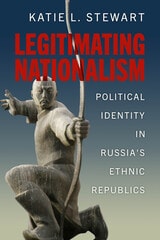
cover of Legitimating Nationalism: Political Identity in Russia's Ethnic Republics

Legitimating Nationalism

Political Identity in Russia's Ethnic Republics

Katie L. Stewart

University of Wisconsin Press, 2024

Russia is a large, diverse, and complicated country whose far-flung regions maintain their own histories and cultures, even as President Vladimir Putin increases his political control. Powerful, autocratic regimes still need to establish their legitimacy; in Russia, as elsewhere, developing a compelling national narrative and building a sense of pride and belonging in a national identity is key to maintaining a united nation. It can also legitimate political power when leaders present themselves as the nation’s champions. Putin’s hold thus requires effective nation building— propagating the ever-evolving and often contested story of who, exactly, is Russian and what, exactly, that means.

Even in the current autocratic system, however, Russia’s multiethnic nature and fractured political history mean that not all political symbols work the same way everywhere; not every story finds the same audience in the same way. The message may emanate from Moscow, but regional actors—including local governments, civic organizations, and cultural institutions—have some agency in how they spread the message: some regionalization of identity work is permitted to ensure that Russian national symbols and narratives resonate with people, and to avoid protest. This book investigates how nation building works on the ground through close studies of three of Russia’s ethnic republics: Karelia, Tatarstan, and Buryatia. Understanding how the project of legitimating nationalism, in support of a unified country and specifically Putin’s regime, works in practice offers crucial context in understanding the shape and story of contemporary Russia.
[more]
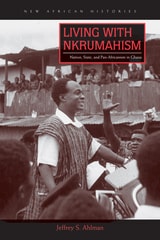
cover of Living with Nkrumahism: Nation, State, and Pan-Africanism in Ghana

Living with Nkrumahism

Nation, State, and Pan-Africanism in Ghana

Jeffrey S. Ahlman

Ohio University Press, 2017

In the 1950s, Ghana, under the leadership of Kwame Nkrumah and the Convention People’s Party, drew the world’s attention as anticolonial activists, intellectuals, and politicians looked to it as a model for Africa’s postcolonial future. Nkrumah was a visionary, a statesman, and one of the key makers of contemporary Africa. In Living with Nkrumahism, Jeffrey S. Ahlman reexamines the infrastructure that organized and consolidated Nkrumah’s philosophy into a political program. Ahlman draws on newly available source material to portray an organizational and cultural history of Nkrumahism. Taking us inside bureaucracies, offices, salary structures, and working routines, he painstakingly reconstructs the political and social milieu of the time and portrays a range of Ghanaians’ relationships to their country’s unique position in the decolonization process. Through fine attunement to the nuances of statecraft, he demonstrates how political and philosophical ideas shape lived experience. Living with Nkrumahism stands at the crossroads of the rapidly growing fields of African decolonization, postcolonial history, and Cold War studies. It provides a much-needed scholarly model through which to reflect on the changing nature of citizenship and political and social participation in Africa and the broader postcolonial world.
[more]