Results by title
166 books match the query 'Native American' and 6 start with l
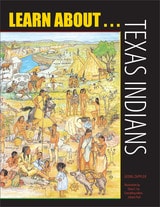
Learn About . . . Texas Indians
By Georg Zappler
University of Texas Press, 2007
Here is an entertaining and educational activity book for children from six to twelve on the always-popular topic of American Indians—except that the subject has been narrowed to only those Native Americans known to have lived in the Lone Star State.
Eye-catching line drawings invite children to color a wide assortment of scenes from the diverse lives of the many different groups of Indians native to Texas. The settings in the first part of the book range from the mammoth- and bison-hunting Paleo-Indians of over 11,000 years ago to the various nomadic and agricultural groups encountered by sixteenth-century Spanish explorers. Further drawings reflect changes over the centuries as Indian lifeways were forever altered and often destroyed due to contact with white newcomers who all claimed their land. In addition to the many drawings, a number of fun-filled and challenging games help build youngsters' Indian knowledge.
Leaving Tulsa
Jennifer Elise Foerster
University of Arizona Press, 2013
In her first magical collection of poetry, Jennifer Elise Foerster weaves together a mythic and geographic exploration of a woman’s coming of age in a dislocated time. Leaving Tulsa, a book of road elegies and laments, travels from Oklahoma to the edges of the American continent through landscapes at once stark and lush, ancient and apocalyptic. The imagery that cycles through the poems—fire, shell, highway, wing—gives the collection a rich lyrical-dramatic texture. Each poem builds on a theme of searching for a lost “self”—an “other” America—that crosses biblical, tribal, and ecological mythologies.
In Leaving Tulsa, Foerster is not afraid of the strange or of estrangement. The narrator occupies a space in between and navigates the offbeat experiences of a speaker that is of both Muscogee and European heritage. With bold images and candid language, Foerster challenges the perceptions of what it means to be Native, what it means to be a woman, and what it means to be an American today. Ultimately, these brave and luminous poems engage and shatter the boundaries of time, self, and continent.
Foerster’s journey transcends both geographic space and the confines of the page to live vividly in the mind of the reader.
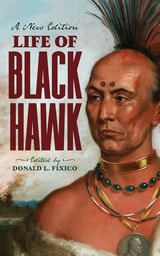
Life of Black Hawk
A New EditionDonald L. Fixico
Westholme Publishing, 2026
Born in 1767 at Saukenuk on the Rock River in western Illinois, Black Hawk of the Sauk and Fox Nation rose from young warrior to fierce defender of his people as the United States pushed relentlessly westward. His autobiography, originally dictated in 1833, is one of the earliest Native American life narratives recorded: a warrior’s unfiltered account of betrayal, resistance, and the patriotic fight to protect his homeland. In 1832, Black Hawk led his people to reclaim Saukenuk. Settlers had destroyed their homes and crops and illegally occupied their land that had been recognized as Sauk and Fox by treaty. After winning the first two battles against the U.S. military and volunteer militia in Wisconsin, Black Hawk’s band lost the final one at Bad Axe. Black Hawk’s people were forced to accept permanent removal to the west, and he became a prisoner of war at the Fort Jefferson barracks near St. Louis. It was there that he dictated his autobiography to an interpreter.
Introduced and edited by historian Donald L. Fixico, this new edition of Life of Black Hawk brings fresh context and cultural depth to Black Hawk’s words, illuminating the Sauk and Fox worldview, the sacred traditions of the Thunder Clan, and the spiritual life that shaped this remarkable leader. Black Hawk's account conveys what it was like to be a Sauk warrior in the early 1800s. He explains the Medicine Way of his people and how the traditional worldview of Black Hawk was quickly changing from a harmonious relationship with nature to unavoidable frontier hostilities with an expanding United States. You feel the frustrating dilemma of Black Hawk, who knows that defending his people and fighting to save his homeland is morally right. Timely, intimate, and essential, this volume is both a vivid window into the Indigenous experience on the frontier and a testament to a man who stands alongside the great Native patriots. For readers of Native American history, military history, and American biography, this is an extraordinary story that has never been more important to hear.

Light As Light
PoemsSimon J. Ortiz
University of Arizona Press, 2023
The poems in Light As Light travel far across both space and memory, landing everywhere from the New Mexico of the speaker’s childhood, to California, Tucson, and present-day Beijing, and many airports, highways, and way stations in between. The central concern uniting this collection is language itself: the weight and significance of English and Keres, as well as the nature and power of poetry as a way of life. No collection of Indigenous literature is complete without the work of Simon Ortiz, and this book is a powerful journey through the poet’s life—both a love letter to the future, and a sentimental, authentic celebration of the past.
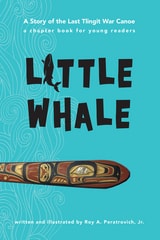
Little Whale
A Story of the Last Tlingit War CanoeRoy A. Peratrovich, Jr.
University of Alaska Press, 2016
And it’s mostly true. Roy Peratrovich here builds a wonderful children’s tale on the bones of a story his own grandfather passed down. His accompanying illustrations bring the people and landscapes of Alaska—to say nothing of the adventures!—to stunning life, drawing young readers into a long-gone time when the whims of nature and man could suddenly test a boy’s courage.
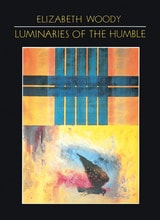
Luminaries of the Humble
Elizabeth Woody
University of Arizona Press, 1994
In opening remarks, Woody shares anecdotes of her youth that contributed to her sense of personal history and her development as a poet. "The petroglyphs on rock in the Columbia River Gorge are part of my literary heritage," she writes. Now through the medium of the printed word, Luminaries of the Humble marks an important continuation of that tradition.