Results by title
405 books match the query 'Natural history' and 20 start with l

La Selva
Ecology and Natural History of a Neotropical Rain ForestEdited by Lucinda A. McDade, Kamaljit S. Bawa, Henry A. Hespenheide, and Gary S.
University of Chicago Press, 1994
the most intensively studied and best-understood tropical field sites
in the world. For over thirty years, La Selva has been a major focus
of research on rainforest ecology, flora, and fauna. This volume
provides the first comprehensive review of this research, covering La
Selva's geographical history and physical setting, its plant and
animal life, and agricultural development and land use.
Drawing together a wealth of information never before available in a
single volume, La Selva offers a substantive treatment of the
ecology of a rainforest. Part 1 summarizes research on the physical
setting and environment of the rainforest, as well as the history of
the research station. Some chapters in this part focus on climate,
geomorphology, and aquatic systems, while others look at soils,
nutrient acquisition, and cycles of energy.
Part 2 synthesizes what is known about the plant community. It begins
with chapters on vegetation types and plant diversity, and also
explores plant demography, spatial patterns of trees, and the impact
of treefall gaps on forest structure and dynamics. Other chapters
address plant physiological ecology, as well as plant reproductive
systems.
Part 3 covers the animal community, summarizing information on the six
best-known animal taxa of the region: fishes, amphibians, reptiles,
birds, mammals, and butterflies. This part includes an overview of
faunal studies at La Selva and a chapter on animal population biology,
which examines animal demography and abundance, and interactions
between predators and prey. Part 4 addresses interactions between
plants and animals and the effects of these interactions on species
diversity.
Part 5 considers the impact of land use and agricultural development
on La Selva and other areas of Costa Rica. One chapter examines land
colonization and conservation in Sarapiqui, another covers subsistence
and commercial agricultural development in the Atlantic lowlands
region, and a third looks at the forest industry in northeastern Costa
Rica. This part also assesses the role and research priorities of La
Selva.
La Selva provides an introduction to tropical ecology for
students and researchers at La Selva, a major source of comparative
information for biologists working in other tropical areas, and a
valuable resource for conservationists.
Lake Effect
Along Superior’s ShoresErika Alin
University of Minnesota Press, 2003
Personal reflections on the natural splendors and human history of the Lake Superior shoreline
The 2,900-mile shoreline of Lake Superior offers some of the most beautiful scenery in the world: stunning juxtapositions of shape, color, and texture, from the birch and evergreen forests of Minnesota’s north shore and the maple-clad slopes of Wisconsin to Ontario’s granite outcrops and Michigan's sandstone shelves. Inhabited by hundreds of species of mammals, birds, and insects, the diverse ecosystems around Superior have also experienced human habitation for millennia.
In Lake Effect, writer Erika Alin explores both the natural and the human landscapes of Lake Superior, meditating on the rich geological, historical, and cultural events that have shaped the region. She begins her journey around Superior at the St. Louis River near Duluth and continues along the shores of the lake to Temperance River State Park, Grand Marais’s Artist’s Point, and Lake Superior Provincial Park. Following the Michigan and Wisconsin coasts, Alin visits the Keweenaw Peninsula, the Porcupine Mountains, and Chequamegon Bay before concluding at the south shore’s Brule River. Inspired by these and other places on the lake, Alin’s engaging essays delve into such diverse topics as the origins of river names, early Native American settlement, the exploits of seventeenth-century French-Canadian voyageurs, the breeding habits of ring-billed gulls, the contributions of women botanists, Canada’s Group of Seven painters, and aboriginal rock art. A holistic and deeply personal reflection on Superior’s shoreline, Lake Effect reveals a profound sensitivity to the natural world and a penetrating historical imagination.
Land Beyond
A MemoirJack Ives
University of Alaska Press, 2010
Geographer Jack Ives moved to Canada in 1954, and soon after he played an instrumental role in the establishment of the McGill Sub-Arctic Research Laboratory in central Labrador-Ungava. This fascinating account of his fifty-plus years living and working in the arctic is simultaneously a light-hearted, winning memoir and a call to action on the issues of environmental awareness and conservation that are inextricably intertwined with life in the north. Mixing personal impressions of key figures of the postwar scientific boom with the intellectual drama of field research, The Land Beyond is a memorable depiction of a life in science.
Land of Bears and Honey
A Natural History of East TexasBy Joe C. Truett and Daniel W. Lay
University of Texas Press, 1994
Winner, Ottis Lock Endowment Award for the best book on East Texas, East Texas Historical Association, 1985
Texas Literary Festival Award for Nonfiction (Southwestern Booksellers Association & Dallas Times Herald), 1985
Annual Publication Award, Texas Chapter of the Wildlife Society, 1984
The story of the land, wildlife, and ecology of East Texas.
Land of Extremes
A Natural History of the Arctic North Slope of AlaskaAlex Huryn and John Hobbie
University of Alaska Press, 2012
This book is a comprehensive guide to the natural history of the North Slope, the only arctic tundra in the United States. The first section provides detailed information on climate, geology, landforms, and ecology. The second provides a guide to the identification and natural history of the common animals and plants and a primer on the human prehistory of the region from the Pleistocene through the mid-twentieth century. The appendix provides the framework for a tour of the natural history features along the Dalton Highway, a road connecting the crest of the Brooks Range with Prudhoe Bay and the Arctic Ocean, and includes mile markers where travelers may safely pull off to view geologic formations, plants, birds, mammals, and fish. Featuring hundreds of illustrations that support the clear, authoritative text, Land of Extremes reveals the arctic tundra as an ecosystem teeming with life.
Landscape Of Desire
Greg Gordon
Utah State University Press, 2003
Landscape of Desire powerfully documents and celebrates a place and the evolutions that occur when human beings are intimately connected to their surroundings. Greg Gordon accomplishes this with a tapestry of writing that interweaves land use history, natural history, experiential education, and personal reflection. He tracks the geomorphology of southern Utah as well as the creatures and plants his student group encounters, the history lessons (planned and unplanned), the trials and joys of gathering so many individuals into a cohesive will, and his own personal epiphanies, restraints, insights, and disillusionments.
Landscape of Desire examines the plight of the western landscape. It discusses a wide range of issues, including mining, grazing, dams, recreation, wilderness, and land management. Since recreation has replaced extraction industries as the primary use of wilderness, especially in southern Utah, Gordon addresses its impactful qualities. He overviews the history of the conflict between preservation and development and places these issues in a cultural context. The text is presented in a narrative format, following the individuals of one field course Gordon lead that explored Muddy Creek and the Dirty Devil River from Interstate 70 to Lake Powell. Though each chapter focuses on the geologic formation the group is traveling through, the plants, animals, ecology, and human impacts are all tightly woven into the narrative. Not only does the land affect the members of the field course, but their attitudes and insights affect the land.
In Landscape of Desire Gordon achieves a vision of wholeness of this popular and contested region of Utah that centers around the implications of being human and also stewards of the wild.
Last Water on the Devil's Highway
A Cultural and Natural History of Tinajas AltasBill Broyles, Gayle Harrison Hartmann, Thomas E. Sheridan, Gary Paul Nabhan, and Mary Charlotte Thurtle
University of Arizona Press, 2013
Now an expert cast of authors describes, narrates, and explains the human and natural history of this special place in a thorough and readable account. Addressing the latest archaeological and historical findings, they reveal why Tinajas Altas was so important and how it related to other waterholes in the arid borderlands. Readers can feel like pioneers, following in the footsteps of early Native Americans, Spanish priests and soldiers, gold seekers and borderland explorers, tourists, and scholars.
Combining authoritative writing with a rich array of more than 180 illustrations and maps as well as detailed appendixes providing up-to-date information on the wildlife and plants that live in the area, Last Water on the Devil’s Highway allows readers to uncover the secrets of this fascinating place, revealing why it still attracts intrepid tourists and campers today.
Leavetakings
EssaysCorinna Cook
University of Alaska Press, 2020
Legends of the Common Stream
John Hanson Mitchell
University of Massachusetts Press, 2021
While Mitchell never leaves the brook's shores, he draws from a range of traditions and takes readers on excursions to regions and cultures across the globe and across time, making the case that our contemporary separation from nature goes hand in hand with our alienation from the world of myth. This book seeks to restore these broken relationships and offers the reminder that while cultures may come and go, the stream goes on forever.
Les aires protégées terrestres de Madagascar
leur histoire, description et biota, tome 1: IntroductionEdited by Steven M. Goodman, Marie Jeanne Raherilalao, and Sébastien Wohlhauser
Association Vahatra, 2020
The purpose of the French-language Les aires protégées terrestres de Madagascar is to present a large-scale update of information available from 98 terrestrial protected areas, various analyses to understand general trends in the conservation of these sites, and a synthesis to assess the needs for future scientific programs. Beautifully illustrated throughout with color maps, graphs, and photos, these three volumes will be an important reference for students, researchers, protected area managers, conservationists, and visiting ecotourists. Volume one provides a comprehensive introduction.
Les aires protégées terrestres de Madagascar
leur histoire, description et biota, tome 2: Le Nord et l'Est de MadagascarEdited by Steven M. Goodman, Marie Jeanne Raherilalao, and Sébastien Wohlhauser
Association Vahatra, 2020
The purpose of the French-language Les aires protégées terrestres de Madagascar is to present a large-scale update of information available from 98 terrestrial protected areas, various analyses to understand general trends in the conservation of these sites, and a synthesis to assess the needs for future scientific programs. Beautifully illustrated throughout with color maps, graphs, and photos, these three volumes will be an important reference for students, researchers, protected area managers, conservationists, and visiting ecotourists. Volume two covers northern and eastern Madagascar.
Les aires protégées terrestres de Madagascar
leur histoire, description et biota, tome 3: L'Ouest et le Sud de Madagascar - SynthèseEdited by Steven M. Goodman, Marie Jeanne Raherilalao, and Sébastien Wohlhauser
Association Vahatra, 2020
The purpose of the French-language Les aires protégées terrestres de Madagascar is to present a large-scale update of information available from 98 terrestrial protected areas, various analyses to understand general trends in the conservation of these sites, and a synthesis to assess the needs for future scientific programs. Beautifully illustrated throughout with color maps, graphs, and photos, these three volumes will be an important reference for students, researchers, protected area managers, conservationists, and visiting ecotourists. Volume three covers western and southwestern Madagascar, as well as provides a valuable synthesis.
Letters from Alabama
Chiefly Relating to Natural HIstoryPhilip Henry Gosse, introduction by Harvey H. Jackson III, edited by Virginia Hamilton
University of Alabama Press, 1993
A naturalist's captivating portrait of Alabama's wildlife, landscapes, and people.
Philip Henry Gosse (1810-1888), a British naturalist, left home at age 17 and made his way to Alabama in 1838, where he had heard educated people were in demand. He was employed by Judge Reuben Saffold at Pleasant Hill in Dallas County as a teacher for about a dozen children of local landowners, but his principal interest was natural history. During the eight months he lived in th Black Belt he watched, listened, thought, took notes, and made sketches--activities that eventually led to Letters from Alabama. He lived among Alabamians, talked and listened to them, saw them at their best and their worst, and came to understand their hopes and fears. They were a part of the natural world, and he paid attention to them as any good scientist would. With the skills of a scientist and the temperament of an artist, Gosse set down an account of natural life in frontier Alabama that has no equal. Written to no one in particular, a common literary device of the period, the letters were first published in a magazine, and in 1859 appeared as a book. By that time Gosse was an established scholar and one of England’s most noted scientific illustrators.
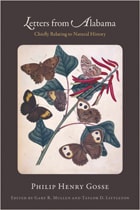
Letters from Alabama
Chiefly Relating to Natural HistoryPhilip Henry Gosse, Edited by Gary R. Mullen and Taylor D. Littleton
University of Alabama Press, 2013
New and improved edition of a naturalist's captivating portrait of Alabama's wildlife, landscapes, and people.
Philip Henry Gosse (1810–1888), a British naturalist, left home at age seventeen and made his way to Alabama in 1838. He was employed by Judge Reuben Saffold and other planters near Pleasant Hill in Dallas County as a teacher for about a dozen of their children, but his principal interest was natural history. Letters from Alabama is a personalized record of Gosse’s perceptive observations during his eight-month residence in this small antebellum community. The work addresses a Victorian readership, including entomologists, who Gosse believed were relatively uninformed about the novelty and beauty of this “hilly region of the State of Alabama.” Written in an engaging literary style and organized as a series of epistolary discussions, the book is unparalleled in its detailed evocations of the natural history and cultural conditions of frontier Alabama. By the time Letters from Alabama appeared in 1859, Gosse’s scientific publications and fine illustrations had led to his being elected a Fellow of the Royal Society of London.
Edited by Gary R. Mullen and Taylor D. Littleton, this authoritative edition features thirty grayscale lithographs shot directly from the 1859 edition, reset type for easier reading, a new introduction and index by the two foremost scholars of Gosse in Alabama, a new appendix that provides modern scientific and common names for the plant and animal species described by Gosse, and a four-color cover featuring one of the plates from Gosse’s Entomologia Alabamensis.
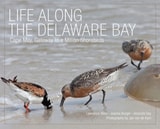
Life Along the Delaware Bay
Cape May, Gateway to a Million ShorebirdsNiles, Lawrence
Rutgers University Press, 2012
The Delaware Bay is the second largest and most diverse bay on the East Coast. It has a rich cultural history, has played an important role in the region’s commerce and tourism, and has spectacular and vital natural resources. Birdwatchers gather along its shores to watch the spectacle of thousands of spawning horseshoe crabs, the dense flocks of migrant shorebirds, the fall hawk migration, and the huge migration of monarch butterflies.
Life Along the Delaware Bay focuses on the area as an ecosystem, the horseshoe crab as a keystone species within that system, and the crucial role that the bay plays in the migratory ecology of shorebirds. An abundance of horseshoe crabs spawning on the Delaware Bay beaches results in an abundance of eggs brought to the surface, providing a source of high-quality food and bringing hundreds of thousands of shorebirds to the bay to forage in late May and early June. A dramatic decline in horseshoe crabs has resulted in a rapid and dramatic decline in birds, particularly the red knot. This decline has sounded an alarm throughout the world, prompting a host of biologists to converge on the bay each spring, to understand the biology and conservation of red knots and other shorebirds.
Lawrence Niles, Joanna Burger, and Amanda Dey examine current efforts to protect the bay and identify new efforts that must take place to ensure it remains an intact ecological system. Over three hundred stunning color photographs and maps capture the beauty and majesty of this unique treasure—one that must be protected today and for generations to come.
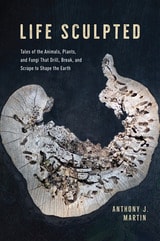
Life Sculpted
Tales of the Animals, Plants, and Fungi That Drill, Break, and Scrape to Shape the EarthAnthony J. Martin
University of Chicago Press, 2023
Meet the menagerie of lifeforms that dig, crunch, bore, and otherwise reshape our planet.
Did you know elephants dig ballroom-sized caves alongside volcanoes? Or that parrotfish chew coral reefs and poop sandy beaches? Or that our planet once hosted a five-ton dinosaur-crunching alligator cousin? In fact, almost since its fascinating start, life was boring. Billions of years ago bacteria, algae, and fungi began breaking down rocks in oceans, a role they still perform today. About a half-billion years ago, animal ancestors began drilling, scraping, gnawing, or breaking rocky seascapes. In turn, their descendants crunched through the materials of life itself—shells, wood, and bones. Today, such “bioeroders” continue to shape our planet—from the bacteria that devour our teeth to the mighty moon snail, always hunting for food, as evidenced by tiny snail-made boreholes in clams and other moon snails.
There is no better guide to these lifeforms than Anthony J. Martin, a popular science author, paleontologist, and co-discoverer of the first known burrowing dinosaur. Following the crumbs of lichens, sponges, worms, clams, snails, octopi, barnacles, sea urchins, termites, beetles, fishes, dinosaurs, crocodilians, birds, elephants, and (of course) humans, Life Sculpted reveals how bioerosion expanded with the tree of life, becoming an essential part of how ecosystems function while reshaping the face of our planet. With vast knowledge and no small amount of whimsy, Martin uses paleontology, biology, and geology to reveal the awesome power of life’s chewing force. He provokes us to think deeply about the past and present of bioerosion, while also considering how knowledge of this history might aid us in mitigating and adapting to climate change in the future. Yes, Martin concedes, sometimes life can be hard—but life also makes everything less hard every day.
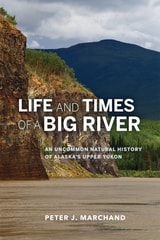
Life and Times of a Big River
An Uncommon Natural History of Alaska's Upper YukonPeter J. Marchand
University of Alaska Press, 2015
Life and Times of a Big River follows Peter J. Marchand and his team of biologists as they set out to explore the land that would ultimately become the Yukon-Charley Rivers National Preserve. Their encounters with strange plants, rare insects, and little-known mammals bring to life a land once thought to be static and monotonous. And their struggles to navigate and adapt to an unforgiving environment capture the rigorous demands of remote field work. Weaving in and out of Marchand's narrative is an account of the natural and cultural history of the area as it relates to the expedition and the region’s Native peoples. Life and Times of a Big River chorincles this riveting, one-of-a-kind journey of uncertainty and discovery from a disparate (and at one point desperate) group of biologists.
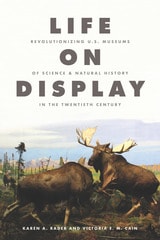
Life on Display
Revolutionizing U.S. Museums of Science and Natural History in the Twentieth CenturyKaren A. Rader and Victoria E. M. Cain
University of Chicago Press, 2014
Rader and Cain explain why science and natural history museums began to welcome new audiences between the 1900s and the 1920s and chronicle the turmoil that resulted from the introduction of new kinds of biological displays. They describe how these displays of life changed dramatically once again in the 1930s and 1940s, as museums negotiated changing, often conflicting interests of scientists, educators, and visitors. The authors then reveal how museum staffs, facing intense public and scientific scrutiny, experimented with wildly different definitions of life science and life science education from the 1950s through the 1980s. The book concludes with a discussion of the influence that corporate sponsorship and blockbuster economics wielded over science and natural history museums in the century’s last decades.
A vivid, entertaining study of the ways science and natural history museums shaped and were shaped by understandings of science and public education in the twentieth-century United States, Life on Display will appeal to historians, sociologists, and ethnographers of American science and culture, as well as museum practitioners and general readers.
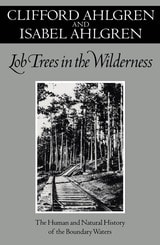
Lob Trees In The Wilderness
The Human and Natural History of the Boundary WatersClifford Ahlgren
University of Minnesota Press, 2001
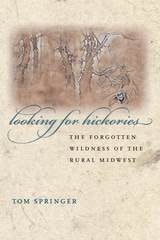
Looking for Hickories
The Forgotten Wildness of the Rural MidwestTom Springer
University of Michigan Press, 2008
A new voice reveals the unique character of the upper Midwest
In the spirit of other writers who share an affinity for the natural world---authors such as Robert Frost, Emerson, and Bill Bryson---Looking for Hickories is Tom Springer's ode to the people, natural beauty, and lore of the Midwest, a place where bustling communities neighbor a fragile mosaic of quiet woods, fertile meadows, and miles of farmland.
Touching and humorous by turns, Looking for Hickories captures the essence of the upper Midwest's character with subjects particular to the region yet often universal in theme, from barn building to land preservation to the neglected importance of various trees in the landscape.
Like Frost's best poems, Springer's essays often begin with delight and end in wisdom. They mingle a generosity of spirit and the childlike pleasure of discovery with a grown-up sense of a time and a place, if not lost, then in danger of disappearing altogether---things to treasure and preserve for today and tomorrow.