Results by title
2817 books match the query 'Nature' and 84 start with l

Lab Dog
What Global Science Owes American BeaglesBrad Bolman
University of Chicago Press, 2025
Intrepid, docile, and cloaked in coats of white, black, and tan, beagles were one of the most popular breeds in the United States in the twentieth century. From Snoopy to dog shows, many Americans loved and identified with beagles. But during the same period, as scientists searched for a standard research dog, beagles emerged as something else: an ideal animal for laboratory experimentation.
In Lab Dog, historian Brad Bolman explains how the laboratory dog became a subject of intense focus for twentieth-century scientists and charts the beagle’s surprising trajectory through global science. Following beagles as they moved from eugenics to radiobiology, pharmaceutical testing to Alzheimer’s studies, Lab Dog sheds new light on pivotal stories of twentieth-century science, including the Manhattan Project, tobacco controversies, contraceptive testing, and behavioral genetics research. Bolman shows how these experiments shaped our understanding of dogs as intelligent companions who deserve moral protection and socialization—and in some cases, daily medication. Compelling and accessible, Lab Dog tells the thorny story of the participation of beagles in science, including both their sacrifices and their contributions, and offers a glimpse into the future of animal experimentation.
Labour, Nature and Capitalism
Exploring Labour-Environmental Conflicts in Kerala, IndiaSilpa Satheesh
University College London, 2025
Set against the industrial belt of Eloor-Edayar, Labour, Nature and Capitalism investigates the uneasy tensions between trade unions and environmental movements in Kerala, complicating the celebrated “Kerala Model” of development. Through ethnographic research and document analysis, Silpa Satheesh studies how capitalist interests shape and divide movements that appear to share common ground. The book challenges the simplistic “environment versus development” binary, depicting how industrial labor and grassroots environmental activism frequently find themselves at odds, despite both being embedded in struggles for justice.
By foregrounding the lived experiences of movement actors and examining the ideological fractures that emerge in postcolonial capitalism, Satheesh provides a much-needed intervention into debates on labor and ecology in the Global South. This interdisciplinary work is particularly valuable for scholars and activists working at the intersection of environmental justice and working-class mobilization, shedding light on the possibilities and limits of solidarity in the fight for just transitions.
Ladies'-tresses in Your Pocket
A Guide to the Native Ladies'-tresses Orchids, Spiranthes, of the United States and CanadaPaul Martin Brown
University of Iowa Press, 2008
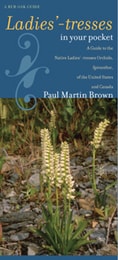
Brown provides general distributional information, time of flowering, and habitat requirements for each species as well as a complete list of hybrids and the many different growth and color forms that can make identifying orchids so intriguing. He includes information on 256 species, 3 additional varieties, and 7 hybrids.
Wild ladies’-tresses occur from British Columbia, with the hooded ladies’-tresses, Spiranthes romanzoffiana, to Florida, with Eaton’s-ladies’-tresses, S. eatonii. The newest species to science, Spiranthes stellata, the starry ladies’-tresses, is featured. Most of these species are easy to identify based upon their general appearance, range, and time of flowering. Answer three simple questions—when, where, and how does it grow? Then compare the living plant with the striking photos in these backpack-friendly laminated guides and consult the keys that Brown has created. Following these steps should enable both professional and amateur naturalists to achieve the satisfaction of identifying specific orchids in their native environment.
Lady's-slippers in Your Pocket
A Guide to the Native Lady's-slipper Orchids, Cypripedium, of the United States and CanadaPaul Martin Brown
University of Iowa Press, 2008
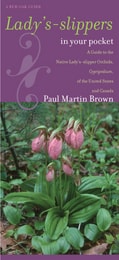
Brown provides general distributional information, time of flowering, and habitat requirements for each species as well as a complete list of hybrids and the many different growth and color forms that can make identifying orchids so intriguing. For the lady’s-slippers he includes information on 12 species, 2 additional varieties, and 6 hybrids.
Wild lady’s-slippers grow from Alaska, with the spotted lady’s-slipper, Cypripedium guttatum, to Texas, with the ivory-lipped lady’s-slipper, C. kentuckiense. Most of these species are easy to identify based upon their general appearance, range, and time of flowering. Answer three simple questions—when, where, and how does it grow? Then compare the living plant with the striking photos in these backpack-friendly laminated guides and consult the keys that Brown has created. Following these steps should enable both professional and amateur naturalists to achieve the satisfaction of identifying specific orchids in their native environment.
Lake Effect
Along Superior’s ShoresErika Alin
University of Minnesota Press, 2003
Personal reflections on the natural splendors and human history of the Lake Superior shoreline
The 2,900-mile shoreline of Lake Superior offers some of the most beautiful scenery in the world: stunning juxtapositions of shape, color, and texture, from the birch and evergreen forests of Minnesota’s north shore and the maple-clad slopes of Wisconsin to Ontario’s granite outcrops and Michigan's sandstone shelves. Inhabited by hundreds of species of mammals, birds, and insects, the diverse ecosystems around Superior have also experienced human habitation for millennia.
In Lake Effect, writer Erika Alin explores both the natural and the human landscapes of Lake Superior, meditating on the rich geological, historical, and cultural events that have shaped the region. She begins her journey around Superior at the St. Louis River near Duluth and continues along the shores of the lake to Temperance River State Park, Grand Marais’s Artist’s Point, and Lake Superior Provincial Park. Following the Michigan and Wisconsin coasts, Alin visits the Keweenaw Peninsula, the Porcupine Mountains, and Chequamegon Bay before concluding at the south shore’s Brule River. Inspired by these and other places on the lake, Alin’s engaging essays delve into such diverse topics as the origins of river names, early Native American settlement, the exploits of seventeenth-century French-Canadian voyageurs, the breeding habits of ring-billed gulls, the contributions of women botanists, Canada’s Group of Seven painters, and aboriginal rock art. A holistic and deeply personal reflection on Superior’s shoreline, Lake Effect reveals a profound sensitivity to the natural world and a penetrating historical imagination.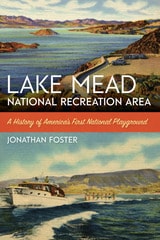
Lake Mead National Recreation Area
A History of America’s First National PlaygroundJonathan Foster
University of Nevada Press, 2016
First named the Boulder Dam Recreation Area, this parkland was created in 1936 by a memorandum of agreement between the National Park Service and the U.S. Bureau of Reclamation. Over the course of its existence, the area has served as a model for a subsequent system of National Recreation Areas. The area’s extreme popularity has, in combination with changing public attitudes regarding preservation and safety, presented the National Park Service with tremendous challenges in recent decades. Jonathan Foster’s examination of these challenges and the responses to them reveal an increasingly anxious relationship between the government, the public, and special interest groups in the American West.
Lake Superior
Grace Lee Nute
University of Minnesota Press, 2000
The captivating history of the world’s largest freshwater lake.
This classic history of Lake Superior, from the earliest explorations to the explosion of industry on its shores, takes the reader on a tour from Duluth to Isle Royale, from Thunder Bay to Sault Ste. Marie, from Pictured Rocks to the Apostle Islands. Grace Lee Nute tells the fascinating stories of the Native Americans, voyageurs, missionaries, and others who created the way of life that many generations have known on the edge of this magnificent body of water.
Lakeshore Living
Designing Lake Places and Communities in the Footprints of Environmental WritersPaul J. Radomski
Michigan State University Press, 2014
Lambs in Winter
Sketches of a Vermont Life Through Seasons of ChangeAlexis Lathem
University of Massachusetts Press, 2025
Finding hope in a small farm, an engaged community, and an age-old connection to the earth
After half a lifetime spent moving from place to place, Alexis Lathem at last settled down with her husband on a small farm near Vermont’s largest city. The lyric essays of Lambs in Winter take readers through the seasonal cycles of raising sheep and hens and growing fruits and vegetables while confronting the challenges of winter storms, summer floods, invasive weeds, and pests and diseases.
Ever conscious of her place in a historically colonized and ecologically degraded landscape, Lathem wrestles with ethical questions that come to many rural dwellers who—following Thoreau—set out to “live deliberately,” in a time of climate crisis, persistent racial inequity, and growing economic inequality. Likewise, she grapples with the moral complexities of small-scale animal husbandry. Through her efforts at self-provisioning, without holding illusions of the self-reliant individual, Lathem finds herself deeply embedded in the community and reliant on others, especially as her region deals with repeated catastrophic flooding brought on by climate change.
Through elegant prose and insightful investigations into pressing contemporary issues, Lathem evokes the world of her farm and the surrounding countryside with a spiritual awareness of the human journey on this earth. Living in place, attuned to the unfolding changes in the world around her, gives her much to grieve, but the pages of Lambs in Winter are luminous with moments of joy and beauty.
Land Hunger
Ohio and the Western FrontiersMansel G. Blackford
Ohio University Press, 2025
Land Made from Water
Appropriation and the Evolution of Colorado's Landscape, Ditches, and Water InstitutionsRobert R. Crifasi
University Press of Colorado, 2016
A Land Made from Water chronicles how the appropriation and development of water and riparian resources in Colorado changed the face of the Front Range—an area that was once a desert and is now an irrigated oasis suitable for the habitation and support of millions of people. This comprehensive history of human intervention in the Boulder Creek and Lefthand Creek valleys explores the complex interactions between environmental and historical factors to show how thoroughly the environment along the Front Range is a product of human influence.
Author Robert Crifasi examines the events that took place in nineteenth-century Boulder County, Colorado, and set the stage for much of the water development that occurred throughout Colorado and the American West over the following century. Settlers planned and constructed ditches, irrigation systems, and reservoirs; initiated the seminal court decisions establishing the appropriation doctrine; and instigated war to wrest control of the region from the local Native American population. Additionally, Crifasi places these river valleys in the context of a continent-wide historical perspective.
By examining the complex interaction of people and the environment over time, A Land Made from Water links contemporary issues facing Front Range water users to the historical evolution of the current water management system and demonstrates the critical role people have played in creating ecosystems that are often presented to the public as “natural” or “native.” It will appeal to students, scholars, professionals, and general readers interested in water history, water management, water law, environmental management, political ecology, or local natural history.
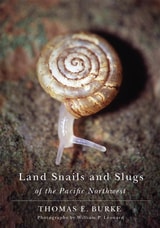
Land Snails and Slugs of the Pacific Northwest
Thomas E. Burke
Oregon State University Press, 2013
Primarily an identification guide, this richly illustrated volume offers complete information on the range of terrestrial mollusk shapes, sizes, and characteristics. It presents an overview of their habitat requirements as well as details of land snail and slug ecology, collection and preservation methods, and biogeography.
Land Snails and Slugs of the Pacific Northwest is an essential reference for biologists, horticulturalists, gardeners, and naturalists, and anyone wishing to identify species in the field.
• Identification keys and species accounts for most of the 245 taxa of terrestrial slugs and snails in the region
• 280 full-color photographs of 155 species and subspecies
• Range maps for most species
Land of Bears and Honey
A Natural History of East TexasBy Joe C. Truett and Daniel W. Lay
University of Texas Press, 1994
Winner, Ottis Lock Endowment Award for the best book on East Texas, East Texas Historical Association, 1985
Texas Literary Festival Award for Nonfiction (Southwestern Booksellers Association & Dallas Times Herald), 1985
Annual Publication Award, Texas Chapter of the Wildlife Society, 1984
The story of the land, wildlife, and ecology of East Texas.
Land of Extremes
A Natural History of the Arctic North Slope of AlaskaAlex Huryn and John Hobbie
University of Alaska Press, 2012
This book is a comprehensive guide to the natural history of the North Slope, the only arctic tundra in the United States. The first section provides detailed information on climate, geology, landforms, and ecology. The second provides a guide to the identification and natural history of the common animals and plants and a primer on the human prehistory of the region from the Pleistocene through the mid-twentieth century. The appendix provides the framework for a tour of the natural history features along the Dalton Highway, a road connecting the crest of the Brooks Range with Prudhoe Bay and the Arctic Ocean, and includes mile markers where travelers may safely pull off to view geologic formations, plants, birds, mammals, and fish. Featuring hundreds of illustrations that support the clear, authoritative text, Land of Extremes reveals the arctic tundra as an ecosystem teeming with life.

Land of the Underground Rain
Irrigation on the Texas High Plains, 1910-1970By Donald E. Green
University of Texas Press, 1973
The scarcity of surface water which has so marked the Great Plains is even more characteristic of its subdivision, the Texas High Plains. Settlers on the plateau were forced to use pump technology to tap the vast ground water resources—the underground rain—beneath its flat surface.
The evolution from windmills to the modern high-speed irrigation pumps took place over several decades. Three phases characterized the movement toward irrigation. In the period from 1910 to 1920, large-volume pumping plants first appeared in the region, but, due to national and regional circumstances, these premature efforts were largely abortive. The second phase began as a response to the drouth of the Dust Bowl and continued into the 1950s. By 1959, irrigation had become an important aspect of the flourishing High Plains economy. The decade of the 1960s was characterized chiefly by a growing alarm over the declining ground water table caused by massive pumping, and by investigations of other water sources.
Land of the Underground Rain is a study in human use and threatened exhaustion of the High Plains' most valuable natural resource. Ground water was so plentiful that settlers believed it flowed inexhaustibly from some faraway place or mysteriously from a giant underground river. Whatever the source, they believed that it was being constantly replenished, and until the 1950s they generally opposed effective conservation of ground water. A growing number of weak and dry wells then made it apparent that Plains residents were "mining" an exhaustible resource.
The Texas High Plains region has been far more successful in exploiting its resource than in conserving it. The very success of its pump technology has produced its environmental crisis. The problem brought about by the threatened exhaustion of this resource still awaits a solution.
This study is the first comprehensive history of irrigation on the Texas High Plains, and it is the first comprehensive treatment of the development of twentieth-century pump irrigation in any area of the United States.
Landkeeping
Restoring Indigenous Fire Stewardship and Ecological PartnershipsJared D. Aldern
Oregon State University Press, 2026
With rising temperatures, longer summers, drought, and more wildfires occurring in the United States and Canada, there is growing interest in the impact and efficacy of Indigenous fire and cultural burning practices. Indigenous communities throughout this region known as Turtle Island have long used fire to manage their homelands. An interdisciplinary anthology that includes extensive Native views, Landkeeping provides engaging perspectives on the role of Indigenous fire and its importance to our ecological health, cultural continuity, and land-based kinship.
Indigenous-identified and non-Indigenous allies and researchers in ecology, natural resource management, forestry, ethnobotany, and Native American/Indigenous Studies demonstrate how Indigenous knowledge offers sustainable, relational approaches to land care and resilience. Each chapter builds on the idea that fire stewardship is a manifestation of Traditional Ecological Knowledge (TEK)—a system of knowledge that is rooted in place, transmitted through oral traditions and embodied practices, and guided by values such as reciprocity, responsibility, and interdependence with more-than-humans. By recognizing that fire is part of a larger cosmology, Landkeeping contributors share how fire stewardship is a path toward ecological balance, cultural revitalization, and just climate futures.
Landscape Of Desire
Greg Gordon
Utah State University Press, 2003
Landscape of Desire powerfully documents and celebrates a place and the evolutions that occur when human beings are intimately connected to their surroundings. Greg Gordon accomplishes this with a tapestry of writing that interweaves land use history, natural history, experiential education, and personal reflection. He tracks the geomorphology of southern Utah as well as the creatures and plants his student group encounters, the history lessons (planned and unplanned), the trials and joys of gathering so many individuals into a cohesive will, and his own personal epiphanies, restraints, insights, and disillusionments.
Landscape of Desire examines the plight of the western landscape. It discusses a wide range of issues, including mining, grazing, dams, recreation, wilderness, and land management. Since recreation has replaced extraction industries as the primary use of wilderness, especially in southern Utah, Gordon addresses its impactful qualities. He overviews the history of the conflict between preservation and development and places these issues in a cultural context. The text is presented in a narrative format, following the individuals of one field course Gordon lead that explored Muddy Creek and the Dirty Devil River from Interstate 70 to Lake Powell. Though each chapter focuses on the geologic formation the group is traveling through, the plants, animals, ecology, and human impacts are all tightly woven into the narrative. Not only does the land affect the members of the field course, but their attitudes and insights affect the land.
In Landscape of Desire Gordon achieves a vision of wholeness of this popular and contested region of Utah that centers around the implications of being human and also stewards of the wild.
Landscape With Figures
Nature & Culture New EnglandKent C. Ryden
University of Iowa Press, 2001
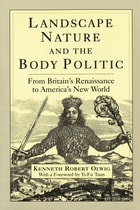
Landscape, Nature, and the Body Politic
From Britain's Renaissance to America's New WorldKenneth Robert Olwig
University of Wisconsin Press, 2002
Landscape, Nature, and the Body Politic explores the origins and lasting influences of two contesting but intertwined discourses that persist today when we use the words landscape, country, scenery, nature, national. In the first sense, the land is a physical and bounded body of terrain upon which the nation state is constructed (e.g., the purple mountain majesties above the fruited plain, from sea to shining sea). In the second, the country is constituted through its people and established through time and precedence (e.g., land where our fathers died, land of the Pilgrims’ pride). Kenneth Robert Olwig’s extended exploration of these discourses is a masterful work of scholarship both broad and deep, which opens up new avenues of thinking in the areas of geography, literature, theater, history, political science, law, and environmental studies.
Olwig tracks these ideas though Anglo-American history, starting with seventeenth-century conflicts between the Stuart kings and the English Parliament, and the Stuart dream of uniting Scotland with England and Wales into one nation on the island of Britain. He uses a royal production of a Ben Jonson masque, with stage sets by architect Inigo Jones, as a touchstone for exploring how the notion of "landscape" expands from artful stage scenery to a geopolitical ideal. Olwig pursues these contested concepts of the body politic from Europe to America and to global politics, illuminating a host of topics, from national parks and environmental planning to theories of polity and virulent nationalistic movements.
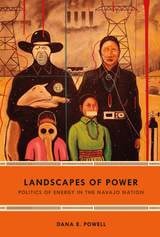
Landscapes of Power
Politics of Energy in the Navajo NationDana E. Powell
Duke University Press, 2018

Landscapes
Selected Writings of J.B. JacksonJ. B. Jackson
University of Massachusetts Press, 1970
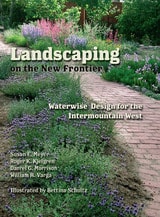
Landscaping on the New Frontier
Waterwise Design for the Intermountain WestSusan E. Meyer, Roger K. Kjelgren, Darrel G. Morrison, and William A. Varga
Utah State University Press, 2009
In this book you will learn how to use natural landscapes to inspire your own designed landscape around your business or home and yard. Included are design principles, practical ideas, and strong examples of what some homeowners have already done to convert traditional "bluegrass" landscapes into ones that are more expressive of theWest. Landscaping on the new Frontier also offers an approach to irrigation that minimizes the use of supplemental water yet ensures the survival of plants during unusually dry periods. You will learn how to combine ecological principles with design principles to create beautiful home landscapes that require only minimal resources to maintain.
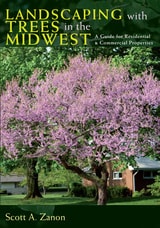
Landscaping with Trees in the Midwest
A Guide for Residential and Commercial PropertiesScott A. Zanon
Ohio University Press, 2014
Trees not only add beauty and value to property but also enhance the physical environment by providing shade, reflecting heat, and blocking wind. Choosing the right trees for the right location and conditions, however, is not always easy: each species has its own requirements for sunlight, water, drainage, and protection.
Landscaping with Trees in the Midwest: A Guide for Residential and Commercial Properties describes sixty-five desirable tree species, their characteristics, and their uses. More than 325 color photographs illustrate the appearance of each species through the seasons—including height, shape, bark, flowers, and fall colors—as well as other factors that influence selection and siting in order to help the landscape professional or homeowner make informed choices.
This guidebook also considers trees as a factor in overall environmental health and gives special consideration to the effects of the emerald ash borer, which continues to wreak havoc in wooded areas of the Midwest, offering replacement alternatives for vulnerable areas. In addition to the text and photos, the book includes a table of growth rates and sizes, a map of hardiness zones, and other valuable reference tools.
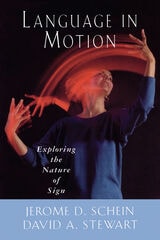
Language in Motion
Exploring the Nature of SignJerome D. Schein
Gallaudet University Press, 1995
This enjoyable book first introduces sign language and communication, follows with a history of sign languages in general, then delves into the structure of ASL. Later chapters outline the special skills of fingerspelling and assess the academic offshoot of artificial sign systems and their value to young deaf children.
Language in Motion offers for consideration the process required to learn sign language and putting sign language to work to communicate in the Deaf community. Appendices featuring the manual alphabets of three countries and a notation system developed to write signs complete this enriching book. Its delightful potpourri of entertaining, accessible knowledge makes it a perfect primer for those interested in learning more about sign language, Deaf culture, and Deaf communities.
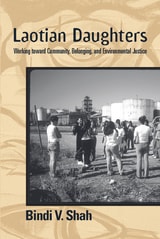
Laotian Daughters
Working toward Community, Belonging, and Environmental JusticeBindi V. Shah
Temple University Press, 2011
Laotian Daughters focuses on second-generation environmental justice activists in Richmond, California. Bindi Shah's pathbreaking book charts these young women's efforts to improve the degraded conditions in their community and explores the ways their activism and political practices resist the negative stereotypes of race, class, and gender associated with their ethnic group.
Using ethnographic observations, interviews, focus groups, and archival data on their participation in Asian Youth Advocates—a youth leadership development project—Shah analyzes the teenagers' mobilization for social rights, cross-race relations, and negotiations of gender and inter-generational relations. She also addresses issues of ethnic youth, and immigration and citizenship and how these shape national identities.
Shah ultimately finds that citizenship as a social practice is not just an adult experience, and that ethnicity is an ongoing force in the political and social identities of second-generation Laotians.
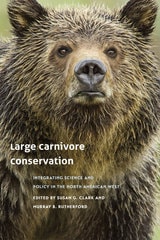
Large Carnivore Conservation
Integrating Science and Policy in the North American WestEdited by Susan G. Clark and Murray B. Rutherford
University of Chicago Press, 2014
In combining real-world examples with discussions of conservation and policy theory, Large Carnivore Conservation not only explains how traditional management approaches have failed to meet the needs of all parties, but also highlights examples of innovative, successful strategies and provides practical recommendations for improving future conservation efforts.
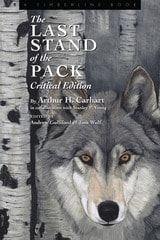
Last Stand of the Pack
Critical EditionAndrew Gulliford
University Press of Colorado, 2017
This critical edition explores the past and future of wolves in Colorado. Originally published in 1929, The Last Stand of the Pack is a historical account of the extermination of what were then believed to be the last wolves in Colorado. Arthur H. Carhart and Stanley P. Young describe the wolves’ extermination and extoll the bravery of the federal trappers hunting them down while simultaneously characterizing the wolves as cunning individuals and noble adversaries to the growth of the livestock industry and the settlement of the West. This is nature writing at its best, even if the worldview expressed is at times jarring to the twenty-first-century reader.
Now, almost 100 years later, much has been learned about ecology and the role of top-tier predators within ecosystems. In this new edition, Carhart and Young’s original text is accompanied by an extensive introduction with biographical details on Arthur Carhart and an overview of the history of wolf eradication in the west; chapters by prominent wildlife biologists, environmentalists, wolf reintroduction activists, and ranchers Tom Compton, Bonnie Brown, Mike Phillips, Norman A. Bishop, and Cheney Gardner; and an epilogue considering current issues surrounding the reintroduction of wolves in Colorado. Presenting a balanced perspective, these additional chapters address views both in support of and opposed to wolf reintroduction.
Coloradans are deeply interested in wilderness and the debate surrounding wolf reintroduction, but for wolves to have a future in Colorado we must first understand the past. The Last Stand of the Pack: Critical Edition presents both important historical scholarship and contemporary ecological ideas, offering a complete picture of the impact of wolves in Colorado.
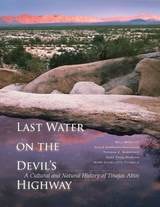
Last Water on the Devil's Highway
A Cultural and Natural History of Tinajas AltasBill Broyles, Gayle Harrison Hartmann, Thomas E. Sheridan, Gary Paul Nabhan, and Mary Charlotte Thurtle
University of Arizona Press, 2013
Now an expert cast of authors describes, narrates, and explains the human and natural history of this special place in a thorough and readable account. Addressing the latest archaeological and historical findings, they reveal why Tinajas Altas was so important and how it related to other waterholes in the arid borderlands. Readers can feel like pioneers, following in the footsteps of early Native Americans, Spanish priests and soldiers, gold seekers and borderland explorers, tourists, and scholars.
Combining authoritative writing with a rich array of more than 180 illustrations and maps as well as detailed appendixes providing up-to-date information on the wildlife and plants that live in the area, Last Water on the Devil’s Highway allows readers to uncover the secrets of this fascinating place, revealing why it still attracts intrepid tourists and campers today.
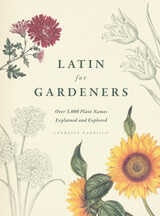
Latin for Gardeners
Over 3,000 Plant Names Explained and ExploredLorraine Harrison
University of Chicago Press, 2012
Since Latin became the standard language for plant naming in the eighteenth century, it has been intrinsically linked with botany. And while mastery of the classical language may not be a prerequisite for tending perennials, all gardeners stand to benefit from learning a bit of Latin and its conventions in the field. Without it, they might buy a Hellebores foetidus and be unprepared for its fetid smell, or a Potentilla reptans with the expectation that it will stand straight as a sentinel rather than creep along the ground.
An essential addition to the gardener’s library, this colorful, fully illustrated book details the history of naming plants, provides an overview of Latin naming conventions, and offers guidelines for pronunciation. Readers will learn to identify Latin terms that indicate the provenance of a given plant and provide clues to its color, shape, fragrance, taste, behavior, functions, and more.
Latinx Environmentalisms
Place, Justice, and the DecolonialSarah D. Wald
Temple University Press, 2019
The whiteness of mainstream environmentalism often fails to account for the richness and variety of Latinx environmental thought. Building on insights of environmental justice scholarship as well as critical race and ethnic studies, the editors and contributors to Latinx Environmentalisms map the ways Latinx cultural texts integrate environmental concerns with questions of social and political justice.
Original interviews with creative writers, including Cherríe Moraga, Helena María Viramontes, and Héctor Tobar, as well as new essays by noted scholars of Latinx literature and culture, show how Latinx authors and cultural producers express environmental concerns in their work. These chapters, which focus on film, visual art, and literature—and engage in fields such as disability studies, animal studies, and queer studies—emphasize the role of racial capitalism in shaping human relationships to the more-than-human world and reveal a vibrant tradition of Latinx decolonial environmentalism.
Latinx Environmentalisms accounts for the ways Latinx cultures are environmental, but often do not assume the mantle of “environmentalism.”
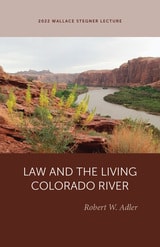
Law and the Living Colorado River
Robert W. Adler
University of Utah Press, 2023
Law and the Living Colorado River asserts that the so-called Law of the River—the vast assemblage of interstate compacts, international treaties, federal and state statutes, regulations, contracts, and other legal documents governing use and management of the Colorado River—ignores the needs of the river as a nested system of aquatic and aquatic-dependent ecosystems. Although society now recognizes and appreciates the natural values of the Colorado River, the Law of the River remains fixed in service of human economies like irrigation and hydropower. Robert W. Adler contends that the law must respond to changing values that prioritize natural systems alongside human ones. He proposes acknowledging the legal rights of the river itself, following the recent movement to recognize rights of nature in other ecosystems around the world. Recognizing that U.S. law has significant barriers to that proposal, however, Adler borrows from aspects of international water law to propose as a shorter-term strategy amendments to the Colorado River Compact that would enhance protection of the river’s environmental needs and values.
Adler delivered this lecture on March 17, 2022, at the 27th annual symposium of the Wallace Stegner Center for Land, Resources and the Environment, jointly sponsored by the Wallace Stegner Center and the Water & Tribes Initiative | Colorado River Basin.
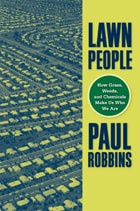
Lawn People
How Grasses, Weeds, and Chemicals Make Us Who We ArePaul Robbins
Temple University Press, 2007
For some people, their lawn is a source of pride, and for others, caring for their lawn is a chore. Yet for an increasing number of people, turf care is a cause of ecological anxiety. In Lawn People, author Paul Robbins, asks, "How did the needs of the grass come to be my own?" In his goal to get a clearer picture of why people and grasses do what they do, Robbins interviews homeowners about their lawns, and uses national surveys, analysis from aerial photographs, and economic data to determine what people really feel about-and how they treat-their lawns.
Lawn People places the lawn in its ecological, economic, and social context. Robbins considers the attention we pay our turfgrass-the chemicals we use to grow lawns, the hazards of turf care to our urban ecology, and its potential impact on water quality and household health. He also shows how the ecology of cities creates certain kinds of citizens, deftly contrasting man's control of the lawn with the lawn's control of man.
Lawn People provides an intriguing examination of nature's influence on landscape management and on the ecosystem.
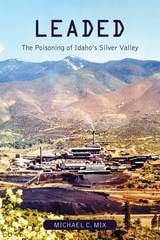
Leaded
The Poisoning of Idaho's Silver ValleyMichael C. Mix
Oregon State University Press, 2016
During the first half of the 20th century, industrial mining operations caused severe environmental damage to area waterways and lands from releases of lead and other toxic metals, and sulfur gases. Despite the obvious devastation, no effective federal laws regulating mining and smelting operations were passed until the 1970s, due to the influence of the mine and lead industry in state and federal politics, and scientific uncertainties about pollution effects. Harmful human health effects were evident soon after the smelter opened in 1917, when Bunker Hill workers suffered from lead poisoning, but no federal laws regulating workplace lead were passed until the 1970s.
In 1974, lead smelter emissions from Bunker Hill caused the largest epidemic of childhood lead poisoning in U.S. history. That landmark event ultimately led to the EPA mandating federal air lead standards in 1978 and, at the same time, NIOSH passed national standards reducing occupational lead exposures. Bunker Hill could not meet the new standards; consequently, the company closed in 1981, leaving behind a contaminated geographic area that was classified as the largest Superfund site in the United States in 1983.
Leaded is a deeply researched account of one of the greatest environmental disasters in our history. It belongs on the bookshelf of every student of environmental history, western history, mining history, environmental ethics, and environmental law.
Leaning Into The Wind
A Memoir Of Midwest WeatherSusan Allen Toth
University of Minnesota Press, 2006
Learning from the Land, Teachers Guide and Student Materials, 2nd Edition
Bobbie Malone
Wisconsin Historical Society Press, 2021
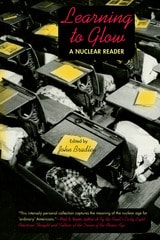
Learning to Glow
A Nuclear ReaderJohn Bradley
University of Arizona Press, 2000
In Learning to Glow, twenty-four essays testify to many of the unsuspected human and environmental costs of atomic science. They show that Americans have paid a terrible price for supposedly "winning" the Cold War--for although the nuclear nightmare may be over, we are still living with nuclear threats every day. Writers such as Scott Russell Sanders, Terry Tempest Williams, and Barbara Kingsolver reveal the psychic and emotional fallout of the Cold War and of subsequent developments in nuclear science. The essays include personal testimonies of what it was like to grow up with family members in nuclear-related jobs; hard-hitting journalism on the health and environmental costs of our nuclear policies and practices; and poignant stories of coming to terms with nuclear power, including contributions by writers who revisit Hiroshima in an attempt to heal the wounds left by the Bomb.
These essays offer an alternative to the official version of nuclear history as told to us by school textbooks, government authorities, and nuclear industry officials. They are stories of and by ordinary people who have suffered the consequences of the decisions made by those in power-stories that have been largely ignored, dismissed, or suppressed. They will challenge readers to re-examine their preconceptions about the way we deal with issues of nuclear arms and radioactive waste because they show that nuclear history does not belong to experts but to us all.
Contributors:
Marilou Awiakta
John Bradley
Jim Carrier
Alison Hawthorne Deming
Mary Dickson
Edward Dougherty
Ray Gonzalez
Karl Grossman
Sonya Huber
Barbara Kingsolver
Valerie Kuletz
Mary Laufer
Kay Mack
Craig McGrath
Bill Mesler
Richard H. Minear
Randy Morris
Mayumi Oda
Catherine Quigg
Richard Rawles
Kenneth Robbins
Scott Russell Sanders
David Seaborg
Terry Tempest Williams
Bill Witherup
Phil Woods
Leavetakings
EssaysCorinna Cook
University of Alaska Press, 2020
Legends of the Common Stream
John Hanson Mitchell
University of Massachusetts Press, 2021
While Mitchell never leaves the brook's shores, he draws from a range of traditions and takes readers on excursions to regions and cultures across the globe and across time, making the case that our contemporary separation from nature goes hand in hand with our alienation from the world of myth. This book seeks to restore these broken relationships and offers the reminder that while cultures may come and go, the stream goes on forever.
Let There Be Night
Testimony on Behalf of the DarkPaul Bogard
University of Nevada Press, 2008
Letters From Side Lake
A Chronicle of Life in the North WoodsPeter M. Leschak
University of Minnesota Press, 1992
After a brief taste of urban life, and convinced that nothing equaled the formidable challenge of life in the heart of the vast woods, Peter M. Leschak returned to northern Minnesota. Letters from Side Lake chronicles the marvelous range of adventures and reflections-described with thoughtfulness and humor-springing from his pioneer-like existence. In Leschak's unique voice and beautifully crafted style, Letters from Side Lake captures the great pleasures and rugged feats and hardships of North Woods living.
"Letters from Side Lake is a celebration. Leschak revels in what he loves the best: the beauty of the north woods; the sweep of Andromeda across a black sky; the sleek thrust of his canoe slicing across a mirror-flat lake; and the simplicity of small-town life." -Washington Post Book World"A vivid, engaging book by a talented writer." -New York Times Book Review
Letters from Alabama
Chiefly Relating to Natural HIstoryPhilip Henry Gosse, introduction by Harvey H. Jackson III, edited by Virginia Hamilton
University of Alabama Press, 1993
A naturalist's captivating portrait of Alabama's wildlife, landscapes, and people.
Philip Henry Gosse (1810-1888), a British naturalist, left home at age 17 and made his way to Alabama in 1838, where he had heard educated people were in demand. He was employed by Judge Reuben Saffold at Pleasant Hill in Dallas County as a teacher for about a dozen children of local landowners, but his principal interest was natural history. During the eight months he lived in th Black Belt he watched, listened, thought, took notes, and made sketches--activities that eventually led to Letters from Alabama. He lived among Alabamians, talked and listened to them, saw them at their best and their worst, and came to understand their hopes and fears. They were a part of the natural world, and he paid attention to them as any good scientist would. With the skills of a scientist and the temperament of an artist, Gosse set down an account of natural life in frontier Alabama that has no equal. Written to no one in particular, a common literary device of the period, the letters were first published in a magazine, and in 1859 appeared as a book. By that time Gosse was an established scholar and one of England’s most noted scientific illustrators.
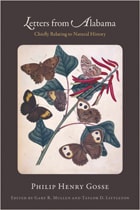
Letters from Alabama
Chiefly Relating to Natural HistoryPhilip Henry Gosse, Edited by Gary R. Mullen and Taylor D. Littleton
University of Alabama Press, 2013
New and improved edition of a naturalist's captivating portrait of Alabama's wildlife, landscapes, and people.
Philip Henry Gosse (1810–1888), a British naturalist, left home at age seventeen and made his way to Alabama in 1838. He was employed by Judge Reuben Saffold and other planters near Pleasant Hill in Dallas County as a teacher for about a dozen of their children, but his principal interest was natural history. Letters from Alabama is a personalized record of Gosse’s perceptive observations during his eight-month residence in this small antebellum community. The work addresses a Victorian readership, including entomologists, who Gosse believed were relatively uninformed about the novelty and beauty of this “hilly region of the State of Alabama.” Written in an engaging literary style and organized as a series of epistolary discussions, the book is unparalleled in its detailed evocations of the natural history and cultural conditions of frontier Alabama. By the time Letters from Alabama appeared in 1859, Gosse’s scientific publications and fine illustrations had led to his being elected a Fellow of the Royal Society of London.
Edited by Gary R. Mullen and Taylor D. Littleton, this authoritative edition features thirty grayscale lithographs shot directly from the 1859 edition, reset type for easier reading, a new introduction and index by the two foremost scholars of Gosse in Alabama, a new appendix that provides modern scientific and common names for the plant and animal species described by Gosse, and a four-color cover featuring one of the plates from Gosse’s Entomologia Alabamensis.
Letters from the Leelanau
Essays of People and PlaceKathleen Stocking
University of Michigan Press, 1990
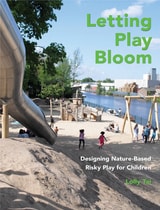
Letting Play Bloom
Designing Nature-Based Risky Play for ChildrenLolly Tai
Temple University Press, 2022
Children love to play in risky—often misunderstood to mean unsafe—ways. It is often how they learn. Research shows that activities like climbing on trees and boulders, hiking in nature, and playing in a creek are excellent ways for kids to develop their creativity and their senses, because playing outdoors evokes different sights, sounds, smells, and textures.
Letting Play Bloom analyzes five outstanding case studies of children’s nature-based risky play spaces—the Slide Hill at Governors Island in New York, the Berkeley (CA) Adventure Playground, and Wildwoods at Fernbank Museum in Atlanta, as well as sites in the Netherlands and Australia. Author Lolly Tai provides detailed explanations of their background and design, and what visitors can experience at each site.
She also outlines the six categories of risky—not hazardous—play, which involve great heights, rapid speeds, dangerous tools, dangerous elements, rough-and-tumble play, and wandering or getting lost. These activities allow children to explore and challenge themselves (testing their limits) to foster greater self-worth while also learning valuable risk-management skills such as dealing with fear-inducing situations.
Filled with more than 200 photographs, Letting Play Bloom advocates for a thoughtful landscape design process that incorporates the specific considerations children need to fully experience the thrill that comes from playing in nature.

Lichen Flora of the United States
Bruce Fink
University of Michigan Press, 1935
The manual presents a general discussion of the morphology and reproduction of the group. There are descriptions of 1,578 species, varieties, and forms, belonging to 178 genera and 46 families. Keys to the families, genera, and species, 47 plates illustrating 63 species, and an index complete the volume.
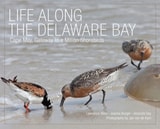
Life Along the Delaware Bay
Cape May, Gateway to a Million ShorebirdsNiles, Lawrence
Rutgers University Press, 2012
The Delaware Bay is the second largest and most diverse bay on the East Coast. It has a rich cultural history, has played an important role in the region’s commerce and tourism, and has spectacular and vital natural resources. Birdwatchers gather along its shores to watch the spectacle of thousands of spawning horseshoe crabs, the dense flocks of migrant shorebirds, the fall hawk migration, and the huge migration of monarch butterflies.
Life Along the Delaware Bay focuses on the area as an ecosystem, the horseshoe crab as a keystone species within that system, and the crucial role that the bay plays in the migratory ecology of shorebirds. An abundance of horseshoe crabs spawning on the Delaware Bay beaches results in an abundance of eggs brought to the surface, providing a source of high-quality food and bringing hundreds of thousands of shorebirds to the bay to forage in late May and early June. A dramatic decline in horseshoe crabs has resulted in a rapid and dramatic decline in birds, particularly the red knot. This decline has sounded an alarm throughout the world, prompting a host of biologists to converge on the bay each spring, to understand the biology and conservation of red knots and other shorebirds.
Lawrence Niles, Joanna Burger, and Amanda Dey examine current efforts to protect the bay and identify new efforts that must take place to ensure it remains an intact ecological system. Over three hundred stunning color photographs and maps capture the beauty and majesty of this unique treasure—one that must be protected today and for generations to come.
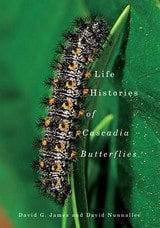
Life Histories of Cascadia Butterflies
David G. James
Oregon State University Press, 2011
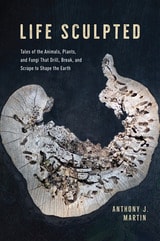
Life Sculpted
Tales of the Animals, Plants, and Fungi That Drill, Break, and Scrape to Shape the EarthAnthony J. Martin
University of Chicago Press, 2023
Meet the menagerie of lifeforms that dig, crunch, bore, and otherwise reshape our planet.
Did you know elephants dig ballroom-sized caves alongside volcanoes? Or that parrotfish chew coral reefs and poop sandy beaches? Or that our planet once hosted a five-ton dinosaur-crunching alligator cousin? In fact, almost since its fascinating start, life was boring. Billions of years ago bacteria, algae, and fungi began breaking down rocks in oceans, a role they still perform today. About a half-billion years ago, animal ancestors began drilling, scraping, gnawing, or breaking rocky seascapes. In turn, their descendants crunched through the materials of life itself—shells, wood, and bones. Today, such “bioeroders” continue to shape our planet—from the bacteria that devour our teeth to the mighty moon snail, always hunting for food, as evidenced by tiny snail-made boreholes in clams and other moon snails.
There is no better guide to these lifeforms than Anthony J. Martin, a popular science author, paleontologist, and co-discoverer of the first known burrowing dinosaur. Following the crumbs of lichens, sponges, worms, clams, snails, octopi, barnacles, sea urchins, termites, beetles, fishes, dinosaurs, crocodilians, birds, elephants, and (of course) humans, Life Sculpted reveals how bioerosion expanded with the tree of life, becoming an essential part of how ecosystems function while reshaping the face of our planet. With vast knowledge and no small amount of whimsy, Martin uses paleontology, biology, and geology to reveal the awesome power of life’s chewing force. He provokes us to think deeply about the past and present of bioerosion, while also considering how knowledge of this history might aid us in mitigating and adapting to climate change in the future. Yes, Martin concedes, sometimes life can be hard—but life also makes everything less hard every day.
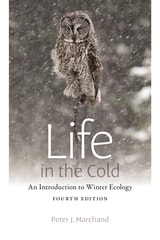
Life in the Cold
An Introduction to Winter Ecology, fourth editionPeter J. Marchand
University Press of New England, 2014
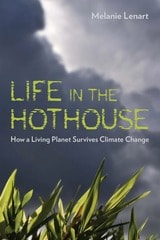
Life in the Hothouse
How a Living Planet Survives Climate ChangeMelanie Lenart
University of Arizona Press, 2010
Life in the Hothouse incorporates Lenart’s extensive knowledge of climate science—including the latest research in climate change—and the most current scientific theories, including Gaia theory, which holds that the Earth has some degree of climate control “built in.” As Lenart points out, scientists have been documenting stronger hurricanes and larger floods for many years. There is a good reason for this, she notes. Hurricanes help cool the ocean surface and clear the air of carbon dioxide, the main greenhouse gas responsible for global warming. From the perspective of Gaia theory, these responses are helping to slow the ongoing global warming and Lenart expounds upon this in a clear and understandable fashion.
There is hope, Lenart writes. If we help sustain Earth's natural defense systems, including wetlands and forests, perhaps Mother Earth will no longer need to rely as much on the cooling effects of what we call "natural disasters"—many of which carry a human fingerprint. At a minimum, she argues, these systems can help us survive the heat.