Results by title
126 books match the query 'New England' and 4 start with l
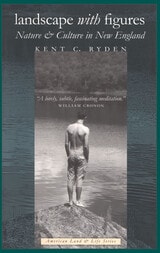
Landscape With Figures
Nature & Culture New EnglandKent C. Ryden
University of Iowa Press, 2001
Latinos in New England
edited by Andrés Torres
Temple University Press, 2006
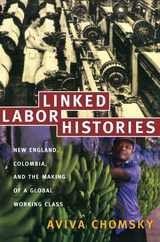
Linked Labor Histories
New England, Colombia, and the Making of a Global Working ClassAviva Chomsky
Duke University Press, 2008
Chomsky examines labor and management at two early-twentieth-century Massachusetts factories: one that transformed the global textile industry by exporting looms around the world, and another that was the site of a model program of labor-management collaboration in the 1920s. She follows the path of the textile industry from New England, first to the U.S. South, and then to Puerto Rico, Japan, Mexico, Central America, the Caribbean, and Colombia. She considers how towns in Rhode Island and Massachusetts began to import Colombian workers as they struggled to keep their remaining textile factories going. Most of the workers eventually landed in service jobs: cleaning houses, caring for elders, washing dishes.
Focusing on Colombia between the 1960s and the present, Chomsky looks at the Urabá banana export region, where violence against organized labor has been particularly acute, and, through a discussion of the AFL-CIO’s activities in Colombia, she explores the thorny question of U.S. union involvement in foreign policy. In the 1980s, two U.S. coal mining companies began to shift their operations to Colombia, where they opened two of the largest open-pit coal mines in the world. Chomsky assesses how different groups, especially labor unions in both countries, were affected. Linked Labor Histories suggests that economic integration among regions often exacerbates regional inequalities rather than ameliorating them.
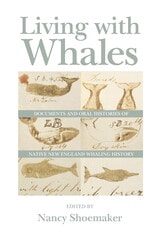
Living with Whales
Documents and Oral Histories of Native New England Whaling HistoryNancy Shoemaker
University of Massachusetts Press, 2014
Native Americans along the coasts of southern New England and Long Island have had close ties to whales for thousands of years. They made a living from the sea and saw in the world's largest beings special power and meaning. After English settlement in the early seventeenth century, the region's natural bounty of these creatures drew Natives and colonists alike to develop whale hunting on an industrial scale. By the nineteenth century, New England dominated the world in whaling, and Native Americans contributed substantially to whaleship crews.
In Living with Whales, Nancy Shoemaker reconstructs the history of Native whaling in New England through a diversity of primary documents: explorers' descriptions of their “first encounters,” indentures, deeds, merchants' accounts, Indian overseer reports, crew lists, memoirs, obituaries, and excerpts from journals kept by Native whalemen on their voyages. These materials span the centuries-long rise and fall of the American whalefishery and give insight into the far-reaching impact of whaling on Native North American communities. One chapter even follows a Pequot Native to New Zealand, where many of his Maori descendants still reside today.
Whaling has left behind a legacy of ambivalent emotions. In oral histories included in this volume, descendants of Wampanoag and Shinnecock whalemen reflect on how whales, whaling, and the ocean were vital to the survival of coastal Native communities in the Northeast, but at great cost to human life, family life, whales, and the ocean environment.