57 books match the query 'Peasants' and 2 start with l
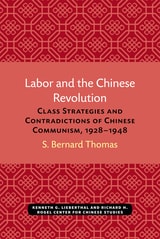
cover of Labor and the Chinese Revolution: Class Strategies and Contradictions of Chinese Communism, 1928–1948

Labor and the Chinese Revolution

Class Strategies and Contradictions of Chinese Communism, 1928–1948

S. Bernard Thomas

University of Michigan Press, 1983
In the two-decade period from 1928 to 1948, the proletarian themes and issues underlying the Chinese Communist Party’s ideological utterances were shrouded in rhetoric designed, perhaps, as much to disguise as to chart actual class strategies. Rhetoric notwithstanding, a careful analysis of such pronouncements is vitally important in following and evaluating the party’s changing lines during this key revolutionary period. The function of the “proletariat” in the complex of policy issues and leadership struggles which developed under the precarious circumstances of those years had an importance out of all proportion to labor’s relatively minor role in the post-1927 Communist led revolution. [1, 2]
[more]
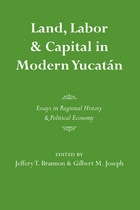
cover of Land, Labor, and Capital in Modern Yucatan: Essays in Regional History and Political Economy

Land, Labor, and Capital in Modern Yucatan

Essays in Regional History and Political Economy

Jeffrey T. Brannon

University of Alabama Press, 1991

Owing to Yucatan’s relative isolation, many assume that the history and economy of the peninsula have evolved in a distinctive way, apart from the central government in Mexico City and insulated from world social and economic factors. The essays in this volume suggest that this has not been the case: the process of development in Yucatan has been linked firmly to national and global forces of change over the past two centuries. The essays are by U.S., Mexican, Canadian, and Belizean social scientists representing both well-established and younger scholars. The result is a perspective on Yucatan’s historical development that is at once international, interdisciplinary, and intergenerational.

    In this volume, all of the contributors are genuinely comfortable with the theories and approaches of several disciplines—economics, history, and anthropology, and sociology. All have used largely untapped, primary, archival sources, and the result is a fascinating offering of new information.
[more]