105 books match the query 'Political activists' and 6 start with l
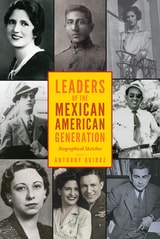
cover of Leaders of the Mexican American Generation: Biographical Essays

Leaders of the Mexican American Generation

Biographical Essays

Anthony Quiroz

University Press of Colorado, 2016

Leaders of the Mexican American Generation explores the lives of a wide range of influential members of the US Mexican American community between 1920 and 1965 who paved the way for major changes in their social, political, and economic status within the United States.

Including feminist Alice Dickerson Montemayor, to San Antonio attorney Gus García, and labor activist and scholar Ernesto Galarza, the subjects of these biographies include some of the most prominent idealists and actors of the time. Whether debating in a court of law, writing for a major newspaper, producing reports for governmental agencies, organizing workers, holding public office, or otherwise shaping space for the Mexican American identity in the United States, these subjects embody the core values and diversity of their generation.

More than a chronicle of personalities who left their mark on Mexican American history, Leaders of the Mexican American Generation cements these individuals as major players in the history of activism and civil rights in the United States. It is a rich collection of historical biographies that will enlighten and enliven our understanding of Mexican American history.  

[more]
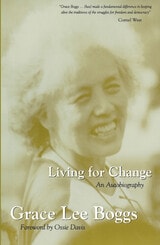
cover of Living For Change: An Autobiography

Living For Change

An Autobiography

Grace Lee Boggs

University of Minnesota Press, 1998
"Grace Lee Boggs has made a fundamental difference in keeping alive the traditions of the struggles for freedom and democracy." Cornel West "More than a deeply moving memoir, this is a book of revelation. Grace Lee Boggs, Chinese American, middle class, highly educated, discovers through her encounters with remarkable rebels, blue collars as well as philosophers, where the body is buried: who is doing what to whom in our society. It is an adventure that is truly liberating." Studs Terkel "It seems to me that the life of Grace Lee Boggs has been an exercise of will. Through sheer will, without waiting for social conditions to come around and without waiting to explore her identity, she turned her back on who she was and barged into new territories. She was a woman who barged into men's territory; she was a Chinese who barged into black territory; she was an intellectual who barged into workers territory." from a letter from Louis Tsen "Throught these pages walk causes, gatherings, confrontations, movements, and the men and women who made them: workers, and students, and committees of the People; Christians, Black Muslims, Black Panthers, Labor Unions; C.L.R. James. Rev. Cleage, Rev. Cleveland, Coleman Young, Malcolm and Martin; artists, musicians, poets, actors, strikers, and seekers of revolution." from the foreword by Ossie Davis Living for Change is a sweeping account of the life of an untraditional radical from the end of the thirties, through the cold war, the civil rights era, and the rise of Black Power, the Nation of Islam, and the Black Panthers to the present efforts to rebuild our crumbling urban communities. This fascinating autobiography traces the story of a woman who transcended class and racial boundaries to pursue her passionate belief in a better society. Grace Lee Boggs was raised in New York City during a time when her father was not allowed to buy land for their home because he was Chinese. Educated at Barnard and Bryn Mawr, Boggs was in her twenties when radical politics beckoned, and she was inspired to become a revolutionary focusing on the black community. During her early years as an activist in New York, Boggs began a twenty-year friendship and collaboration with C. L. R. James, the brilliant and influential West Indian Marxist to whom she devotes a revelatory chapter of this book. In 1953, she moved to Detroit where, she writes, "radical history had been made and could be made again." It was also the home of James Boggs, an African American auto worker (and later author and revolutionary theoretician) who would become one of the movement's freshest and most persuasive voices, as well as Grace's husband. Beginning with their work together on the newsletter Correspondence, Grace and James formed the core of a network that over the years would include Malcolm X, Lyman Paine, Ping Ferry, Ossie Davis and Ruby Dee, Kwame Nkrumah, Stokely Carmichael, and inner-city youth. Rich in the personalities and anecdotes of twentieth-century progressive activism, Living for Change is an involving and inspiring look at a remarkable woman who continues to dedicate her life to social justice. Grace Lee Boggs is a first-generation Chinese American who has been a speaker, writer, and movement activist in the African American community for fifty-five years.
[more]
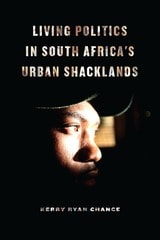
cover of Living Politics in South Africa’s Urban Shacklands

Living Politics in South Africa’s Urban Shacklands

Kerry Ryan Chance

University of Chicago Press, 2018

While much has been written on post-apartheid social movements in South Africa, most discussion centers on ideal forms of movements, disregarding the reality and agency of the activists themselves. In Living Politics, Kerry Ryan Chance radically flips the conversation by focusing on the actual language and humanity of post-apartheid activists rather than the external, idealistic commentary of old.
 
Tracking everyday practices and interactions between poor residents and state agents in South Africa’s shack settlements, Chance investigates the rise of nationwide protests since the late 1990s. Based on ethnography in Durban, Cape Town, and Johannesburg, the book analyzes the criminalization of popular forms of politics that were foundational to South Africa’s celebrated democratic transition. Chance argues that we can best grasp the increasingly murky line between “the criminal” and “the political” with a “politics of living” that casts slum and state in opposition to one another. Living Politics shows us how legitimate domains of politics are redefined, how state sovereignty is forcibly enacted, and how the production of new citizen identities crystallize at the intersections of race, gender, and class. 
 
[more]
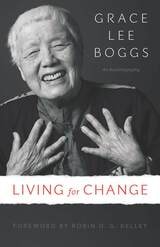
cover of Living for Change: An Autobiography

Living for Change

An Autobiography

Grace Lee Boggs

University of Minnesota Press, 2016

No one can tell in advance what form a movement will take. Grace Lee Boggs’s fascinating autobiography traces the story of a woman who transcended class and racial boundaries to pursue her passionate belief in a better society. Now with a new foreword by Robin D. G. Kelley, Living for Change is a sweeping account of a legendary human rights activist whose network included Malcolm X and C. L. R. James. From the end of the 1930s, through the Cold War, the Civil Rights era, and the rise of the Black Panthers to later efforts to rebuild crumbling urban communities, Living for Change is an exhilarating look at a remarkable woman who dedicated her life to social justice.
[more]
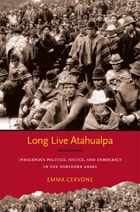
cover of Long Live Atahualpa: Indigenous Politics, Justice, and Democracy in the Northern Andes

Long Live Atahualpa

Indigenous Politics, Justice, and Democracy in the Northern Andes

Emma Cervone

Duke University Press, 2012

Long Live Atahualpa is an innovative ethnographic study of indigenous political movements against discrimination in modern Ecuador. Exploring the politicizing of Indianness—the right of indigenous peoples to self-determination and political agency—Emma Cervone analyzes how the Quichuas mobilized in the country's central Andean province of Chimborazo and formed their own grassroots organization, Inca Atahualpa. She illuminates the complex process that led indigenous activists to forge new alliances with the Catholic Church, NGOs, and regional indigenous organizations as she traces the region's social history since the emergence of a rural unionist movement in the 1950s.

Cervone describes how the Inca Atahualpa contested racial subordination by intervening in matters of resource distribution, justice, and cultural politics. Considering local indigenous politics and indigenous mobilization at the national and international levels, she explains how, beginning in the 1960s, state-led modernization created political openings by generating new economic formations and social categories. Long Live Atahualpa sheds new light on indigenous peoples operating at the crossroads of global capitalism and neoliberal reforms as they redefine historically rooted relationships of subordination.
[more]
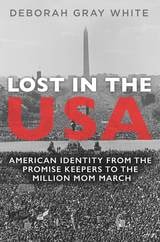
cover of Lost in the USA: American Identity from the Promise Keepers to the Million Mom March

Lost in the USA

American Identity from the Promise Keepers to the Million Mom March

Deborah Gray White

University of Illinois Press, 2017

Remembered as an era of peace and prosperity, turn-of-the-millennium America was also a time of mass protest. But the political demands of the marchers seemed secondary to an urgent desire for renewal and restoration felt by people from all walks of life. Drawing on thousands of personal testimonies, Deborah Gray White explores how Americans sought better ways of living in, and dealing with, a rapidly changing world. From the Million Man, Million Woman, and Million Mom Marches to the Promise Keepers and LGBT protests, White reveals a people lost in their own country. Mass gatherings offered a chance to bond with like-minded others against a relentless tide of loneliness and isolation. By participating, individuals opened a door to self-discovery that energized their quests for order, autonomy, personal meaning, and fellowship in a society that seemed hostile to such deeper human needs. Moving forward in time, White also shows what marchers found out about themselves and those gathered around them. The result is an eye-opening reconsideration of a defining time in contemporary America.
[more]